


ADHD combined type symptoms, diagnosis and daily life

Having both inattentive and hyperactive-impulsive symptoms doesn’t mean ADHD looks the same for everyone. This ADHD combination is known as the combined presentation, and its effects can vary at home, school, work and in relationships.
If you’re trying to understand difficulties with focus, restlessness or impulsive behaviour, it’s natural to want clear answers. Diagnosis isn’t based on one symptom or a single test. An assessment considers a person’s history, symptom patterns and how these affect everyday life.
This article explains what combined-type ADHD means, how clinicians assess it and why symptoms may overlap with conditions such as anxiety, depression or dyslexia. It also looks at how ADHD can affect daily routines and relationships, and what kinds of support may help. Understanding the full picture can bring clarity without reducing someone to a label.
Table of Contents
What Is ADHD Combined Type?
Combined-type attention deficit hyperactivity disorder (ADHD) involves symptoms from both the inattentive and hyperactive-impulsive categories. Clinicians identify this presentation when a person meets the symptom threshold in each category. It is not a separate condition or personality type. Symptoms can affect attention, organisation, activity levels and impulse control, with different effects for each person and across settings.
For adults with ADHD, treatment may combine medication and behavioural support. Medication aims to reduce symptoms that interfere with everyday activities, while therapy can help build practical management strategies. For example, behavioural approaches may focus on breaking tasks into steps, organising routines and reducing distractions. The right approach depends on symptoms, circumstances and treatment response.
NICE guideline NG87 recommends methylphenidate or lisdexamfetamine as first-line medication for adults with ADHD. If an adequate-dose trial of either medicine has not helped enough after six weeks, NICE recommends considering a switch to the other. Treatment is reviewed over time, so the clinician can consider symptom changes, benefits and unwanted effects.
What ADHD medications are available on the NHS, and what do they cost? NHS treatment may include stimulant medicines such as methylphenidate and lisdexamfetamine, as well as the non-stimulant atomoxetine. Prescription charges vary across the UK: prescriptions are free in Scotland, Wales and Northern Ireland, while charges may apply in England, subject to exemptions.
Stimulant medicines can cause insomnia, reduced appetite or anxiety. Possible side effects of non-stimulant medicines include nausea, fatigue and mood changes. What are the side effects and risks of ADHD medication? Effects vary from person to person, and treatment requires monitoring by an ADHD specialist. Reviews help assess benefits and side effects, and whether the medicine remains suitable.
Medication is not the only way to address ADHD symptoms. Behavioural therapy can teach practical strategies for managing attention, planning and distractions. Adults may also find cognitive behavioural therapy useful, particularly when difficulties affect routines or emotional well-being. These approaches support day-to-day functioning, while medication may target core symptoms. One does not automatically replace the other.
Evidence for combining ADHD medicines is limited. NICE states that evidence to guide treatment beyond common single-medicine approaches is very limited, and does not recommend combining medicines because the evidence is insufficient. This is different from combining medication with behavioural therapy. A treatment plan may include both, with progress and side effects reviewed rather than assuming that more medicines will work better.
For adults considering assessment, a specialist evaluation can clarify how symptoms affect work, relationships and daily tasks, and whether ADHD fits the overall picture. It also helps distinguish ADHD symptoms from other possible explanations. An ADHD assessment considers individual history and circumstances, providing a basis for discussing suitable support and treatment options.
Diagnostic criteria and assessment
An ADHD diagnosis draws on a person’s history, symptoms and everyday functioning. There is no single test that confirms the disorder. In the UK, clinicians use recognised diagnostic criteria alongside guidance such as NICE guideline NG87. They consider whether symptoms have persisted, appeared in different settings and caused meaningful difficulties, rather than relying on one questionnaire or observation.
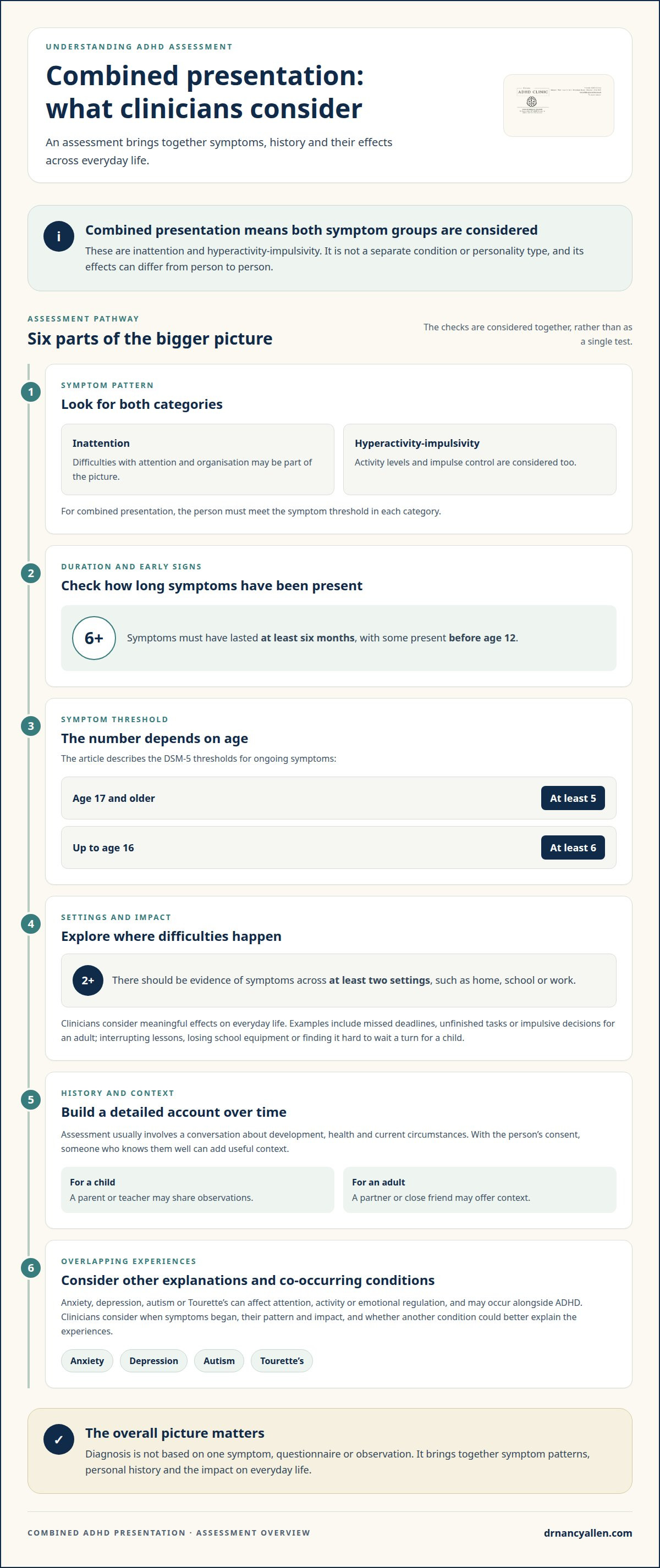
For combined presentation, the assessment considers both inattention and hyperactivity-impulsivity. Symptoms must have lasted at least six months, with some present before age 12 and evidence across at least two settings, such as home and school or work. Under the criteria described in DSM-5, people aged 17 and older need at least five ongoing symptoms; children up to age 16 need at least six.
Clinicians explore how symptoms affect daily life. A child who often interrupts lessons, loses school equipment and struggles to wait their turn may experience difficulties across settings. For an adult, the discussion might cover missed deadlines, unfinished tasks or impulsive decisions at home and work. The assessment also considers whether another condition could better explain these experiences.
What are the NHS referral and assessment waiting times for ADHD in the UK? There is no single waiting time across the UK, and referral routes vary. In England, access to ADHD specialist services may take several months or years.
Assessment usually involves a detailed conversation about development, health and current circumstances. With consent, information from someone who knows the person well can provide useful context. For a child, that might be a parent or teacher; for an adult, a partner or close friend. Their observations can help clarify whether symptoms occur consistently, rather than only during one difficult period.
Gender can affect how ADHD is recognised. A child who is visibly restless or often interrupts may attract attention, while a child whose main difficulties are with concentration may be less noticeable in a busy classroom. Some people also learn to hide or compensate for their difficulties. Assessment should explore the person’s experience, rather than rely on a narrow picture of disruptive behaviour.
Co-occurring conditions and other explanations matter too. Anxiety, depression, autism or Tourette’s may affect attention, activity or emotional regulation, and can occur alongside ADHD. Clinicians consider when symptoms began, their pattern and impact across settings, and the person’s wider history. This broader view helps distinguish overlapping difficulties and guide appropriate support, including whether to discuss medication.
For children and adults, a careful assessment connects symptom patterns with real-life impact. An individual ADHD assessment may help explore that history and clarify possible next steps; availability should be confirmed with the practice.
Living well with combined type ADHD
Combined-type attention deficit hyperactivity disorder (ADHD) describes a pattern of inattentive and hyperactive-impulsive symptoms. It doesn’t automatically mean someone’s ADHD is more severe. The practical effects depend on how symptoms interact with daily demands: a child may struggle to listen in class and wait their turn, while an adult may lose track of tasks and interrupt conversations.
Small adjustments can make everyday tasks easier to manage. A written checklist can break a complicated job into clear steps; a calendar reminder can make an appointment harder to overlook. If getting started is difficult, setting a small first task, such as opening a document or gathering school materials, can reduce the decisions needed to begin.
Movement and predictable routines may also support daily functioning. A walk or another form of physical activity can help some people manage restlessness and support overall well-being. Regular mealtimes, a consistent bedtime routine and a designated place for keys or school equipment can prevent avoidable disruption. These strategies complement, rather than replace, clinical care when needed.
How can parents and schools support a child with combined ADHD in the UK? Parents can use behavioural parent training to develop practical ways to respond to difficult behaviour. School staff can agree on clear instructions, predictable routines and regular communication with home. For example, breaking classroom work into smaller tasks may make it easier to start and stay focused.
For adults, a written task plan, planned breaks and fewer distractions may help at work or university. Adults can request reasonable adjustments in these settings when ADHD affects their ability to study or work. Examples include written instructions or a quieter place to complete focused tasks.
Relationships can benefit when people discuss specific needs rather than treat symptoms as deliberate behaviour. For example, agreeing on a shared calendar can help household members keep track of appointments, while pausing before replying may help with impulsive comments. These approaches work best when expectations are clear and practical, not framed as a test of willpower.
Notice which situations cause the greatest difficulty. A brief record of patterns, such as missed deadlines, restless evenings or forgotten belongings, can help identify where support may be useful. It can also give a clinician concrete examples to discuss during an assessment, rather than relying on a general impression of how things are going.
Combined ADHD can affect school, work, home life and social connections, but its impact varies from person to person. Matching strategies to individual needs and reviewing what helps can make routines more manageable and support day-to-day functioning.
ADHD and co-occurring mental health conditions
Attention deficit hyperactivity disorder can occur alongside other mental health or learning conditions. Anxiety, depression, addiction and dyslexia are examples. Their symptoms may overlap: anxiety can make concentration difficult, while ADHD-related impulsivity can affect decisions. Having one condition does not rule out another. A careful assessment looks at how difficulties began, how they affect daily life and whether they appear together.
Emotional dysregulation means finding it hard to manage the intensity or duration of feelings. It affects around 1 in 3 children with ADHD and around 1 in 2 adults with ADHD. A child may become quickly overwhelmed by a change in plans; an adult may find frustration difficult to settle after a stressful meeting. These experiences can affect relationships and routines.
ADHD and anxiety can both make tasks feel difficult, but for different reasons. Someone with anxiety may lose focus because worries keep returning; someone with ADHD may struggle to organise steps or sustain attention. Both patterns can occur together. Clinicians consider the person’s history and examples from home, school or work, rather than assuming one explanation accounts for every difficulty.
Depression may also affect concentration, motivation and energy. A clinician will explore whether these changes occur alongside low mood, longstanding attention deficit hyperactivity disorder symptoms, or in a different pattern. For example, an adult who has struggled with planning since childhood may also describe a more recent period of low mood. Timing helps clarify what support may be appropriate.
Learning difficulties such as dyslexia can affect reading, spelling and written work. A pupil who avoids written homework may need support with literacy, attention, or both. Understanding the difference matters: treating every missed assignment as a motivation problem can overlook a learning need. Assessment can consider the person’s strengths and difficulties across different tasks, not just one subject.
Some people with ADHD experience impulsive behaviour that contributes to difficulties with addictive substances or behaviours. This connection does not mean addiction is inevitable or that ADHD alone explains it. If substance use is affecting health, relationships or responsibilities, discussing it with a healthcare professional can help identify appropriate support alongside ADHD care.
Managing several conditions can require coordination. A specialist may consider which symptoms cause the greatest impairment, whether treatments interact and what support is already in place. For a young person, useful information may come from family and school; for an adult, work demands or relationship pressures may provide context. Addressing co-occurring needs can make care more relevant to the whole person.
Keep track of specific changes, such as worsening sleep, low mood or increased difficulty concentrating. Sharing when they began and where they occur gives a clinician clearer context. If mental health symptoms affect everyday functioning, seek advice from a GP or appropriate healthcare professional rather than trying to interpret overlapping symptoms alone.
Combined ADHD presentation and symptom categories
Clinicians describe ADHD through three presentations: predominantly inattentive, predominantly hyperactive-impulsive, and combined. These labels reflect symptom patterns, not a person’s character or potential. Someone with an inattentive presentation may often lose track of instructions, while hyperactivity can appear as restlessness or difficulty staying seated. Impulsivity may involve acting or speaking before considering the consequences.
Combined presentation means symptoms from both the inattentive and hyperactive-impulsive categories are present. A person might find it hard to follow a conversation, misplace everyday items and feel driven to move or speak quickly. The mix differs from person to person. One person’s difficulties may be most noticeable during a quiet task; another’s may stand out during group activities or changes in routine.
Descriptions of combined ADHD commonly refer to six or more symptoms in each category. The symptom threshold used in diagnosis can depend on age and the criteria applied. A number alone does not establish ADHD: clinicians also consider how long symptoms have been present, whether they occur in different settings and how they affect daily functioning.
The categories help organise an assessment, but they do not capture every detail. Difficulty concentrating might mean losing the thread of instructions, while hyperactivity might involve frequent movement during a meeting. Impulsivity could show up as interrupting before someone has finished speaking. Specific examples help explain how symptoms affect real life.
ADHD symptoms can affect different tasks in different ways. A pupil may understand a lesson but struggle to record homework instructions before leaving school. An adult may have useful ideas but find it difficult to prioritise tasks or wait to speak in a discussion. Describing the setting and impact helps distinguish a recurring pattern from an isolated incident.
Presentations are useful shorthand, not a complete account of someone’s strengths or needs. Two people with combined ADHD may share symptom categories yet face different demands at home, school or work. A clear picture can help identify practical strategies, such as written instructions for multi-step tasks, planned movement breaks or appointment reminders.
Understanding which symptom categories are involved can make conversations about support more precise. It can also help a clinician explore how symptoms affect physical activity, relationships and everyday responsibilities. If these patterns are affecting your life, you can explore an ADHD assessment to discuss your experiences and possible next steps.
Dr Nancy Allen
Dr Nancy Allen offers ADHD assessments for adults and children who want a clearer understanding of their symptoms and how these affect everyday life. An assessment provides space to discuss personal history, current circumstances and the questions that matter to the individual or family. It explores whether ADHD may fit the pattern and what options could be considered next.
Consultations are thoughtful and individualised, focusing on the whole person rather than a list of symptoms alone. For a child, this may involve understanding how difficulties appear at home and school; for an adult, it may mean exploring their effects on work, relationships or routines. General information cannot replace an individual assessment.
If you’d like to discuss an assessment, contact Dr Nancy Allen.
Take a considered next step
As you consider what you’ve read, think about what greater clarity might make possible in daily life. Perhaps you want to understand a recurring difficulty, feel more prepared for a conversation with family, or decide what questions to raise with a clinician. Identifying your priorities can make a future discussion more focused than starting with a label alone.
An ADHD combination of symptoms makes most sense in the context of a person’s circumstances and goals. The phrase “ADHD combination” may describe a presentation, but it cannot capture someone’s full experience. Consider what you would most like to understand and what changes would feel meaningful. Those priorities can help shape a more individual conversation about possible next steps.
If you’d value a professional discussion about your circumstances, explore your next steps with Dr Nancy Allen. You can take the time you need to decide what feels right, and move towards greater understanding at your own pace.
Frequently Asked Questions
What does NICE NG87 say about treatment of ADHD?
NICE NG87 recommends methylphenidate or lisdexamfetamine as first-line medication for adults with ADHD. If an adequate-dose trial has not helped enough after six weeks, NICE recommends considering a switch to the other medicine. Treatment response and side effects need review over time. Medication can sit alongside psychological or behavioural support, which may help with practical challenges such as planning tasks, organising routines and managing distractions.
What is attention deficit hyperactivity disorder (ADHD)?
ADHD is a condition involving persistent difficulties with attention, activity levels or impulse control that affect everyday functioning. It can influence how someone manages tasks, follows conversations, waits their turn or stays organised. The pattern varies between people and across home, school, work or social settings. Diagnosis considers the person’s history and the impact of symptoms, rather than one behaviour in isolation.
What other options could the provider advise upon instead of combining amphetamines?
NHS Bristol, North Somerset and South Gloucestershire (BSW) guidance is local, not a UK-wide recommendation. It advises optimising one ADHD medicine and describes a split dose of lisdexamfetamine as an alternative, although twice-daily use is off-label. Local ADHD services may suggest dexamfetamine for specific events. These options require clinical consideration and are not instructions to change medication independently.
What does combined-type ADHD mean?
Combined-type ADHD means a person has a significant pattern of symptoms from both the inattentive and hyperactive-impulsive categories. For example, they may struggle to sustain attention while also feeling restless or acting before considering the consequences. This presentation describes a symptom pattern, not someone’s personality or abilities. Clinicians consider the relevant diagnostic criteria and the effects on everyday life when deciding whether it applies.
What are the symptoms of combined ADHD in adults and children?
Symptoms can include losing track of instructions, forgetting belongings, difficulty finishing tasks, restlessness, interrupting and struggling to wait. A child might leave classroom work unfinished and call out answers; an adult might lose track during meetings and speak before others have finished. These examples alone cannot establish ADHD. Clinicians consider whether symptoms form a persistent pattern and how they affect the person across settings.
How is combined ADHD diagnosed in the UK?
Diagnosis involves a specialist assessment, not a single test or questionnaire. The clinician explores developmental and health history, current symptoms, their impact and whether they occur in different settings. With consent, information from someone who knows the person, such as a parent, partner or teacher, can provide context. The assessment also considers other possible explanations, including anxiety, depression or autism, which may overlap with ADHD.
What treatments are recommended for combined ADHD in the UK?
Support may include ADHD medication, psychological approaches and practical behavioural strategies, chosen around the person’s needs and circumstances. NICE recommends methylphenidate or lisdexamfetamine as first-line medication for adults. A plan may also address routines, organisation or difficulties at school and work. Clinicians review how treatment is helping and whether side effects are present, then discuss any changes as part of ongoing care.
How do ADHD medication and psychological therapy compare for combined ADHD?
Medication and psychological therapy can serve different purposes. Medication may help reduce core ADHD symptoms, while therapy can develop ways to manage their effects, such as breaking a demanding task into steps or responding differently to frustration. They are not necessarily competing choices. The role of each depends on the person’s difficulties, preferences and treatment plan, and progress can be reviewed with an appropriate clinician.



Comments