


Conditions Mistaken for ADHD: Symptoms and Treatment

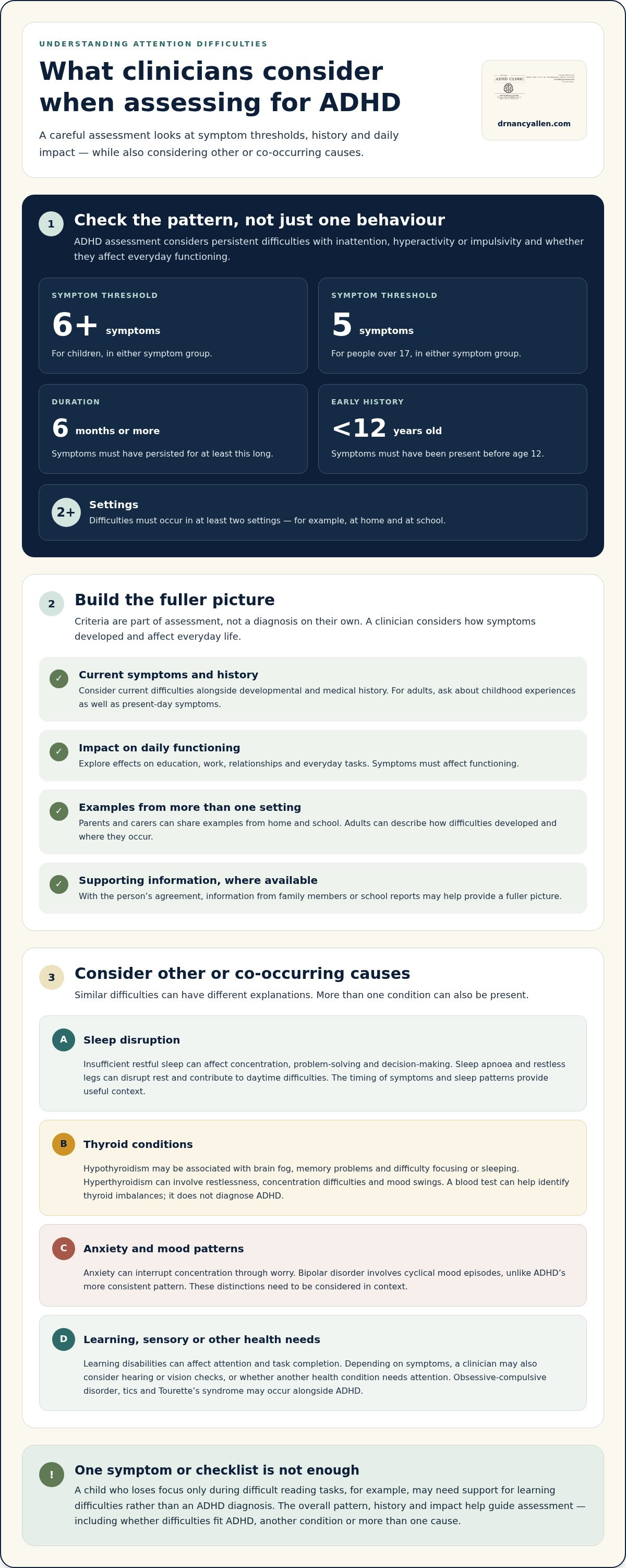
Adults can have inattentive ADHD without having had obvious hyperactivity in childhood. Sleep difficulties, thyroid problems and anxiety can also cause symptoms that resemble ADHD but are different from ADHD, and more than one condition can be present. For people over 17, the threshold described for ADHD is five symptoms; for children, it is six. Symptoms must have lasted at least six months, been present before age 12 and occur in at least two settings, such as home or school.
It can be difficult to identify what is behind problems with focus, organisation or restlessness, especially when symptoms overlap. This article explains how clinicians distinguish ADHD from sleep and thyroid conditions, anxiety and other possible causes, and why a careful assessment considers a person’s history and daily life.
You’ll also learn how support and treatment may differ for children, young people and adults. The right approach depends on what is causing the difficulties, so understanding the distinction is a useful first step towards discussing appropriate care with a healthcare professional.
Table of Contents
ADHD differential diagnosis and co-occurring conditions
ADHD involves persistent difficulties with inattention, hyperactivity or impulsivity that affect everyday functioning. Similar symptoms can have other causes, so assessment considers their history, pattern and impact rather than relying on one behaviour. For example, a child who loses focus only during difficult reading tasks may need support for learning difficulties rather than an ADHD diagnosis.
Diagnostic criteria include symptom thresholds and duration. The threshold described is six or more symptoms in either symptom group for children, and five for people over 17. Symptoms must persist for at least six months, occur in at least two settings, such as home and school, and have been present before age 12 under DSM-5 criteria. These thresholds help organise assessment; symptoms must also affect functioning.
Assessment brings together several kinds of evidence. A clinician considers current symptoms, developmental and medical history, and how difficulties affect education, work, relationships or daily tasks. For adults, this includes asking about childhood experiences, since current symptoms alone do not establish that difficulties began early. With the person’s agreement, information from family members or school reports may help build a fuller picture.
Other conditions can resemble or accompany ADHD. Anxiety may interrupt concentration through worry, while bipolar disorder involves cyclical mood episodes, unlike ADHD’s more consistent pattern. Obsessive-compulsive disorder can coexist with ADHD. Learning disabilities can affect attention, organisation and task completion, so educational assessment may help distinguish the causes. Tics and Tourette’s syndrome involve involuntary movements or sounds and may occur alongside ADHD.
ADHD is neurodevelopmental, but no single factor explains every person’s experience. Assessment considers developmental history and circumstances rather than assuming that one behaviour or family experience caused the condition.
Unrecognised ADHD can continue to affect learning, work, relationships and everyday organisation. These difficulties can overlap with another condition, so identifying co-occurring needs matters when planning support.
A careful assessment also explores possible physical or sensory explanations. Depending on the symptoms, a clinician may consider hearing or vision checks, or whether another health condition needs attention. If ADHD and another condition are both diagnosed, treatment priorities can reflect which difficulties currently have the greatest effect on daily life. This helps avoid treating a symptom in isolation.
For children, parents and carers can share concrete examples from home and school. For adults, a timeline of symptoms and examples across settings can help explain how difficulties developed and where they occur. Neither a checklist nor an isolated symptom confirms ADHD; the overall pattern and its impact guide assessment.
Sleep and thyroid conditions that can mimic ADHD
Insufficient restful sleep can affect concentration, problem-solving and decision-making, creating difficulties that resemble ADHD. A tired child may seem distracted during lessons, forget instructions or become restless while trying to stay alert. These behaviours alone don’t show whether the cause is sleep loss, ADHD or both.
Sleep-related symptoms often include daytime tiredness, poor focus and difficulty thinking clearly. ADHD may also involve inattention, impulsivity or restlessness, but the pattern and history matter. Symptoms linked to disrupted sleep may be more noticeable after a poor night or during demanding daytime tasks. ADHD symptoms are assessed in the context of a person’s wider circumstances, not by one difficult morning.
Sleep apnoea and restless leg syndrome can disrupt sleep and contribute to daytime difficulties resembling ADHD. With sleep apnoea, breathing interruptions can disturb rest; restless legs can cause uncomfortable sensations and an urge to move. A person may then struggle to concentrate or manage tasks the next day. These conditions can also occur alongside ADHD, so identifying a sleep problem doesn’t automatically rule ADHD in or out.
Thyroid conditions can affect attention and mood in different ways. Hypothyroidism may be associated with brain fog, memory problems and difficulty focusing or sleeping. Hyperthyroidism can involve restlessness, concentration difficulties and mood swings. These experiences can overlap with ADHD symptoms, but thyroid-related changes may point to a physical health cause that needs assessment.
A blood test can help identify thyroid imbalances that may contribute to attention difficulties. It doesn’t diagnose ADHD; it helps assess one possible alternative or co-occurring cause. A clinician may also ask about sleep patterns, daytime tiredness, medication and when symptoms began. For example, noting whether concentration problems follow disrupted sleep can provide useful context.
For children, parents can record examples from home and school, including bedtime difficulties, daytime tiredness and changes in behaviour. Teachers may notice whether attention problems appear throughout the school day or mainly during particular activities. This context can help a clinician consider sleep, thyroid health, learning disabilities and ADHD without assuming one explanation fits every symptom.
When someone has already been diagnosed with ADHD, new sleep problems or thyroid symptoms still deserve attention. Treating an underlying condition may ease some ADHD-like difficulties, while persistent symptoms may need separate assessment. If sleep apnoea, restless legs or a thyroid problem seems possible, discuss the pattern with a GP. The key distinction is whether symptoms track a health or sleep issue, form a broader ADHD pattern, or reflect both.
Anxiety and attention difficulties
Anxiety can involve frequent worry, stress, tiredness, tension and difficulty sleeping. These experiences can make it harder to concentrate, follow conversations or finish tasks. For example, someone preoccupied with an upcoming meeting may reread the same email repeatedly. Anxiety can resemble ADHD, but attention difficulties may be driven by excessive worry or fear.
A useful distinction is what happens around the concentration problem. Anxiety-related difficulty may arise when attention is pulled towards worry, such as concern about making a mistake. ADHD involves a broader pattern of attention, activity or impulse-control difficulties. An assessment explores how symptoms affect daily life, not simply whether someone feels distracted.
Consider the context and timing. If focus worsens before presentations, difficult conversations or school tests, note the thoughts and physical feelings involved. Tension, tiredness and disrupted sleep may accompany anxiety. Difficulties across varied everyday activities may call for a wider assessment, including possible attention deficit symptoms. These clues can inform a discussion, but can’t establish a diagnosis on their own.
Anxiety disorders and ADHD can also coexist. A person may have persistent organisational difficulties and, separately, worry that builds around missed deadlines. Treating one explanation as the only explanation can leave important needs unaddressed. A clinician considers symptom history, triggers and effects on work, education, relationships and everyday routines to understand whether one or both conditions may be present.
Before an appointment, keep brief notes about specific examples. Record the situation, the concern, the attention problem and its effect. For instance, note whether a student loses focus during a lesson because of noise or worry about an upcoming assessment. Include patterns at home, school or work, and changes in sleep or energy.
Treatment options depend on the conditions identified and their effects on daily functioning. Support for anxiety may focus on worry and fear, while ADHD care addresses its own symptoms and impairments. How anxiety affects someone and how it can be treated depend on their difficulties and circumstances. If both conditions are diagnosed, a clinician may help prioritise which currently has the greatest effect on daily life.
Children and adults may describe anxiety differently. A child might repeatedly seek reassurance before school; an adult might avoid a task for fear of getting it wrong. Neither behaviour alone proves anxiety or ADHD. Discuss recurring difficulties with a GP or another suitable healthcare professional. A conversation can help identify appropriate next steps, including further assessment where needed.
Treatment recommendations by age group
Age shapes the practical support that fits, but the starting point is the same: clarify what is causing the difficulties. If sleep disruption, thyroid problems or anxiety explain attention changes, treatment addresses that condition. ADHD care instead focuses on ADHD symptoms and their effect on daily functioning. For example, helping someone manage persistent worry differs from supporting organisation across home, school or work.
For younger children, a structured environment can make daily demands easier to manage. Clear routines, simple instructions and positive reinforcement are useful supports for ADHD-like difficulties. A parent might use a visual morning routine, while school staff provide consistent classroom instructions. These steps can support behaviour and learning while assessment considers whether symptoms meet ADHD criteria or another explanation fits better.
For school-age children, coordination between home and school helps make support practical. Parents can share examples of disruptive behaviour, unfinished tasks or difficulty following instructions; teachers can describe how these affect learning and peer relationships. Classroom interventions and organisational-skills support are among the approaches considered for children with ADHD. A child’s learning needs and mental health also matter when planning support.
Adolescents face changing demands, including independent study, timetables and growing responsibility. Support can focus on planning assignments, breaking larger tasks into manageable parts and building routines around school commitments. Behavioural support or organisational-skills training may suit these needs. Assessment should also consider anxiety, low mood or other psychiatric difficulties, since these can affect concentration and the type of help required.
For adults, treatment planning relates to work, relationships, household responsibilities and personal priorities. Someone who regularly misses appointments might use reminders and a consistent calendar; another person may need support with completing tasks or managing impulsive decisions. ADHD treatment options can include behavioural and environmental strategies, alongside consideration of medication following assessment. The approach depends on symptoms, their impact and any co-occurring mental health needs.
Medication is not a treatment for every cause of poor concentration. If a thyroid condition contributes to brain fog, care needs to address thyroid health; if anxiety drives distraction, support needs to address worry and fear. ADHD and another condition can coexist, so a plan can address both rather than assuming one label explains every difficulty. Discuss progress and unwanted effects during clinical follow-up.
Across age groups, treatment should match the source of difficulty and the person’s circumstances. A child struggling mainly with classroom organisation needs a different plan from an adult whose attention problems follow poor sleep. When symptoms significantly affect daily life, discuss them with a GP or appropriate clinician. An assessment can clarify the pattern, consider other conditions and inform suitable next steps without reducing a person’s experience to a checklist.
How does the compared condition differ from ADHD?
ADHD is not the only condition that can affect attention. Several health, developmental and learning differences can influence attention, behaviour or emotional regulation. The distinction depends on the pattern, history and impact of symptoms. For example, difficulty finishing schoolwork might relate to ADHD, a learning disability, anxiety or more than one condition.
Bipolar disorder is distinguished by cyclical mood episodes. A person may experience periods of unusually high energy or happiness, followed by depression. ADHD symptoms tend to follow a more consistent pattern rather than appearing only during distinct mood episodes. A clinician considers the timing and duration of changes, alongside their effects on school, work and relationships.
Learning disabilities can make attention, organisation and task completion difficult, even when someone is very capable. A child who struggles mainly with reading, for instance, may find classroom tasks demanding for reasons that differ from ADHD. A comprehensive educational assessment can help clarify whether learning needs contribute to the difficulty or occur alongside ADHD.
Oppositional defiant disorder can involve losing one’s temper and blaming others for mistakes. These behaviours may look like impulsivity or conflict, but assessment explores the broader pattern and circumstances. Borderline personality disorder can involve emotional regulation difficulties, impulsive behaviour, low self-esteem and relationship problems. These experiences may overlap with ADHD, so no single behaviour establishes either diagnosis.
Tics and Tourette’s syndrome involve involuntary movements or sounds. These differ from ADHD’s core difficulties with attention, hyperactivity and impulsivity, although both conditions can occur together. Similarly, obsessive-compulsive disorder may coexist with ADHD. Repetitive thoughts or actions can affect concentration, so assessment needs to consider what drives the behaviour and how it affects daily life.
For children, context can help make the distinction clearer. A school report might describe missed instructions, frequent movement, difficulty with a particular subject or emotional outbursts. Each example raises a question, not a diagnosis. Clinicians consider reports across settings, developmental history and other possible explanations before deciding whether symptoms fit ADHD, another condition or both.
For adults, a useful account includes current difficulties and examples from childhood. Someone may describe persistent disorganisation across work and home, while also reporting mood episodes or relationship difficulties. The clinician considers whether these experiences form separate patterns or interact. When ADHD and another condition are both diagnosed, treatment priorities can reflect which difficulty currently has the greatest effect on life.
If longstanding attention or organisation difficulties are affecting daily life, an adult ADHD assessment can help explore whether the pattern fits ADHD. A suitable assessment also considers other possible explanations, rather than treating a checklist as a diagnosis.
Dr Nancy Allen: Adult ADHD Assessment
Dr Nancy Allen’s Adult ADHD Assessment gives adults an opportunity to explore persistent difficulties with attention, organisation or impulsivity. It may be a helpful next step when these challenges affect daily life and you want to understand whether they fit ADHD, another explanation or more than one condition.
The assessment considers your symptoms, personal history and circumstances, with time to discuss appropriate options together. This broader context matters: difficulties with concentration can have several causes, and an individual assessment is needed to understand your situation. Dr Nancy Allen also offers a Child ADHD Assessment for children and young people with similar concerns.
Take a considered next step
Difficulty focusing isn’t a verdict on your ability or effort. A condition that looks like ADHD but has another cause needs its own explanation and support, while co-occurring conditions may call for a plan that considers each set of needs. Understanding the pattern can help you describe what is happening and identify what you’d like help with.
Before speaking with a healthcare professional, note the situations where attention or organisation becomes difficult, how this affects everyday life, and what you hope an assessment will clarify. These details can make the conversation more focused, whether you’re seeking support for yourself or a child.
If ongoing attention difficulties are affecting your life, you can contact Dr Nancy Allen to discuss the next step. A thoughtful conversation can help you move towards greater clarity and appropriate support.
Frequently Asked Questions
Can adults have inattentive ADHD without childhood hyperactivity?
Yes. An adult may have predominantly inattentive ADHD without obvious hyperactivity in childhood. They might have struggled to keep track of belongings, follow instructions or complete schoolwork, rather than appearing unusually active. Adult assessment explores current difficulties alongside childhood experiences, using examples from different parts of life. Not remembering childhood clearly doesn’t, by itself, establish or rule out ADHD; family recollections or school records may help provide context.
But first, what is ADHD exactly?
ADHD is a neurodevelopmental condition involving persistent difficulties with attention, hyperactivity or impulsivity that affect everyday life. It can present mainly through inattentive symptoms, mainly through hyperactive-impulsive symptoms, or through both groups. For example, someone may find planning and following instructions difficult, while another may struggle to wait or manage impulses. ADHD is not simply occasional distraction; assessment considers how symptoms affect functioning over time and across circumstances.
What can I do next?
Start by writing down a few recent examples, such as missed appointments, unfinished tasks or difficulty following conversations. Note when they happen, what else is going on, and how they affect work, study or home life. If you’re concerned about yourself or a child, discuss the pattern with a GP or suitable clinician. Bring any questions and relevant history; this can make the conversation more focused without trying to diagnose yourself.
Who is most likely to have this condition?
ADHD can affect children, young people and adults, and it may be recognised at different stages of life. Someone may seek assessment after demands change, such as starting further education, taking on a new job or managing a household independently. These circumstances can make existing difficulties more visible, but they don’t cause or prove ADHD. Assessment focuses on the person’s developmental history, symptoms and impact, rather than a particular occupation or background.
How is this condition diagnosed in the UK?
ADHD diagnosis involves a clinical assessment of symptoms, history and everyday impact, rather than a single test or questionnaire. A clinician may ask for examples from home, education or work, and consider other explanations such as sleep problems, anxiety or thyroid conditions. Adults may be asked about childhood experiences as well as current challenges. If you’re seeking assessment, prepare a brief timeline and examples showing how difficulties affect ordinary routines.
What treatments are available, including medication and therapy?
Treatment depends on the diagnosis, age, symptoms and effect on daily life. Options may include practical strategies, educational or behavioural support, therapy for a co-occurring condition, and medication when clinically appropriate. For example, a child might benefit from clearer routines at home and school, while an adult may want help addressing difficulties with planning. Before deciding on medication, discuss benefits, possible drawbacks and follow-up arrangements with the prescribing clinician.
What support is available for children and adults with this condition?
Children may benefit from consistent routines, clear instructions and coordinated support between home and school. Adults might use calendars, reminders or written plans to manage specific everyday demands. Support can also address learning needs or emotional wellbeing when these affect participation. Dr Nancy Allen offers Adult ADHD Assessment and Child ADHD Assessment. If symptoms are affecting daily life, discuss suitable support with a GP, school or other relevant professional.


Comments