


How ADHD Changes with Age: Symptoms Across the Lifespan

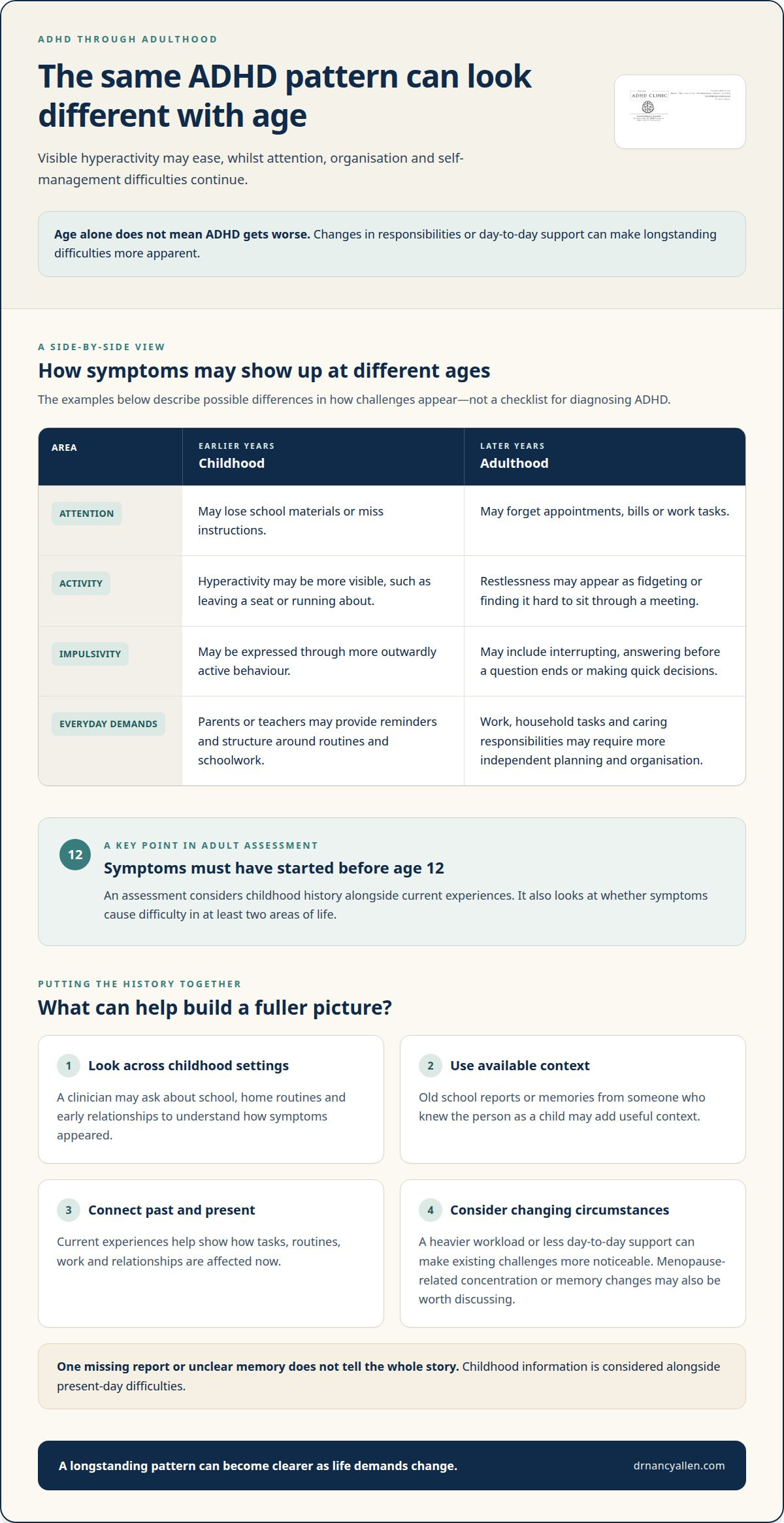
ADHD doesn’t usually get worse with age, but it can feel different as responsibilities change and support shifts. For an adult to be diagnosed, ADHD symptoms must have started before the age of 12. Understanding how ADHD changes with age means looking at how symptoms may become less outwardly hyperactive while difficulties with attention, organisation or self-control remain.
If challenges you remember from childhood feel different now, that experience deserves to be taken seriously. This article explains how ADHD symptoms and cognitive control can shift through adulthood, how ADHD may affect work and everyday life, and how childhood signs can inform an assessment. It also explores why changes in circumstances or hormones may affect how manageable symptoms feel, without assuming every difficulty has the same cause.
Table of Contents
How can a provider know if I showed ADHD symptoms as a child?
An adult ADHD assessment considers whether symptoms began before age 12, even if nobody identified them at school. Boys are diagnosed with ADHD at around twice the rate of girls in childhood; the NHS notes that inattentive symptoms can be less noticeable in girls and women.
How ADHD symptoms change over time
ADHD symptoms can change in how they appear, while difficulties with attention or self-management continue. This matters because adult responsibilities may expose challenges that were less disruptive when parents or teachers provided structure.
ADHD begins in childhood, although some people are diagnosed only in adulthood. Symptoms may fluctuate, and getting older does not necessarily make ADHD worse. A heavier workload, household responsibilities or less day-to-day support can make existing difficulties more apparent.
For example, a pupil may rely on a parent’s reminders, then struggle to track deadlines at university or work. An assessment considers this earlier history alongside current experiences, rather than relying only on behaviour during one appointment. The person’s account can help describe how tasks, routines and relationships have been affected at different stages.
Childhood and adult symptom differences
In children, hyperactivity may be more visible, such as leaving a seat or running about. Adults may instead fidget, feel restless or find it difficult to sit through a meeting. These differences can help explain why longstanding symptoms are harder to identify later.
Inattention can affect people at different ages, but its everyday effects may shift. A child might lose school materials or miss instructions; an adult might forget appointments, bills or work tasks. Adult diagnosis considers whether symptoms started before age 12 and cause difficulty in at least two areas of life.
To explore childhood signs, a clinician may ask about school, home routines and early relationships. Old school reports or memories shared by someone who knew the person as a child can provide context. These examples are considered alongside present-day difficulties: one missing report or unclear memory does not tell the whole story.
Menopause can bring concentration or memory concerns, sometimes described as brain fog. Hormonal changes may also affect how ADHD symptoms present, so timing can be useful to discuss. For example, noting whether difficulties began earlier in life or changed around menopause helps distinguish a longstanding pattern from a newer change. Women whose ADHD was less visible in childhood may have had fewer opportunities for recognition, particularly if inattention was more apparent than hyperactivity.
How Does ADHD Affect Adults?
In the UK, adult ADHD care may include medication and psychological support, reviewed against symptoms and daily impact. NICE recommends offering medication when symptoms still cause significant impairment after environmental modifications have been implemented and reviewed.
Hyperactivity and impulsivity in adulthood
In adults, hyperactivity may become less visibly physical, while restlessness continues as fidgeting or an urge to move. Impulsivity may involve interrupting, answering before a question ends or making quick decisions. In a meeting, someone might sit still yet find it hard to hold back a comment. These patterns can affect work and relationships, even when childhood-style running or climbing has faded.
Executive function and adult responsibilities
Executive function includes the mental skills used to plan, organise, manage time and complete tasks. At work, an adult may underestimate how long a report will take, miss a deadline or lose track of bills. Managing a household alongside caring for children adds demands, often with fewer reminders than school routines provided. The impact shows up in everyday tasks, not simply in how much effort someone makes.
Stress can make existing difficulties with organisation and concentration harder to manage. A diary, alarms or a regular routine can provide structure. Exercise may also help some people manage symptoms, although further research is needed. These strategies can support daily life, but they do not replace assessment when difficulties persist across settings.
Comorbid conditions in adolescence and adulthood
A comorbid condition is another health difficulty present alongside ADHD. In one adolescent sample, 69.5% had at least one comorbid condition. For adults, estimates state that up to 70% with ADHD also have another mental health issue. These figures describe different groups, but they underline why an assessment should consider more than attention alone.
Sleep, mood and stress can influence how someone functions, so clinicians consider these alongside ADHD symptoms. For example, a young person struggling at school may also face difficulties affecting their wellbeing. Identifying overlapping needs can clarify which challenges require attention and help shape appropriate support.
Medication is commonly used to treat adults with ADHD, usually stimulants. Psychological support may include behavioural therapy or cognitive behavioural therapy (CBT), which can help people identify unhelpful thinking patterns and develop coping strategies. NICE recommendations consider continuing impairment after environmental changes, rather than age alone. Treatment plans can therefore differ according to symptoms, daily impact and response.
The move from child to adult services can involve changes in clinicians, records and the way support is arranged. UK primary care data suggests 18% of young people prescribed ADHD medication in their early teens continue receiving prescriptions after age 18. A transition is a useful point to review current needs, treatment history and how ADHD affects study, work or home life.
ADHD and age-related changes in cognitive control
Cognitive control helps direct attention, manage impulses and switch between tasks. In ADHD, these skills can affect daily life throughout adulthood, although their impact may shift with age and circumstances.
Cognitive control and age
Cognitive control is the set of mental skills used to focus, plan and regulate behaviour. It matters because an adult may know what needs doing yet struggle to begin, prioritise or finish it.
The prefrontal cortex, a brain region involved in ADHD, is not fully developed until age 25. This development is one part of a wider picture, not a timetable for symptoms to disappear. A young adult may find it harder to organise competing study, work and home demands than a teenager with more external structure.
ADHD symptoms can fluctuate, and difficulties with attention or self-control may persist into later life. A person’s experience can change without ADHD necessarily becoming more severe. In adults, the practical impact often depends on the demands placed on these skills.
Cognitive changes associated with ageing
Ageing can bring changes in memory, processing speed or attention, while ADHD can also affect organisation and recall. Distinguishing new changes from a longstanding pattern matters when considering what support may help.
Most ADHD symptoms remain relatively stable from early adulthood to later life. The first groups of children diagnosed when ADHD was defined in 1968 are now entering their fifties and sixties, bringing greater attention to ADHD across the lifespan.
Most people with ADHD will not develop dementia as they get older. Language abilities are preserved during ageing in people with ADHD. For example, forgetting an appointment after missing a reminder differs from having difficulty understanding familiar words.
Stress and cognitive load
Cognitive load is the mental effort required to hold information and manage tasks. Stress can use up that capacity, making attention and planning feel harder. Juggling a work deadline, a family commitment and an unexpected change may leave fewer mental resources for each task.
Physical tiredness or a busy environment can add further demands. Someone trying to follow a conversation while checking messages may miss details, then struggle to recall them later. Context can affect daily functioning without proving that ADHD itself has worsened.
Noting what changed, when it began and where it occurs can help describe the pattern. Compare a quiet task with a pressured one, or a familiar routine with a disrupted day. Persistent or new cognitive concerns are worth discussing with an appropriate healthcare professional.
Changes in hyperactivity and impulsivity
Hyperactivity and impulsivity often become less outwardly obvious as children with ADHD grow older. That does not necessarily mean symptoms have disappeared: physical activity may ease, while inner restlessness or difficulty pausing before acting continues. The pattern varies between people, and symptoms can fluctuate over time.
In childhood, hyperactivity may involve running about, climbing or finding it hard to stay seated. During adolescence, it may look more like fidgeting, restless energy or difficulty settling into a lesson. Inattention can remain just as disruptive: a teenager might miss instructions, forget equipment or lose track of homework, even without visible restlessness.
For adults, a long meeting may bring tapping feet, frequent position changes or an uncomfortable urge to move. Impulsivity might show up as interrupting a colleague, answering before a question is finished or making a quick decision. These actions can affect relationships and work, although no single example establishes ADHD.
Inattention may persist as hyperactivity and impulsivity become milder. An adult might appear calm but struggle to listen through a conversation, remember several spoken instructions or complete a task without distraction. Consider whether the pattern has persisted over time and affects everyday life, rather than occurring only during a stressful week.
Medication can be part of ADHD treatment, but its effects and a person’s needs require review over time. Changes in symptoms, daily demands or other health factors can matter when discussing treatment with a clinician. Do not alter prescribed medication without speaking to the prescriber. A simple record of missed tasks, restlessness or impulsive moments can help describe what has changed.
ADHD can occur alongside mental health difficulties, which may influence concentration, sleep or emotional wellbeing. For instance, stress may make it harder to focus during revision, while persistent low mood can affect motivation. These experiences deserve attention in their own right and should not automatically be treated as ADHD symptoms.
During adolescence, parents and teachers may notice a shift from obvious movement towards difficulties with attention, organisation or impulse control. A teenager who once left their seat might later stay seated but blurt out answers or struggle to wait their turn. Examples from home and school can show how symptoms present across settings and change with age.
Memory complaints also need context. Forgetting a school deadline after missing a reminder differs from new, persistent changes that affect familiar routines. For a young person or adult, noting what was forgotten, where it happened and what else was going on gives a clinician a clearer account than simply describing memory as “poor”.
School, work, stress and major life transitions
ADHD can affect daily life differently as the structure around a person changes. School routines, new work demands, caregiving and retirement can each alter the support and focus required.
School, work and major life transitions
Major transitions change routines, responsibilities and the amount of external structure available. A pupil moving to university may need to manage deadlines without daily reminders; a new parent may be balancing appointments, household tasks and work. These changes can make existing attention difficulties or impulsivity more disruptive without meaning the disorder itself has worsened.
At work, difficulties may include missing deadlines, underestimating task time or overlooking details in a long email. At home, the same person might forget a bill or lose track of plans with friends. Planners, phone alarms and consistent routines can make tasks visible and reduce reliance on memory.
Stress can add pressure when several demands arrive together. For example, a job change may bring unfamiliar systems just as family responsibilities increase. Breaking a large task into smaller actions and recording the next step in a calendar can make it easier to begin and follow through.
Untreated ADHD in adults and older people
Untreated ADHD may leave adults facing persistent difficulties with work, relationships and daily responsibilities. Repeated missed deadlines, forgotten bills or impulsive decisions can contribute to conflict, financial strain or frustration, though outcomes differ between people.
For older people, new or changing problems with memory or attention deserve careful consideration rather than automatic attribution to ADHD. Most people with ADHD will not develop dementia as they age. A clinician can consider the person’s lifelong pattern, current functioning and other health factors when assessing concerns.
ADHD may occur alongside mental health difficulties, sleep problems or stress, which can compound day-to-day challenges. For instance, poor sleep may make it harder to concentrate at work, while relationship strain can increase stress at home. Recognising these effects can help people seek suitable support instead of treating every difficulty as a personal failing.
Research into ADHD in later life is developing as the first groups diagnosed when ADHD was defined in 1968 enter their fifties and sixties. Interest in assessment among middle-aged and older adults has risen steadily over the last fifteen years. This growing focus matters because adult ADHD may affect long-standing routines, work and relationships in ways that become more apparent as life changes.
If persistent difficulties are affecting your daily life, you can explore an adult ADHD assessment as a way to discuss your history and current challenges.
Dr Nancy Allen: Adult ADHD Assessment
Dr Nancy Allen’s Adult ADHD Assessment provides a structured opportunity to discuss longstanding symptoms and their impact on everyday life. It may be helpful if difficulties with attention, organisation or impulsivity affect work, relationships or home responsibilities, or if childhood signs are clearer in retrospect.
An assessment considers your symptoms, personal history and circumstances, including how your experiences have changed over time. Dr Allen provides individualised care and discusses appropriate options with you. An online article cannot determine whether you have ADHD; an assessment explores your experience but does not guarantee a diagnosis.
If you’d like to discuss an assessment, contact Dr Nancy Allen or visit her website.
Choose a next step that fits your needs
Understanding how ADHD changes with age can help you put current difficulties into context and decide what to discuss with a healthcare professional. Before a conversation, note which situations feel hardest, what has changed and what support you hope to explore. A few clear examples can make it easier to explain your concerns.
Dr Nancy Allen offers Adult ADHD Assessment and Child ADHD Assessment, as well as Peri-menopause & Menopause Specialist Care. These services may be relevant when ADHD concerns affect you or a child, or when cognitive changes arise around menopause. An individual assessment can explore your history and present circumstances without assuming every difficulty has the same cause.
If you’d like to discuss your situation, contact Dr Nancy Allen. Taking the next step can begin with a calm conversation about what matters most to you.
Frequently Asked Questions
Does ADHD Get Worse with Age, or Just Feel Different?
ADHD does not follow one predictable course, so a sense of worsening needs context. Note whether the change began after a major shift, such as starting a new role, changing medication or entering menopause. This can help distinguish a change in symptoms from a change in circumstances. If difficulties are new or markedly different, discuss their timing and impact with a healthcare professional rather than assuming they are all due to ADHD.
At what age does ADHD peak?
There is no single age at which ADHD reaches a peak for everyone. Symptoms and their effects vary between individuals, and a demanding period can make existing difficulties more noticeable. Rather than comparing yourself with an age-based expectation, consider whether difficulties persist and affect daily life. A useful account describes what has changed over time and which responsibilities now feel harder to manage.
Getting Older with ADHD: What Does “Normal Aging” with ADHD Look Like?
There is no standard pattern of ageing with ADHD. Consider whether a difficulty is familiar or a clear change from your usual abilities. Write down when it began, whether it is becoming more frequent and how it affects familiar routines. Bring this timeline to a GP, especially if changes are concerning or interfere with activities you previously managed comfortably.
How does ADHD change with age?
How ADHD changes with age depends on the person and the demands of each life stage. To understand your own pattern, compare notes from different periods, such as education, work and home life. Include times when things felt easier as well as harder. This balanced account can help an assessment explore the course of symptoms without treating every recent difficulty as evidence of ADHD.
How does ADHD present in adolescents?
ADHD in adolescents can affect more than schoolwork; it may also complicate friendships, home routines and participation in activities. A teenager’s perspective can add details adults may not see, such as how difficult it feels to keep track of several demands. Parents or carers can note changes they observe without drawing conclusions from one missed assignment or a difficult week.
Is it too late to get diagnosed in my 40s or 50s?
No, an assessment can still be considered in your 40s or 50s. You don’t need to arrive with a perfect account of childhood; describe what you remember and how difficulties have affected different stages of life. It may help to write a brief timeline before an appointment, including education, work and home experiences. An assessment can then explore the history alongside your current concerns.
How do ADHD symptoms change from childhood to adulthood?
Often, the most useful comparison is how a difficulty affects someone, rather than whether it looks exactly the same. For instance, a strategy that worked with close family support may become less useful when routines change. Consider what demands or supports were present at different stages. This can help explain why an old difficulty feels more disruptive now, even without a dramatic change in the symptom itself.
How does ADHD present differently in children, teenagers and adults?
Age can influence which behaviours are noticed and who sees them. A parent may observe home routines, a teacher may notice classroom patterns, and an adult may describe difficulties at work or in relationships. These perspectives offer different pieces of information, not competing accounts. Looking at them together can give a fuller picture than relying on one setting or one person’s observations.



Comments