


How to Take Control of Your ADHD: A Practical Guide

ADHD is not a lack of effort. Learning how to take control of your ADHD starts with understanding it as a neurodevelopmental condition and finding support and practical strategies that fit your needs. Healthy routines, exercise, mindfulness and relaxation may help with day-to-day challenges.
If focusing, getting organised or pausing before acting feels harder than it does for other people, it can be frustrating. These difficulties aren’t a character flaw. Recognising how ADHD affects daily life is a useful first step.
This guide explains ADHD and how professional support, changes to routines, physical activity and relaxation techniques may help. You’ll find practical ideas to try, as well as guidance on when an individual assessment or further support could be useful.
Table of Contents
1. Support from family, friends and professionals
Choose one trusted person and describe a specific difficulty, such as losing track of appointments or interrupting conversations. Agree on one practical form of help, such as a reminder before an appointment, rather than asking them to manage everything. Clear, respectful support can make strategies easier to use while leaving decisions and responsibilities with the person with ADHD.
For help with ADHD or a mental health problem, a GP is usually a sensible first contact. A GP can discuss symptoms and refer someone for specialist assessment. In England, NHS England says waits for ADHD specialist services may be several months or years. Ask about the assessment pathway and what support is available while waiting.
Medication is one possible part of ADHD treatment, alongside talking therapies and other support. Stimulants such as methylphenidate and amphetamine-based medicines are commonly prescribed; non-stimulant options include atomoxetine and certain antidepressants, such as bupropion. The right option varies from person to person. ADHD medication must be started and monitored by an ADHD specialist.
Medication may help manage ADHD symptoms, but benefits and unwanted effects vary between individuals. Monitoring may include sleep, appetite, weight, pulse and blood pressure, so tell the prescriber about any changes. A GP may take over prescribing only through a shared care agreement with the ADHD specialist, according to the National Health Service.
Support groups can offer a place to exchange practical ideas with people who understand ADHD-related problems. ADDISS can be contacted in the UK on 020 8952 2800. A group’s approach may vary, so consider whether its discussions feel respectful and useful. Parents and partners can also attend relevant sessions together, while making space for the person with ADHD to speak for themselves.
Therapy can help build skills and provide space to discuss mental wellbeing. Cognitive behavioural therapy can help people practise behaviour-management strategies and work on unhelpful thinking patterns. Mindfulness may also be explored as a talking-therapy approach. Try a brief guided breathing exercise together, then ask whether it felt helpful rather than assuming it will suit everyone.
To support a child or partner, agree on one shared strategy, then let them take the lead. For example, a parent might help a child prepare a school bag with a written checklist, while the child checks each item. Partners could agree on a reminder system, then leave the other person to act on it independently.
Technology can help make these agreements easier to maintain. Add appointments to a shared digital calendar, set reminders, and agree who adds or responds to each alert. Keep notifications purposeful rather than constant. Reviewing the arrangement together can show whether it supports independence or creates extra pressure, so you can adjust it.
2. Lifestyle habits for managing ADHD symptoms
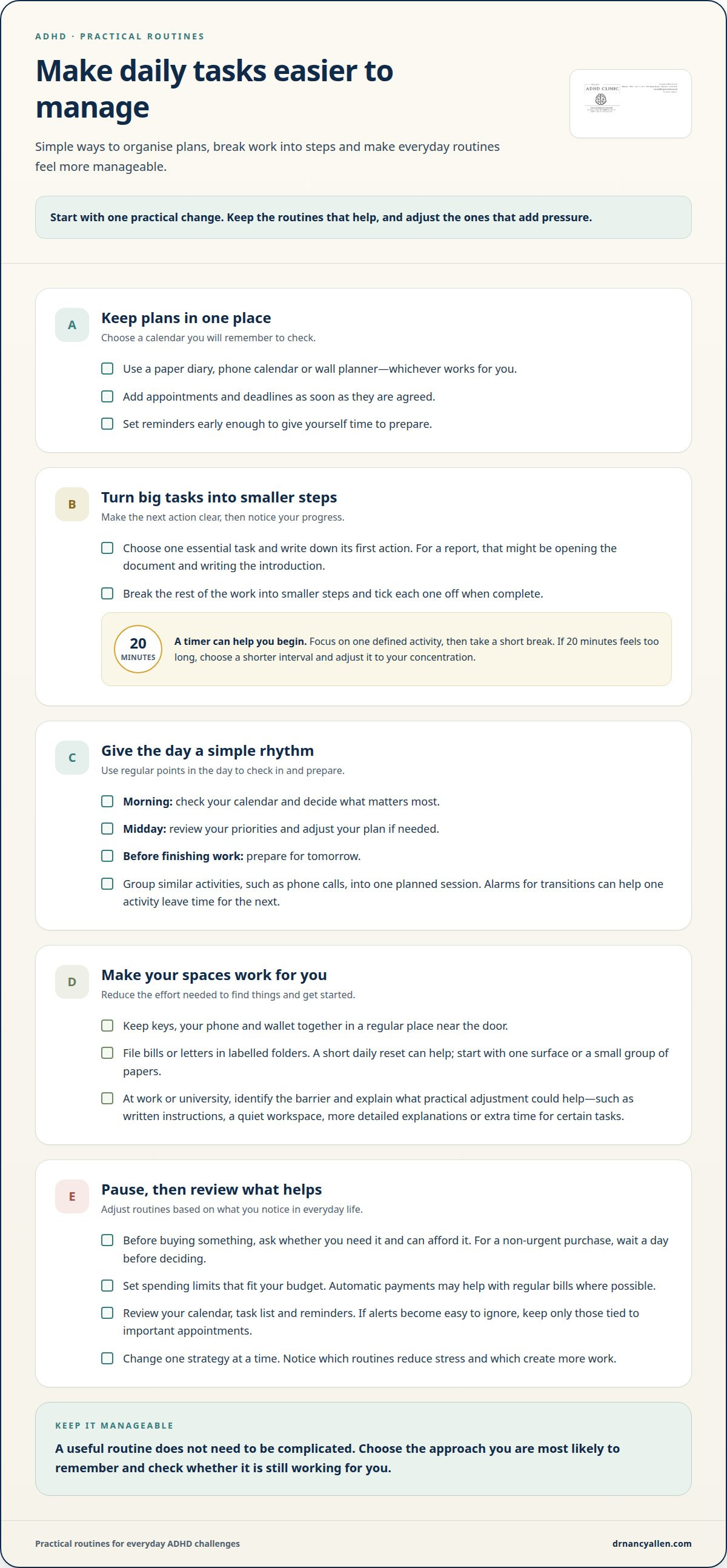
Make your day easier to plan by putting appointments and deadlines in one calendar. Add each commitment as soon as it is agreed, then set a reminder that gives you time to prepare. A paper diary, phone calendar or wall planner can all work. The best choice is the one you’ll remember to check.
At the start of the day, choose one essential task and write down its first action. “Finish report” may feel too big; “open the document and write the introduction” is clearer. Break the rest of the work into smaller steps, and tick each one off when complete. This makes progress visible without expecting everything to happen at once.
A timer can help you begin when a task feels difficult to approach. Try using a timer to work on one defined activity, then take a short break. Use each interval for one defined activity, such as answering emails or sorting paperwork. If 20 minutes feels too long, choose a shorter interval and adjust it to your concentration.
Build a simple schedule around regular points in the day. You might check your calendar in the morning, review priorities at midday and prepare for tomorrow before finishing work. Group similar activities, such as phone calls, into one planned session. Set alarms for transitions too, so one activity doesn’t take over time reserved for another.
At work or university in the UK, adults with ADHD can request reasonable adjustments, such as written instructions, a quiet workspace, more detailed explanations or extra time for certain tasks. First identify the specific barrier, then explain which practical change could help you manage it.
At home, give important items a regular place. Keep keys, a phone and a wallet together near the door, and file bills or letters in labelled folders. A short daily reset can reduce the rush before leaving home. Start with one surface or a small group of papers, rather than trying to reorganise everything.
Impulse shopping may be easier to manage if you pause between wanting and buying. Before purchasing, ask whether you need the item and can afford it. For non-urgent purchases, wait a day before deciding. Set spending limits that fit your budget, and consider automatic payments for regular bills where possible.
Notice which routines reduce stress and which create more work. If several phone reminders become easy to ignore, for example, keep only the alerts tied to important appointments. Review your calendar and task list regularly, then change one strategy at a time. Small adjustments can help you understand what supports your focus and daily responsibilities.
3. Exercise and physical wellbeing
Movement can give restlessness a constructive outlet and support mood. Adults with attention deficit hyperactivity disorder can choose an activity they enjoy, such as walking, cycling, dancing or gardening. Enjoyment matters: a realistic routine is easier to repeat. Start with a short walk, then notice whether movement affects your concentration, stress or anxiety. Choosing an activity you’ll return to can be one practical way to learn how to take control of your ADHD.
Aim for regular exercise that fits your routine and physical health. A daily 20-minute walk is one possible starting point, not a test to pass. If leaving home feels difficult, try a short indoor routine, gentle stretching or walking while listening to music. Choose a convenient time, such as after lunch, and make the activity easy to begin. The useful measure is whether the routine feels manageable enough to continue.
Outdoor activity combines movement with a change of setting. You might walk to a nearby shop, follow a familiar route through a green space, or garden for a short time. Notice which surroundings help you feel settled and which increase distraction. A simple plan, such as putting walking shoes by the door, can make it easier to get started.
Sleep is part of physical wellbeing, too. Adults with ADHD are advised to aim for 7-9 hours of sleep per night. A regular bedtime and a quiet, dark bedroom can support a steadier routine. Try keeping wake-up time consistent, then dim lights and reduce screen use before bed. If sleep remains difficult, record patterns to discuss with a healthcare professional.
Food choices can affect your energy throughout the day. Build meals around vegetables, fruit, whole grains and lean protein, such as eggs with wholemeal toast or lentils with vegetables. Regular meals can help avoid long gaps that leave you feeling tired or distracted. Notice whether your eating routines affect energy, attention or mood, rather than expecting a specific food to manage ADHD symptoms.
Exercise can help relieve stress and improve mood, supporting mental health alongside other care. It isn’t a substitute for ADHD assessment or treatment, but it can be part of a broader approach. If anxiety makes group activities uncomfortable, begin with a solo walk or quiet swim. Later, a class or walking companion might make movement more enjoyable.
Keep your expectations flexible. On a low-energy day, gentle stretching or a brief walk still counts as movement. On another day, you might choose cycling or a longer walk. If a health condition, pain or injury affects what feels safe, discuss suitable activity with a healthcare professional. If you’re considering how to take control of your ADHD, aim for a sustainable routine that supports wellbeing, not a perfect exercise schedule.
4. Mindfulness and relaxation
Mindfulness means paying attention to the present moment rather than automatically following every thought. For someone with attention deficit hyperactivity disorder, that might mean noticing a distraction, then gently returning to one chosen focus. The aim isn’t to empty your mind. Try practising during a familiar activity, such as making tea, and notice each step.
Start meditation with 2-3 minutes, then build gradually towards 10-20 minutes if it feels useful. Sit somewhere comfortable, set a quiet timer and focus on the feeling of breathing. When your attention wanders, notice that without criticism and bring it back. Repeating this simple sequence is the practice; losing focus doesn’t mean you’ve failed.
If sitting still feels uncomfortable, try mindful movement. During a short walk, notice the pressure of each footstep, nearby sounds and changes in the air. A body scan is another option: move your attention slowly from your feet to your shoulders, noticing tension without trying to force it away. Choose one approach and practise for a few minutes.
Progressive muscle relaxation gives the body a clear sequence to follow. Start with your hands: gently tense the muscles, release them, then notice the difference. Move on to your shoulders or jaw. Guided imagery is another option: picture a familiar, calming place and focus on details such as its colours, sounds and temperature.
A gratitude practice can be brief and specific. Set aside 60 seconds to recall one positive moment, such as a helpful conversation or finishing a small task. Name what you appreciated and why. This isn’t about dismissing difficult feelings; it’s a way to make room for a positive detail alongside the demands of the day.
Mindfulness resources include guided audio, written exercises and sessions with a suitably trained therapist. Choose a short recording with clear instructions, then practise in a quiet place where interruptions are less likely. If an exercise increases distress or frustration, stop and try a different technique. People experience mindfulness differently, and no single method suits everyone.
For adult ADHD, mindfulness can complement other support, rather than replace an agreed treatment plan. Research suggests meditation may help mood and attention, while evidence for alternative approaches remains limited. Keep a brief note after each practice: record the technique, how long you tried it and what you noticed. Discuss ongoing symptoms or treatment questions with a healthcare professional.
5. ADHD as a neurodevelopmental condition
ADHD is a neurodevelopmental condition, meaning it relates to how the brain develops and works. According to the National Health Service, ADHD symptoms usually start before age 12. The signs may be recognised later, though, especially if childhood difficulties were overlooked or became more noticeable as demands increased.
ADHD can affect attention, organisation, planning and emotional regulation. Someone might struggle to prioritise tasks, switch focus between activities or pause before acting. These patterns can affect school, work, relationships and home routines. The impact varies: one adult may find deadlines hardest, while another experiences restlessness or impulsive decisions more strongly.
The way symptoms appear can change across different stages of life. A child’s visible hyperactivity might become less obvious in adulthood, while difficulty managing time or completing tasks continues. Adults may also develop routines that help them cope, making difficulties less apparent to others. Looking at the impact on everyday life provides important context.
ADHD is not a measure of intelligence, effort or character. It can run in families, and genetic differences may contribute. Being born prematurely, before 37 weeks of pregnancy, is also linked to ADHD. These factors don’t establish whether a person has the condition; assessment considers symptoms, history and their impact across settings.
There is no single test that confirms ADHD. An assessment explores current difficulties, when they began and how they affect daily life. Earlier experiences matter for adults too. Old school reports or memories from relatives may help build a picture of childhood behaviour, particularly if attention problems weren’t recognised at the time.
Neurodiversity describes the different ways people’s minds work; it is not a diagnosis. This distinction helps separate identity and personal strengths from the clinical question of whether ADHD symptoms cause significant difficulties. A person may value their creativity or enthusiasm and still need support with planning, attention or impulsive behaviour.
Medication is one possible treatment, but it isn’t the definition of ADHD or the only way to manage it. Understanding the developmental pattern can help people describe their experiences and identify where support may be useful. For instance, noting how task-switching affects work and home life gives a clinician clearer information to explore during an assessment.
ADHD begins in childhood, but it can be diagnosed at any age. It can affect planning, organisation, prioritisation, decision-making, focus, switching attention and emotional regulation.
Dr Nancy Allen: Adult ADHD Assessment
Dr Nancy Allen’s Adult ADHD Assessment offers a way to explore persistent difficulties with attention, organisation or impulsivity. It may be helpful if these challenges affect work, relationships or daily routines, or if you want to understand whether ADHD could explain your experiences.
An assessment considers your symptoms, personal history and circumstances, then discusses appropriate options with you. It is an individual process, not a promise of a particular diagnosis or treatment. If you’re an adult seeking clearer insight into your experiences, an assessment can be a practical next step after trying everyday strategies.
Choose a next step that feels manageable
Taking control of your ADHD can begin with one clear decision: what would you like to understand or change next? Note a situation that regularly causes difficulty, then bring that example to a conversation with a healthcare professional. Starting with one focused point can make it easier to explain what matters to you.
Dr Nancy Allen offers Adult ADHD Assessment and Child ADHD Assessment, as well as Peri-menopause & Menopause Specialist Care. An individual assessment can help explore symptoms, history and circumstances, and support a discussion about appropriate options. It isn’t a substitute for urgent help if you’re in immediate danger.
If you’re ready to discuss your own concerns or a child’s assessment, contact Dr Nancy Allen. You can take this at your own pace, one considered step at a time.
Frequently Asked Questions
What is ADHD?
ADHD is a neurodevelopmental condition that can affect attention, activity levels and impulse control. Its presentation differs between people, and difficulties may be more noticeable in some situations than others. For example, someone may concentrate well on an absorbing interest but struggle to follow a lengthy meeting. An assessment considers the broader pattern and its effects, rather than treating one isolated behaviour as proof of ADHD.
What are practical strategies for managing ADHD symptoms day to day?
Choose strategies that reduce friction where a difficulty occurs. If you often forget items when leaving home, put a checklist beside the door; if interruptions derail a task, silence non-essential notifications during that work period. Learning how to take control of your ADHD can involve testing one change at a time and noticing whether it makes a specific responsibility easier to manage.
How can adults with ADHD improve focus, organisation and time management?
Reduce the number of decisions you need to make before starting a task. Gather the materials you need, close unrelated tabs and write down what “finished” will look like. For a meeting, keep a notepad beside you and record follow-up actions straight afterwards. These cues can make it easier to resume tasks after interruptions, without relying on memory for every detail.
What treatments are available for ADHD in the UK, including medication and therapy?
ADHD treatment may include medication, talking therapies or both, depending on a person’s needs and circumstances. Medication options include stimulants, such as methylphenidate, and non-stimulants, such as atomoxetine. A qualified specialist considers symptoms, health history and preferences when discussing treatment. If medication is prescribed, monitoring helps review its effects and identify concerns to discuss with the prescriber.
Can diet, exercise, sleep or mindfulness help manage ADHD symptoms?
These habits can support general wellbeing, but they aren’t substitutes for an ADHD assessment or individually planned treatment. Notice how your energy and concentration relate to meals, movement, sleep and relaxation, rather than expecting one change to resolve every difficulty. For example, a brief note about bedtime and next-day alertness may help you spot a pattern to discuss with a healthcare professional.
What are the benefits, side effects and risks of ADHD medication?
ADHD medication may help manage symptoms, but benefits and unwanted effects vary between people. A specialist should start and monitor it, including checking sleep, appetite, weight, pulse and blood pressure. Tell the prescriber about any changes.


Comments