


In Debt Due to ADHD? How to Take Back Control

Updated: 4 hours ago
What if debt isn’t proof that you’re careless, but a sign that managing money has become difficult to sustain? Impulsive spending, forgotten bills and unopened statements can leave you feeling stuck or ashamed. If you’re asking, “Am I in debt because of ADHD and what can I do about it?”, you’re not alone in wondering whether ADHD-related challenges could be part of the picture.
ADHD can affect planning, prioritising and pausing before acting, which may make some parts of money management harder. But debt alone doesn’t mean you have ADHD, and understanding a possible connection isn’t the same as blaming yourself. This article explains how ADHD may affect money management, how to identify debts that need attention first and how to choose a manageable next step. It also covers practical ways to organise bills and spending, and where to find UK debt support. If you’re concerned about ADHD more broadly, an adult ADHD assessment may offer clinical clarity, while debt advice can help you explore practical financial options.
Table of Contents
Could ADHD contribute to debt? Understand the link without blaming yourself
How ADHD can affect spending, bills and financial organisation
Which debts need attention first? Sort urgent bills from the rest
What can you do about ADHD-related debt? Start with small, practical steps
When should you seek ADHD assessment or clinical support for money difficulties?
Could ADHD contribute to debt? Understand the link without blaming yourself
Financial stress can make it hard to open a statement, plan a payment or talk about what’s happening. Debt isn’t proof that you’re irresponsible. If you’re asking, “Am I in debt because of ADHD and what can I do about it?”, ADHD may be one influence, but it is neither a diagnosis nor an inevitable path to debt.
ADHD-related differences in planning, working memory, impulse control and starting tasks can make some money-management demands harder. The overview of attention-deficit hyperactivity disorder describes symptoms and features associated with ADHD, but an overview cannot establish whether you have it. Income, living costs, health, life events and access to support also shape financial circumstances.
For another perspective on why money can feel difficult with ADHD, watch this explanation from Understood:
ADHD can be one factor in financial difficulties, but it’s rarely helpful or accurate to treat it as the sole cause. Several pressures may interact, and the reasons can differ from person to person.
Which ADHD-related difficulties can make money tasks harder?
Time blindness may make a payment date feel distant until it has passed, potentially leading to a missed bill or late fee. Working-memory demands can make it difficult to keep track of several balances, due dates and direct debits at once, particularly when details are spread across letters, apps and emails. Starting a task can be difficult too, so checking a balance or contacting a creditor may keep getting postponed.
Some people may also find it harder to pause before an unplanned purchase, especially when spending offers immediate relief or excitement. That isn’t true of everyone with ADHD, and impulsive spending alone doesn’t establish a cause. Small obstacles can accumulate, but they don’t define your character.
Does debt mean you have ADHD?
No. Debt, missed payments or spending patterns cannot diagnose ADHD. An assessment considers whether symptoms have been persistent, their history and their impact across settings, rather than relying on one financial problem. If similar attention, organisation or impulsivity concerns affect different parts of your life, you may wish to explore them with a clinician. Adult ADHD Assessment: A Comprehensive Guide to Seeking Clarity and Support explains what seeking assessment can involve. Clinical assessment can help you explore ADHD; debt advice addresses your financial options. They serve different needs.
How ADHD can affect spending, bills and financial organisation
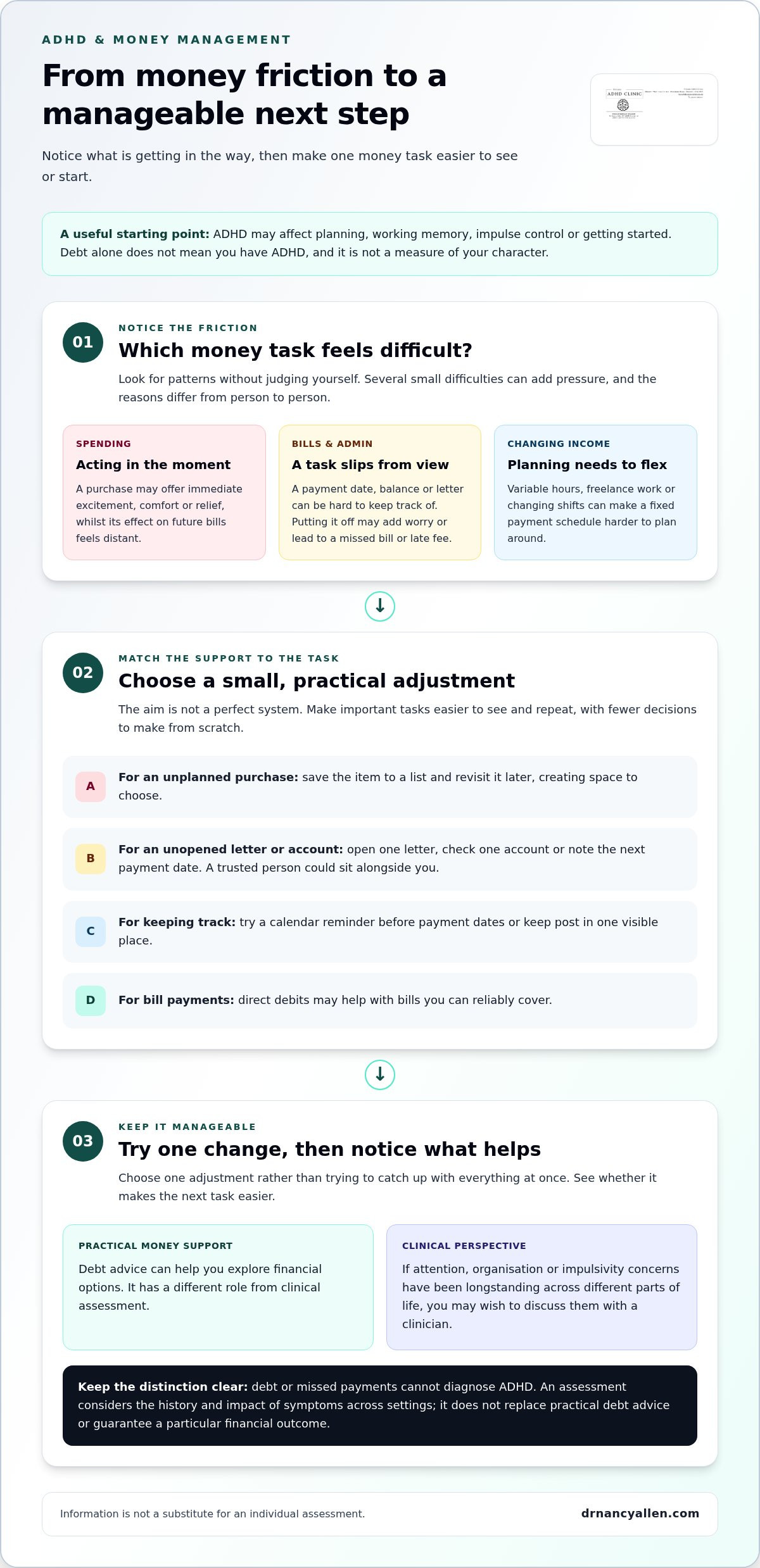
Financial difficulties often build through several small points of friction rather than one dramatic mistake. A purchase made for a quick lift, an unpaid bill that slips out of view and a change in income can each put pressure on the same budget. These experiences don’t happen to everyone with ADHD, and they can also occur for many other reasons. Research has explored links between ADHD and financial strain, including in this study of ADHD and financial difficulties, but an association alone doesn’t explain any one person’s circumstances.
If you’re asking, “Am I in debt because of ADHD and what can I do about it?”, look for patterns without judging yourself. Different difficulties call for different supports.
Impulsive spending, reward-seeking and delayed consequences
A purchase can offer an immediate sense of excitement, comfort or relief, whilst the effect on next month’s bills feels distant. For some people, acting quickly in that moment can make it harder to weigh up longer-term consequences. Rather than labelling this as reckless, notice what tends to happen before spending: perhaps boredom, stress, a targeted advert or an unexpected change in plans. Saving an item to a list and revisiting it later can create space to choose.
Missed bills, unopened post and avoidance
Financial admin can feel hard to start, especially when you’re unsure what a letter means or expect bad news. Putting it off may leave a balance or deadline unseen, adding worry and making the task feel even bigger. Aim for one brief check-in, not an exhausting catch-up: open one letter, check one account or note the next payment date. If it helps, ask someone you trust to sit alongside you while you do it.
Irregular income and systems that reduce effort
Variable hours, freelance work or changing shifts can make it harder to plan around a fixed payment schedule. If income arrives at different times, even a workable budget may need frequent adjustment. The aim isn’t to build a perfect system. It’s to make important tasks easier to see and repeat, with fewer decisions to make from scratch.
Predictable prompts and simpler routines can make bill administration easier by relying less on memory and last-minute decisions. Depending on what suits you, try a calendar reminder before payment dates, direct debits for bills you can reliably cover, or keeping post in one visible place. Choose one adjustment, then notice whether it makes the next task easier.
If these difficulties sit alongside longstanding concerns about attention or organisation in other areas of life, an adult ADHD assessment may help you explore them with a clinician. It can offer clinical clarity, but it won’t replace practical debt advice or guarantee a particular financial outcome.
Which debts need attention first? Sort urgent bills from the rest
If you’re thinking, “Am I in debt because of ADHD and what can I do about it?”, first consider which payment could have the most serious consequences if missed. The largest balance isn’t automatically the most urgent. Housing, essential household costs and some debts with legal consequences may need prompt attention, depending on your circumstances and where you live.
“Priority debt” describes debts where non-payment can have particularly serious consequences, not simply debts with the highest interest rate. Categories and processes differ across England, Wales, Scotland and Northern Ireland, so treat these examples as a starting point, not a definitive ranking.
What counts as a priority debt in the UK?
Housing arrears, council tax, energy bills and certain court-related debts can require early attention. By contrast, credit cards and overdrafts are usually unsecured borrowing, though they still need to be included in your overall plan. The consequences depend on the debt, the stage it has reached and your personal situation.
This is a broad guide, not a personal priority order. If you’re uncertain, speak to a free, reputable debt-advice organisation before agreeing to repayments. Don’t promise an amount you can’t afford after covering essential costs. The CHADD guide to managing money and ADHD offers general strategies, but debt options and rules need advice suited to your circumstances in the UK.
What information should you gather before asking for help?
A clear picture can help an adviser understand what needs attention. If you can, collect:
Creditor names, account details and current balances
Recent arrears letters, notices or court documents
Essential household costs, such as housing, food, energy and travel
Any regular income and when it usually arrives
You don’t need a perfect spreadsheet before asking for help. An incomplete list, or even one unopened letter, is a useful start. Keep account details and personal documents secure, and share them only through the debt-advice organisation’s appropriate channels. The aim is to understand the next safest step, not to solve everything in one sitting.
What can you do about ADHD-related debt? Start with small, practical steps
If you’re wondering, “Am I in debt because of ADHD and what can I do about it?”, you don’t need to solve everything at once. Focus first on making the next decision clearer, then take one step at a time.
Stabilise essentials. Work out what’s needed for housing, food, energy and other essential costs before agreeing to pay towards debts.
Make a debt list. Write down what you know, including creditor names, balances, arrears and any deadlines. An incomplete list is still useful.
Contact creditors. If you can, explain that you’re seeking advice and ask about your account. Don’t agree to a payment you can’t afford.
Choose one next action. It might be opening a letter, asking for advice or setting a reminder to make a call.
Your first financial action doesn’t have to fix the debt; it only has to make the next step easier to see. Don’t ignore court papers, enforcement notices or creditor communications. Note any dates and seek qualified debt advice promptly, as the right response depends on the notice and your circumstances.
Build a low-friction money system that fits your brain
Choose supports that reduce the need to remember and decide repeatedly. You could use a single visible place to track bills, calendar prompts ahead of due dates or direct debits for payments you can reliably afford. To add a pause before discretionary spending, try removing saved card details, waiting before buying or setting aside a planned amount for non-essentials. Keep what helps and change what doesn’t. These are practical experiments, not cures.
Where can you find debt advice and support?
MoneyHelper can help you find guidance, while StepChange and Citizens Advice are possible starting points for free debt advice. An adviser can help you understand your options and, where appropriate, communicate with creditors. The right route may vary across England, Wales, Scotland and Northern Ireland, as well as according to your circumstances.
If money difficulties sit alongside support needs related to ADHD, you may also find it helpful to read Is ADHD a Disability? Understanding Your Rights and Support in the UK (2026). This is separate from debt advice. For clinical clarity about longstanding ADHD-related difficulties, an adult ADHD assessment may be worth exploring. Explore an adult ADHD assessment with Dr Nancy Allen, a private GP with over 25 years of clinical experience. An assessment can help you discuss your broader needs, but it can’t guarantee a particular financial outcome or replace debt advice.
When should you seek ADHD assessment or clinical support for money difficulties?
Debt on its own isn’t a reason to conclude that you have ADHD. But if difficulties with attention, organisation, starting tasks or impulsivity have been present over time and affect several parts of life, such as work, home or relationships, it may be worth discussing them with a clinician. You don’t need to be certain ADHD is the explanation before asking questions.
Clinical assessment and debt advice address different needs. A clinician can explore whether ADHD may help explain a broader pattern of experiences; a debt adviser can help you understand your financial options. Neither replaces the other. An assessment may offer greater understanding, but it can’t guarantee a diagnosis, change your financial circumstances or resolve debt.
What can an ADHD assessment clarify?
An assessment involves exploring symptoms, personal history and how difficulties affect everyday life. Debt, spending habits or a single questionnaire can’t determine a diagnosis. A clinician considers the wider picture, including whether relevant experiences have been persistent and how they show up in different settings. For more on the process, read Adult ADHD Assessment: A Comprehensive Guide to Seeking Clarity and Support.
How to take a supported next step
If you choose to discuss ADHD, jot down a few examples beforehand. You might note what happens with bills or appointments, as well as any similar challenges with planning, time or organisation in other parts of your life. Include relevant history and questions you’d like answered. Your notes don’t need to be complete or perfectly organised; they’re there to help you explain what matters to you.
If you’re still asking, “Am I in debt because of ADHD and what can I do about it?”, it’s reasonable to seek support for each concern separately. A clinician can explore possible ADHD-related needs, while a free, reputable debt-advice organisation can discuss financial options. You can take either step first, depending on what feels most pressing.
Dr Nancy Allen is a private GP with over 25 years of clinical experience, offering adult ADHD assessments and personalised treatment planning. If clinical clarity feels like a helpful next step, you can explore adult ADHD assessment and personalised clinical support. There’s no need to have everything worked out before seeking information.
Take one clear step towards support
Debt can feel overwhelming, but it isn’t proof that you’ve failed. ADHD may contribute to difficulties with spending, remembering bills or organising finances, yet it’s only one possible influence. Start by identifying any urgent arrears and taking one manageable step, such as listing a debt or seeking free, reputable debt advice. You don’t need to untangle everything today.
If you’re still asking, “Am I in debt because of ADHD and what can I do about it?”, remember that debt can’t diagnose ADHD. A clinical assessment may help you explore longstanding difficulties across different areas of life, whilst a debt adviser can help with financial options. Each kind of support has a distinct role, and neither promises a particular outcome.
Dr Nancy Allen is a private GP with over 25 years of clinical experience, offering secure online consultations to patients across the UK. If exploring ADHD clinically feels like a helpful next step, explore adult ADHD assessment and personalised clinical support.
You deserve support without shame, and progress can begin with one step that feels manageable.
Frequently Asked Questions
Can ADHD cause debt?
ADHD can contribute to financial difficulties for some people, but it doesn’t inevitably lead to debt or explain every situation. Challenges with planning, remembering payment dates or pausing before purchases may make money tasks harder. Income, living costs, health and life events also matter. If you’re asking, “Am I in debt because of ADHD and what can I do about it?”, consider possible patterns without treating debt as proof of ADHD or personal failure.
Is impulsive spending a sign of ADHD?
Impulsive spending can occur alongside ADHD, but it doesn’t prove someone has the condition. People may spend for many reasons, including stress, excitement or a desire for immediate comfort, and experiences differ. An ADHD assessment considers a broader pattern of persistent symptoms, personal history and impact across settings. If spending concerns you, noticing triggers and building in a pause before purchases may help you understand your habits.
What should I do first if I am in debt and have ADHD?
Start by checking whether essential bills or urgent notices need attention, then make a simple list of creditors, balances and deadlines. It doesn’t need to be complete. Contact a free, reputable debt-advice organisation for guidance before agreeing to repayments you may not be able to afford. Don’t ignore court papers or enforcement notices. If opening everything feels too much, begin with one letter or ask someone you trust to sit with you.
Which debts should I pay first in the UK?
Prioritise by the consequences of non-payment, not simply by the balance. Housing costs, council tax, energy bills and some debts involving legal action may need prompt attention. Credit cards and overdrafts still matter, but are generally unsecured borrowing. The precise rules and processes can differ across England, Wales, Scotland and Northern Ireland, and your circumstances affect what to address first. A qualified debt adviser can help you work out a suitable order.
Can ADHD medication help with debt or spending?
ADHD medication is prescribed to help manage ADHD symptoms, not as a debt treatment. Some people may find that symptom support makes certain daily tasks easier, but effects vary and medication can’t guarantee changes to spending, bills or debt. Discuss potential benefits, risks and any concerns with your prescribing clinician. Don’t start, stop or change medication to manage finances without clinical advice. For debt itself, seek guidance from a qualified debt-advice organisation.
Where can I get free debt advice in the UK?
MoneyHelper can provide money guidance and signposting, while StepChange and Citizens Advice are possible starting points for free debt advice. An adviser can help you understand your options and, where appropriate, communicate with creditors. The right advice route may depend on where you live, the type of debt and your circumstances, as processes differ across UK nations. Gather any letters or account details you can, but an incomplete list shouldn’t stop you asking for help.



Comments