


Menopause Causing Low Mood: Causes, Coping and HRT

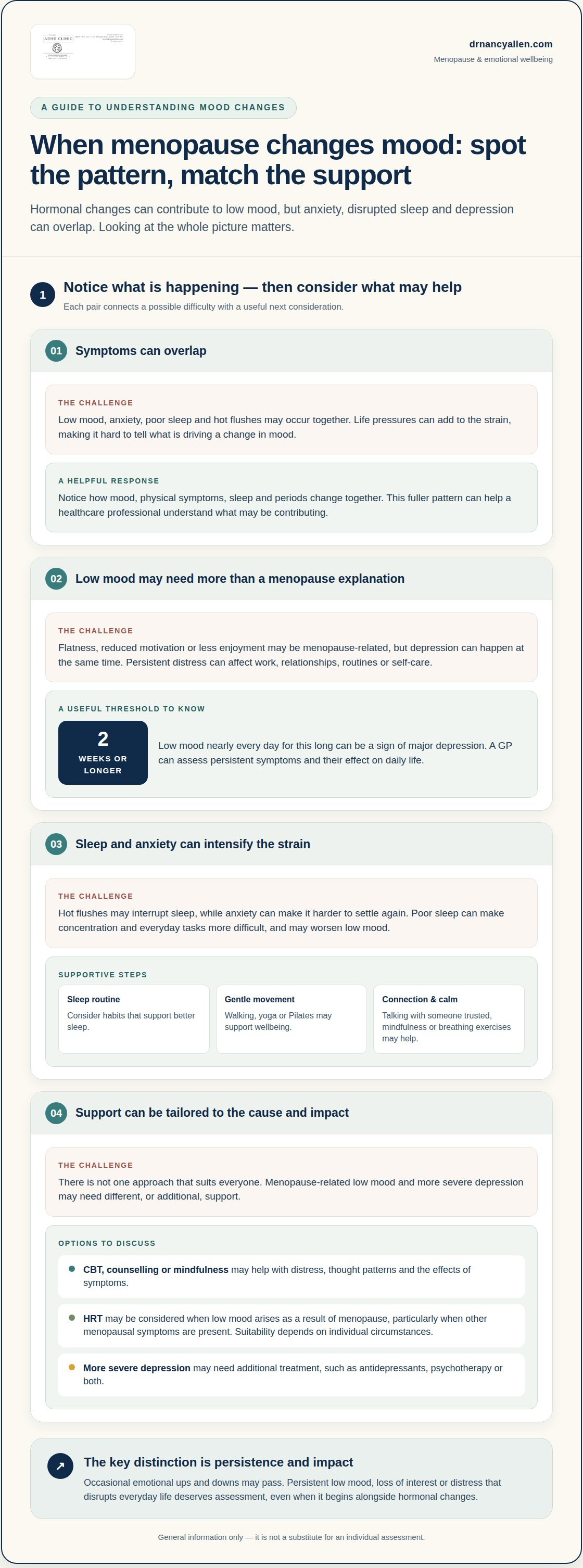
Low mood during menopause isn’t always “just hormones”. If menopause is causing low mood, hormonal changes may be part of the picture, but depression and anxiety can also overlap with menopausal symptoms. Low mood nearly every day for two weeks or longer can be a sign of major depression, so consider how you’re feeling overall.
It can be hard to tell what’s behind a change in mood, particularly when poor sleep, hot flushes, anxiety or life pressures are also taking their toll. Feeling this way doesn’t mean you’re imagining it, and you don’t have to work it out alone.
This article explains how menopause-related mood changes may differ from depression, why anxiety and disrupted sleep can add to the strain, and what may help. It also looks at when HRT could be considered and why a personalised assessment matters if symptoms persist or affect daily life.
Table of Contents
Am I depressed or menopausal?
Yes, menopause can contribute to low mood and anxiety, and depression can occur at the same time. Because symptoms overlap, consider how persistent they are and how they affect daily life.
Mood changes can begin during perimenopause, sometimes without a clear link to periods. They may continue through menopause, which is reached 12 months after the last period.
Low mood and clinical depression
Menopause-related low mood may feel like flatness, reduced motivation or less enjoyment. Clinical depression is more persistent and affects daily functioning. The distinction matters: symptoms of depression deserve assessment, even if they begin alongside hormonal changes.
Major depression can involve low mood nearly every day for 2 weeks or longer. Menopause may worsen an existing mental health problem or bring new symptoms, though this does not happen to everyone. A history of depression also matters: women with previous depression are nearly five times more likely to receive a major depression diagnosis during menopause.
During perimenopause, mood symptoms can occur for years without following the menstrual cycle. If hopelessness, tearfulness or loss of interest disrupts work, relationships or self-care, speak with a GP rather than assuming hormones explain everything.
Antidepressants and depression treatment
Antidepressants treat depression and can also help some people with anxiety. They may be appropriate when depression is diagnosed, including during menopause, but treatment should reflect your symptoms and their impact.
These medicines may take at least two weeks to begin helping, with a good effect often starting by four weeks. Some people continue to improve up to eight weeks later or longer. Don’t stop prescribed antidepressants without medical support, as gradual withdrawal may be needed.
Cognitive behavioural therapy, or CBT, can be used alongside depression treatment. If low mood seems closely linked to menopause, discuss the full pattern of symptoms, including periods, sleep and anxiety, with a healthcare professional. This can help distinguish overlapping causes and identify suitable support.
Sleep disruption and anxiety
Sleep disruption means difficulty getting enough restorative sleep; anxiety can involve worry, rumination or feeling overwhelmed. Both can intensify low mood, while poor sleep may make concentration and everyday tasks harder.
Hot flushes can interrupt sleep, while anxiety can make it harder to settle again. Poor sleep can make someone up to 10 times more likely to become depressed. The Menopause Charity advises keeping alcohol intake within the recommended limit of 14 units a week.
If you may act on suicidal thoughts or have seriously harmed yourself, seek emergency help now. In England and Wales, contact emergency services or attend an emergency department; urgent mental health support routes differ across the UK. If you’re worried about someone, stay with them while help is arranged.
How Can I Cope With the Emotional Changes of Menopause?
Options for low mood include cognitive behavioural therapy (CBT), counselling, mindfulness and, where appropriate, HRT. The right approach depends on your symptoms, their effect on daily life and whether depression is also present.
Emotional changes during menopause
Emotional changes can include sadness, tearfulness, irritability, reduced confidence, forgetfulness and difficulty concentrating. They matter when they interfere with work, relationships, routines or activities you usually enjoy.
For example, brain fog may make it harder to follow a conversation or remember an appointment, while fatigue can make everyday tasks feel demanding. These experiences can affect self-esteem, particularly if you feel unlike yourself or struggle to keep up with familiar responsibilities.
Menopause symptoms can interact, too. Hot flushes, discomfort or pain may disturb sleep and leave you tired, making concentration and emotional resilience more difficult. Tracking how physical symptoms and feelings change together can give you a clearer picture to discuss with a healthcare professional.
For some people, daily functioning is the key difference: occasional emotional ups and downs may pass, while persistent distress can affect relationships or self-care. If symptoms disrupt everyday activities, discuss them with a GP rather than managing them alone.
Practical support can include talking with someone you trust, making time to relax and staying socially connected. Breathing exercises or mindfulness may help settle racing thoughts; gentle activities such as walking, yoga or Pilates can support wellbeing.
Treatments for psychological symptoms
Psychological treatments offer ways to address distress, unhelpful thought patterns and the effects of menopause symptoms. CBT may help you recognise links between thoughts, feelings and behaviour, then practise more manageable responses to difficult situations.
Counselling provides space to explore changes, pressures and relationships. Mindfulness and relaxation exercises can help some people respond to stress with greater awareness. These approaches can complement practical steps such as improving sleep routines, moving regularly and keeping in touch with others.
HRT may be considered when low mood arises in connection with menopause, particularly if other menopausal symptoms are present. NICE menopause guidance says HRT should be considered for low mood arising as a result of menopause. Its suitability depends on individual symptoms and health circumstances.
HRT alone may not be enough for more severe depression. You may need additional treatment, such as antidepressants, psychotherapy or both. Discussing the full pattern of symptoms can help distinguish menopause-related changes from depression and shape a treatment plan suited to your needs.
There isn’t one approach that suits everyone. A clinician can consider your mood, physical symptoms, sleep, medical history and the effect on daily life when discussing treatment options.
Hormonal and life-stress causes of mood changes
Menopause-related mood changes can reflect hormonal shifts, everyday pressures or both. Speak to your GP if low mood affects daily activities or relationships, or an existing mental health problem becomes harder to manage.
Hormonal changes and mood
During perimenopause, changing hormone levels can affect mental health as well as physical symptoms. Ovarian hormone production declines, which may affect brain systems involved in mood, anxiety, memory and libido.
That connection can help explain why mood changes sometimes appear alongside brain fog or disrupted sleep. About 4 in 10 women experience mood symptoms during perimenopause that are similar to PMS. These symptoms may not follow a regular cycle, so a clear monthly pattern isn’t essential.
Memory lapses and concentration difficulties can feel unsettling, especially during a demanding workday or conversation. Brain fog can affect your ability to remember information, find words or organise thoughts. These changes are often temporary, but persistent or worsening problems deserve discussion with a healthcare professional.
Life stress and mood changes
Life stress means pressures outside hormonal changes that can affect emotional wellbeing. Work demands, relationship difficulties, money worries, health concerns and caring responsibilities may all contribute to low mood.
For someone in their 40s or 50s, several pressures may coincide: managing a demanding job, supporting children and caring for an ageing parent. Hormonal symptoms can add strain to an already difficult period. Recognising these factors doesn’t dismiss menopause; it gives a fuller picture of what may be affecting mental health.
Try noting your mood, physical symptoms and major pressures together. For example, record whether difficult feelings intensify after poor sleep, a hot flush or a stressful workday. This can help a GP spot possible patterns and discuss which concerns need attention.
Support can include practical changes as well as clinical care. Regular exercise, such as walking, yoga or Pilates, may support mood and general wellbeing. A balanced diet with fresh fruit and vegetables, relaxation exercises and contact with supportive people can also help. Choose manageable changes, such as a short walk or a conversation with someone you trust.
Alcohol and caffeine can affect sleep, while poor sleep may aggravate irritability and concentration difficulties. Notice whether evening caffeine or alcohol coincides with restless nights, then discuss persistent sleep problems with a healthcare professional. Addressing sleep can be one useful part of supporting emotional wellbeing.
Seek help rather than waiting for a perfect explanation. A GP can consider hormonal symptoms, life pressures, memory changes and mental health together, then discuss appropriate support. If low mood affects relationships, work or daily tasks, describe those specific effects at your appointment.
Overlapping symptoms, including anxiety and poor sleep
Anxiety, tiredness and low mood can overlap during menopause, making it harder to identify what needs attention. Considering sleep, physical symptoms and daily routines together can reveal useful patterns.
Sleep disruption and night sweats
Night sweats are episodes of sweating during sleep that can wake you or make it difficult to settle again. A disrupted night may leave you with less energy for work, family responsibilities or exercise the next day.
Hot flushes can interrupt sleep, and repeated waking may contribute to daytime irritability, anxiety and difficulty concentrating. A simple sleep note can help: record when you wake, whether sweating is involved and how rested you feel the following morning.
Sleep and mental wellbeing
Sleep and mental wellbeing affect each other: poor-quality rest can make anxiety and low mood harder to manage, while distress can interfere with sleep. Poor sleep can make someone up to 10 times more likely to become depressed.
Notice what may be affecting rest, such as late caffeine, alcohol or screen use before bed. Caffeine can affect sleep for up to 8 hours after it is consumed; avoiding screens during the hour before bedtime is one habit to try.
Anxiety during menopause can involve rumination, intrusive thoughts, panic or feeling overwhelmed. For example, repeatedly worrying about a work task at night may delay sleep, and tiredness can make the task feel harder the next day. Recognising this cycle can help explain why symptoms seem to reinforce one another.
Periods may provide context, although mood and sleep changes don’t always follow a clear cycle. If symptoms fluctuate, note when they occur alongside hot flushes, waking or stressful events. This gives a GP a clearer account than trying to remember every difficult night during an appointment.
Regular movement, nutritious meals and social contact can support wellbeing. Walking or yoga can fit around daily routines, and a balanced diet with fruit and vegetables offers a practical foundation. These habits support health but aren’t a substitute for assessment if anxiety or depression affects everyday life.
Talking therapies, including cognitive behavioural therapy (CBT), can help address distress and unhelpful thought patterns. A therapist may help you identify triggers, practise ways to respond to anxious thoughts and build coping strategies. Discuss therapy with a GP if symptoms persist, worsen or affect work, relationships or sleep.
If thoughts of suicide arise, tell someone you trust and seek urgent professional help. If you may act on those thoughts or are in immediate danger, contact emergency services or go to an emergency department. Someone you trust can stay with you while urgent help is arranged.
HRT for menopause-related low mood
If menopause is causing low mood, HRT may be one option to discuss, particularly when mood changes occur alongside other menopause symptoms. Potential benefits and risks depend on your health circumstances, treatment preferences and the symptoms affecting daily life.
Potential mood benefits of HRT
Hormone replacement therapy (HRT) replaces hormones that decline during menopause, including oestrogen. It may help when low mood is predominantly linked to hormonal changes, particularly during perimenopause.
Understanding whether menopause is causing low mood involves looking at symptom patterns and how they change over time. When hormone treatment is tried first, a response should be seen within 2-4 weeks, giving a timeframe for discussing progress and next steps.
At a review, describe mood changes alongside any shifts in sleep, hot flushes or other symptoms. This gives a clearer picture of what has improved and what still affects daily life, helping shape a discussion about continuing or adjusting your approach.
HRT isn’t suitable for everyone. Before treatment begins or changes, a clinician can weigh possible benefits against your health history, current medicines and individual concerns.
Risks of HRT for mood symptoms
HRT risks are possible unwanted effects or health concerns associated with treatment. The balance depends on your health history, the type of HRT and the symptoms being treated.
Before starting or changing treatment, discuss previous health conditions, medicines and any concerns you have. These details help inform a balanced decision, especially if you’re considering HRT mainly for mood rather than several menopause symptoms.
If your mood remains persistently low, discuss it separately rather than assuming HRT addresses every cause. A review can consider whether menopause is causing low mood, whether other factors may be involved and what further support may be appropriate. Don’t stop or change prescribed treatment without medical advice.
If you’re considering hormone treatment or need an HRT review, discuss menopause-related mood symptoms through Peri-menopause & Menopause Specialist Care. A consultation can consider your symptoms, history and treatment options together.
Dr Nancy Allen: Peri-menopause & Menopause Specialist Care
Dr Nancy Allen’s Peri-menopause & Menopause Specialist Care gives you space to discuss low mood alongside other menopause symptoms. A consultation considers your symptoms, health history and circumstances, then explores appropriate options, including HRT or a review of current treatment where relevant.
This may be a helpful next step if mood changes persist, affect daily life, or leave you unsure whether menopause, sleep or another factor is involved. The aim is to understand the whole picture and discuss care collaboratively, rather than assume one explanation or treatment fits everyone. Consultations are available in person or online where appropriate.
If you’d like to discuss your symptoms and possible next steps, contact Dr Nancy Allen.
Take a thoughtful next step
If menopause is causing low mood, you don’t have to decide on your own whether hormones explain everything. A useful next step is to bring together what you’ve noticed, what affects your everyday life and what you’d like help with. This can make a conversation about care more focused and give you space to consider options at your own pace.
Dr Nancy Allen offers Peri-menopause & Menopause Specialist Care, alongside Adult ADHD Assessment and Child ADHD Assessment. For menopause concerns, a consultation can focus on your symptoms, health history and treatment questions. If you’d like to explore that support, contact Dr Nancy Allen to discuss your next step.
Seeking help is a practical way to begin making sense of changes and finding a way forward that feels right for you.
Frequently Asked Questions
Can Hormone Replacement Therapy Help During Menopause?
Yes, HRT may help when low mood is linked to menopause, and NICE recommends considering it for this reason. It isn’t a universal treatment for depression, so a discussion should cover your mood, other menopause symptoms, medical history and treatment preferences. For example, if you’re seeking help for low mood alongside hot flushes, you may want to discuss both concerns together. More severe depression can require additional treatment.
How do I know whether menopause is the problem?
Consider when changes began and what else has changed, rather than relying on one symptom alone. A note of mood, sleep, periods, hot flushes and stressful events can help show whether symptoms coincide. For example, jot down whether low mood follows a run of disrupted nights or appears alongside changing periods. Take this account to a GP, who can consider menopause and other possible explanations.
Which hormonal and life changes during menopause can affect mood?
Changing ovarian hormones can affect mood and emotional wellbeing, while other symptoms may add to the strain. Life events matter, too: a change in caring duties, a relationship difficulty or a new health concern may coincide with menopause. These influences can overlap rather than having one clear cause. Naming what has changed, including symptoms and circumstances, gives a GP a useful starting point for discussing support.
How common are low mood and depression during menopause in the UK?
Low mood and depressive feelings are recognised during menopause, but they don’t affect everyone in the same way. A personal history of depression is relevant, as symptoms can become harder to manage for some people. If you’re concerned, describe how long the change has lasted and what it affects, such as relationships, work or routine tasks. A GP can assess your experience rather than rely on a general estimate.
How can you tell menopause-related low mood from clinical depression?
Symptoms can overlap, so duration, intensity and impact on daily life all matter. Low mood nearly every day for two weeks or longer can be a sign of major depression. Note changes such as withdrawing from people, losing interest in usual activities or struggling with responsibilities. Share these details with a GP, especially if you’ve experienced depression before or your symptoms are worsening.
What other symptoms may accompany menopause-related mood changes?
Mood changes may occur alongside anxiety, irritability, reduced confidence or difficulty concentrating. Physical symptoms can include hot flushes and night sweats, which may disturb rest and affect how you feel the next day. For example, waking repeatedly may leave you tired and less able to focus at work. Keeping a brief record of emotional and physical changes can help you explain the combination at an appointment.
Can lifestyle changes such as exercise, sleep and diet improve mood during menopause?
These steps can support wellbeing, but they aren’t a substitute for help with persistent or severe symptoms. Regular movement, such as a walk, and balanced meals with fruit and vegetables are practical starting points. A calming bedtime routine may support better rest, and reducing late caffeine may be worth trying. Talking therapies, including cognitive behavioural therapy, are another option to discuss with a GP when emotional changes affect everyday life.



Comments