


Why Children Kick and Spit: ADHD Signs and Support

A toddler who kicks and spits isn’t necessarily showing signs of ADHD. Hitting, kicking, biting and spitting can happen when a young child feels overwhelmed and hasn’t yet developed the impulse control to stop themselves; according to the NHS, aggressive behaviour can include hitting, spitting, kicking or throwing things. The behaviour matters, but on its own it doesn’t establish a diagnosis.
It can be upsetting or worrying when your child lashes out, especially if someone gets hurt or it happens repeatedly. You can set a clear boundary without shouting or labelling your child as bad: calmly stop the behaviour and help them put their feelings into words.
This article explains why toddlers may act aggressively, how to respond during a tantrum and what patterns may be useful to notice. It also explores when a child’s behaviour may need a closer look, including whether ADHD could be part of the picture.
Table of Contents
2. Why toddlers hit, kick, bite or spit
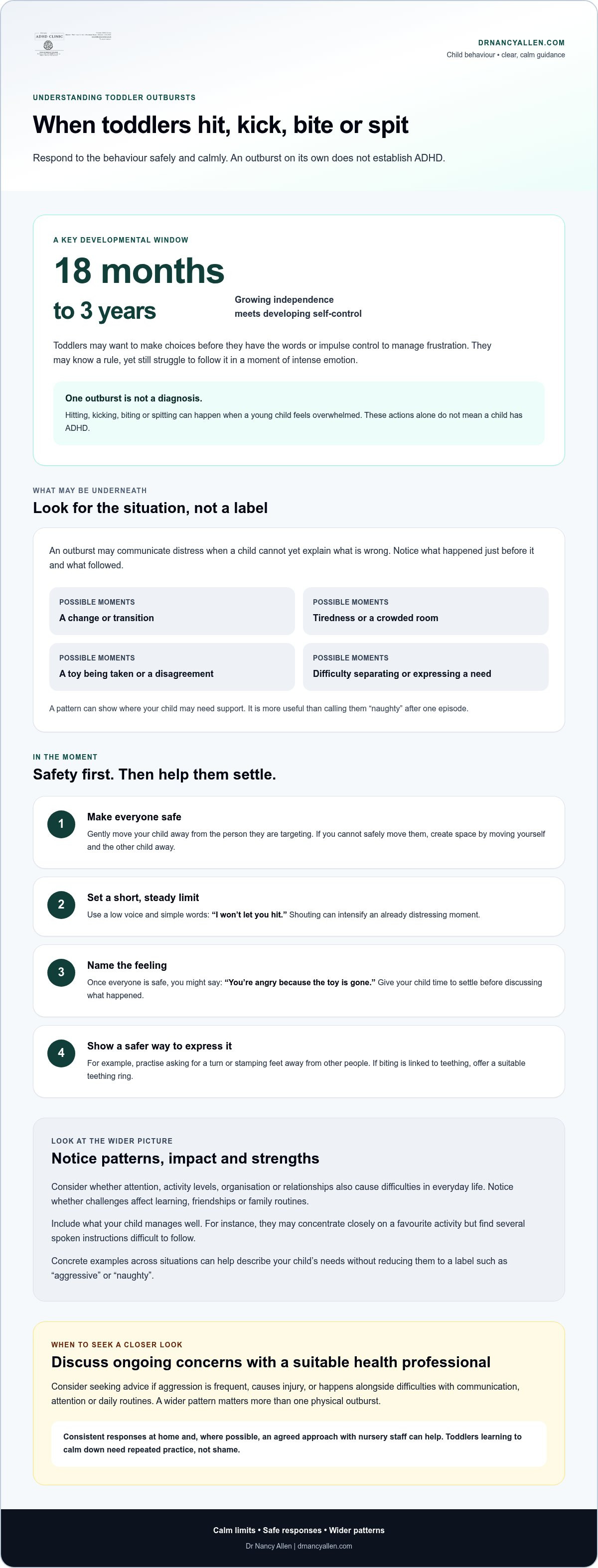
When a toddler kicks and spits, it can feel deliberate, especially if someone is hurt. Yet young children may act before thinking and then struggle to explain what happened. The NHS includes hitting, spitting, kicking and throwing things among aggressive behaviours. Respond calmly and consistently, but remember that these actions alone do not mean a child has ADHD.
Between 18 months and 3 years, toddlers begin to understand that they are separate people from parents and other important adults. They may want to make choices, but lack the words and self-control to manage frustration when someone says no. For example, a child who can repeat “I mustn’t hit” may still lash out when a toy is taken away.
To understand how ADHD and physical outbursts can be connected, watch this explanation from the Child Mind Institute:
A toddler’s brain does not yet have the self-control of an older child or adult. The prefrontal cortex, which helps people pause and consider what to do, is still developing. During a tantrum, strong emotions can take over before a toddler can follow a rule they already know. That helps explain why saying “gentle hands” may not prevent pushing in the heat of the moment.
Distress can also drive aggression. A child may kick when a parent leaves, bite when another child grabs a toy, or spit when they feel overwhelmed. At 30 months, Bella pushed away a friend and later hit a teacher while distressed about her mother leaving. The behaviour communicated distress, even though it wasn’t a safe way to express it.
Notice what happens before and after an incident. For example, note whether hitting follows a difficult transition, tiredness, a crowded nursery room or a disagreement over toys. A pattern may show that your child needs help with a particular situation, such as separating from a parent or finding words for anger. This is more useful than labelling them “naughty” after one episode.
For a parent or teacher, immediate safety comes first. Gently move the child away from the person they’re targeting and set a short, steady limit: “I won’t let you hit.” If you cannot safely move the child, create space by moving yourself and the other child away. Keep your voice low, as shouting can intensify an already distressing moment.
Once everyone is safe, help your child recognise the feeling behind the action. You might say, “You’re angry because the toy is gone,” then show a safer way to express it, such as asking for a turn or stamping their feet away from others. If biting is linked to teething, offer a suitable teething ring. During a tantrum, use simple words and give your child time to settle before discussing what happened.
Consistent responses matter more than a long lecture after each incident. Set the same clear limit at home and, where possible, agree on a similar approach with nursery staff. Toddlers learning to calm down need repeated practice, not shame. If aggression is frequent, causes injury or occurs alongside difficulties with communication, attention or daily routines, discuss the pattern with a suitable health professional.
A toddler may know the rule and still lack the impulse control to stop themselves from doing something they want. That gap between knowing and doing matters: repeating a rule does not mean a child can follow it during a moment of intense emotion. Tantrums are temporary, while the prefrontal cortex and skills related to impulse control and emotional regulation continue to develop. Adults can treat the behaviour as a difficulty with control while still setting a clear limit on hitting, biting, kicking or spitting.
Toddlers may act aggressively when overwhelmed by distress or feelings such as anger or jealousy. Janet Lansbury advises adults not to treat a child’s impulse to bite as a defect in the child. Maggie Dent says boys who struggle with aggressive behaviour, especially those under 6, lack impulse control rather than intentionally hurting others. These perspectives do not make the behaviour safe or mean that adults should ignore it. They can help adults separate the child from the action: stop the behaviour, protect anyone at risk and respond without defining the toddler by an impulsive moment. A calm limit can make clear that hurting is not allowed, while recognising that the child may not yet be able to manage the impulse alone.
Your child
To understand your child’s needs, look beyond a single physical outburst. Consider whether attention, activity levels, organisation or relationships also cause difficulties in daily life. For example, regularly losing school belongings, interrupting conversations and struggling to stay seated may provide a broader picture than one episode of kicking. These observations can help distinguish an isolated behaviour from wider concerns worth discussing.
Aggression alone does not identify ADHD. A child may hit during one difficult moment without ongoing difficulties with attention or impulse control. Conversely, a child with ADHD may find schoolwork, waiting or social interactions challenging without ever hitting or spitting. Consider how your child manages different demands and whether difficulties affect learning, friendships or family routines.
Notice what your child manages well as well as what feels difficult. They may concentrate closely on a favourite activity but struggle to follow several spoken instructions. They might be lively during a club and quiet in class. Concrete examples like these describe strengths and support needs without reducing your child to a label such as “aggressive” or “naughty”.
Your child’s own account can provide important context. Once they’re calm, try a gentle invitation rather than asking a series of questions: “Would you like to draw what happened?” A picture, short conversation or pretend-play scene may help your child communicate something they find hard to explain. Don’t press for an answer if they aren’t ready to talk.
Teachers can offer a useful perspective on learning and relationships. Instead of asking only whether your child behaves well, ask for specific examples: how they manage group instructions, wait for a turn or move between classroom activities. A teacher might notice that your child joins discussions enthusiastically but misses the next instruction. Such details can clarify where support could help.
When discussing concerns with a professional, share strengths and difficulties together. For instance, explain that your child enjoys creative tasks, finds written instructions confusing and becomes upset after disagreements with friends. This balanced account gives a fuller picture of their day and helps adults consider whether communication, learning demands or attention need closer exploration.
Keep conversations about behaviour separate from your child’s sense of worth. “That action hurt someone” describes what happened; “you’re a bad child” turns an action into an identity. If your child says, “I’m always in trouble,” acknowledge their feelings and remind them that adults are working with them to understand what’s difficult.
Look for changes over time, too. A child who previously enjoyed school but now avoids talking about lessons may need support with something beyond behaviour. Share the change with the school or a suitable health professional, along with examples of what your child says and does. You don’t need to settle on an explanation before raising a concern.
If home and school describe very different experiences, that difference is useful information, not proof that either account is wrong. Ask what changes between settings, such as classroom demands, adult support or the way instructions are given. Understanding these contrasts can guide an individual discussion about your child’s needs and suitable practical support.
That action hurt someone, but it does not make your child a bad person. Age and context can help frame what you observe: the article describes children between 3 and 7 years old as potentially experimenting with cause and effect when they act out, while the child described in the letter was 2.5 years old. These details do not explain every incident. Parents are advised to identify and observe situations that may trigger a young child’s aggression. Stressful situations are a possible cause of aggressive behaviour in young children, so consider whether an episode happens around a situation the child finds stressful. Note the circumstances without assuming a cause.
A commenter said her 8-year-old child went to bed normally and was happy in their own bedroom. Recording what is going well alongside troubling behaviour can help keep the picture balanced. Parents are advised to intervene immediately when a child behaves aggressively. Immediate intervention responds to the behaviour in the moment, while careful observation may help identify situations that trigger it. Once your child is calm, you can use those observations to describe what happened and consider which situations may need attention.
Dr Nancy Allen: Adult ADHD Assessment
Dr Nancy Allen’s Child ADHD Assessment may be a next step if concerns about your child’s attention, activity or impulsivity persist and affect daily life. It offers an opportunity to discuss their symptoms, history and circumstances in context, rather than drawing conclusions from a single incident of kicking or spitting.
The assessment can explore whether ADHD may be relevant and help you discuss appropriate options. It does not replace support from your child’s school or usual healthcare team, and general information cannot determine an individual diagnosis.
To discuss whether an assessment suits your child’s situation, contact Dr Nancy Allen.
Choose a thoughtful next step
If your child kicks and spits repeatedly, consider what could make the next difficult moment safer and easier to understand. A brief note about the setting, what happened beforehand and what helped afterwards can support a useful conversation with a health professional. You don’t need to have all the answers before asking for guidance.
Dr Nancy Allen offers Child ADHD Assessment for families exploring ongoing concerns, as well as Adult ADHD Assessment and Peri-menopause & Menopause Specialist Care. The assessment provides an opportunity to discuss symptoms, history and circumstances and consider appropriate options together. It does not replace support your child may need from school or their usual healthcare team.
If you’d like to consider whether an assessment could help clarify your child’s needs, explore Dr Nancy Allen’s practice. Taking a calm, informed next step can help you move forward with greater understanding and confidence.
Frequently Asked Questions
What about the hitting, kicking and screaming?
Hitting, kicking and screaming do not automatically mean your child has ADHD. After an incident, focus on repairing any harm in a way that suits your child’s age. For example, they could help pick up scattered toys or ask whether someone would like their toy returned. A forced apology may teach little; instead, guide your child to recognise the effect of their actions and take a small, meaningful step towards making things right.
What does “kicks and spits” mean?
It describes a young child kicking or spitting, which may happen when they feel overwhelmed or struggle to control an impulse. This behaviour alone does not establish ADHD.



Comments