


ADHD Afternoon Crashes: What to Ask Your Prescriber

Updated: 11 hours ago
Could an afternoon crash be linked to your ADHD medication, or might something else be contributing? A sudden dip in focus, energy or mood can feel unsettling, especially when it disrupts the rest of your day. Exploring Afternoon Crashes and What to Discuss With Your Prescriber starts with treating the dip as a pattern to understand, not a reason to change medication on your own.
If symptoms appear as medication effects change, the timing may be useful to share. Sleep, meals, stress and other factors can also affect how you feel, so one difficult afternoon doesn’t necessarily point to a single cause. Your experience is worth discussing, even if you’re unsure which details matter.
This guide will help you describe what happens and when, keep a simple record for a medication review, and prepare clear questions for your prescriber. You’ll also learn about patterns that may help distinguish wearing off from rebound, what a clinician might explore, and when to seek urgent help rather than wait for a routine appointment. Don’t adjust your dose or timing without advice from the clinician responsible for your care.
Table of Contents
What can an ADHD medication afternoon crash feel like?
A difficult afternoon dip is worth describing, but it doesn’t identify one cause by itself. People use “afternoon crash” to describe a noticeable change later in the day in their ADHD symptoms, energy or mood. The phrase describes an experience, not a formal diagnosis or proof that medication is responsible.
Some people notice familiar difficulties returning; others mainly feel tired, less focused or more irritable. Your experience may not match anyone else’s, and that’s all right. Describe it in your own words rather than trying to make it fit a label.
This video discusses the medication “crash” concept. Treat it as general information, not a diagnosis or advice to alter your treatment.
Which changes might someone notice in the afternoon?
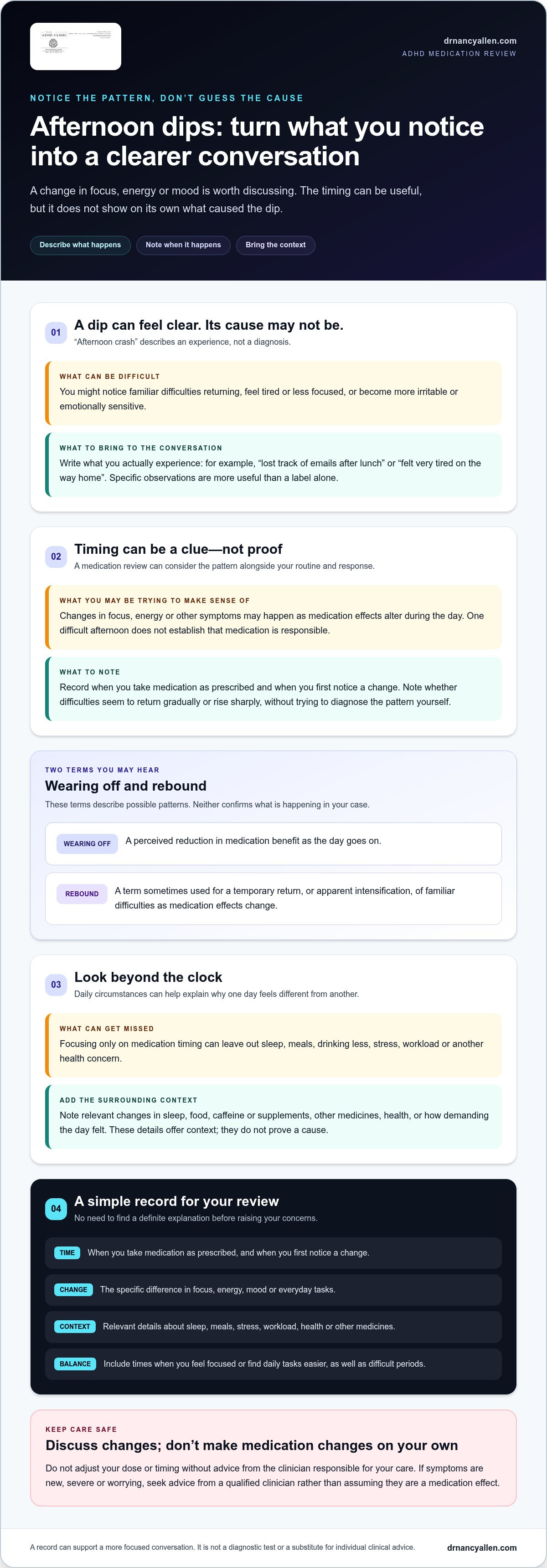
There isn’t one defining set of symptoms. You might find it harder to follow a conversation, finish a task or organise what to do next. Perhaps you feel unusually drained, impatient or emotionally sensitive, or notice difficulties that were less apparent earlier in the day. Record what you actually experience, such as “lost track of emails after lunch” or “felt very tired on the way home”, rather than writing only “crash”.
A reported pattern is a useful observation, not confirmation of its cause. A clinician can consider the timing alongside your medication and other circumstances. For background on the range of ADHD treatments, see this overview of ADHD management.
Why one difficult afternoon does not tell the whole story
A dip that recurs at a similar time may be useful to discuss, but one hard afternoon can have a different explanation. A poor night’s sleep, a missed or delayed meal, not drinking enough, a demanding workload or another health concern may affect how you feel. These factors don’t rule medication in or out; they give your clinician more context for the conversation.
As you explore Afternoon Crashes and What to Discuss With Your Prescriber, note whether the change repeats and what was happening that day. If symptoms are new, severe or worrying, seek advice from a qualified clinician rather than assuming they are a medication effect. Don’t change your dose or timing without guidance from the clinician responsible for your care.
Could ADHD medication wearing off explain an afternoon crash?
It’s possible. Some people report changes in focus, energy or other symptoms as the effects of ADHD medication alter over the course of the day. But an afternoon dip doesn’t, by itself, show that medication is the cause. Other parts of your routine or health may also be relevant.
The timing of symptoms can inform a medication review, but timing alone can’t establish the cause. Medication type, formulation, when it’s taken and your individual response all matter. Your prescriber can consider these details alongside what you notice, rather than relying on a label or a single difficult day. Don’t change your dose or schedule without advice from the clinician responsible for your care.
Wearing off and rebound: what is the difference?
People may use “wearing off” to describe a perceived reduction in medication benefit as the day goes on. “Rebound” is sometimes used for a temporary return, or apparent intensification, of familiar difficulties as medication effects change. Neither experience is inevitable, and these terms don’t confirm what’s happening in your case.
Rather than deciding which label fits, note what changes and when. For example, record whether difficulties return gradually or seem to rise sharply, and how this relates to your medication routine. These observations give your prescriber a clearer starting point. CHADD also offers questions to ask your prescriber about medication effects and treatment.
What else might contribute to an afternoon dip?
Consider the wider context, not just the time. Did you sleep differently, eat later than usual, drink less, face an unusually demanding workload or feel more stressed? These details don’t prove an alternative explanation, but they may help your clinician understand why the pattern varies from day to day.
If you take other medicines or have noticed a recent change in your health, mention it rather than assuming it’s connected. You can also describe relevant routines involving food, caffeine or supplements. Avoid treating any one of them as a universal solution or cause.
If you’re looking for broader clarity about ADHD, you can learn about Dr Nancy Allen’s private adult ADHD assessments. An assessment doesn’t automatically include a medication review or changes to treatment, so check what a particular consultation covers.
How can you tell what pattern to discuss with your prescriber?
A brief record can make a medication review more focused. It isn’t a diagnostic test, and you don’t need to find a definite explanation before raising your concerns. The aim is to show what tends to happen, when it happens and whether anything else in the day might help explain differences.
Keep the record balanced. Include difficult periods, but also note when you feel focused or find daily tasks easier. Recording only the dips can make it harder to see how your experience changes throughout the day.
What details are useful to record before a review?
Use a simple table or notes app. Take medication as prescribed rather than changing your routine to test a theory. A useful entry might include:
Time: when you take medication as prescribed and when you first notice a change.
What you notice: the specific change in focus, energy, mood or familiar difficulties, in your own words.
Duration and impact: how long it lasts and what it makes harder, such as finishing work or managing an evening routine.
Daily context: sleep, meals, hydration, stress, workload, illness or other medicines, where relevant.
Missed doses or changes: note these factually, without judgement, and mention them to your prescriber.
For example, “felt foggy and struggled to finish a task after lunch” gives a clinician more to explore than “bad afternoon”. Record good periods too, including what was going well and when.
How do you separate a recurring pattern from a difficult day?
Look back across your notes for repeated timing or similar circumstances, but don’t apply a threshold or conclude that repetition proves a medication effect. A single difficult day may follow disrupted sleep, illness, an unusually demanding day or another change in routine. Those details matter, too.
If the timing or intensity varies, record that rather than forcing a pattern. Your prescriber can consider your observations alongside your medication routine and wider health. The record supports a conversation; it doesn’t replace clinical judgement.
If you’re looking for broader context about adult ADHD assessment, read this adult ADHD assessment guide. Keep your notes simple and bring any questions they raise to a qualified clinician.
What should you ask your ADHD prescriber about afternoon crashes?
A clear conversation doesn’t depend on knowing the right medical terms. Describe what you’ve noticed, share your notes, explain how it affects daily life and ask what might account for the pattern. You could ask whether it may relate to medication effects or formulation, your routine, another medicine or a different health factor. These are possibilities to explore, not conclusions to reach alone.
Don’t change, stop, share or add supplements to prescribed medication without clinical advice. If you’re considering any change, ask the clinician responsible for your care first. A review can consider your individual circumstances and whether anything needs further attention.
Questions that can make the conversation clearer
Choose the questions that fit your situation. You might ask:
“What details would help you assess when the change starts, how long it lasts and what symptoms I notice?”
“Could this relate to my medication, its formulation or timing, my daily routine, or another factor?”
“Are there any other medicines or health changes we should take into account?”
“What should I monitor, and when would you recommend we follow up?”
“What changes would mean I should contact you sooner?”
These questions invite an assessment without presuming that a dose change is needed. They can also help clarify whether monitoring or follow-up is appropriate for you.
How to raise the concern if you feel uncertain
If you’re unsure how to begin, try: “I notice a repeated change in how I feel later in the day, and I’d like to understand what might be contributing.” Then give a concrete example. You might explain that later in the day you find it harder to complete work, keep up with study, manage evening tasks or stay patient in conversations. Describe what happens rather than assuming why it happens.
You can also say if the pattern isn’t consistent or if you’re worried your notes don’t show the full picture. Honest uncertainty is useful information, not a reason to delay asking for help. For general background, read about differences between ADHD medications; this isn’t individual treatment advice.
Thinking through Afternoon Crashes and What to Discuss With Your Prescriber can help you feel prepared, while leaving clinical decisions to the appropriate professional. If you’re seeking broader clarity about ADHD, you can explore private ADHD assessments. An assessment doesn’t automatically include a medication review or changes to treatment, so check what a specific consultation covers.
When should an afternoon crash prompt further support?
If the afternoon dip keeps recurring, disrupts work or relationships, or leaves you worried about managing daily tasks, arrange a conversation with the clinician responsible for your ADHD medication. You don’t need to be certain it’s caused by treatment before asking for a review. The aim is to look at the pattern and your circumstances together, not to assume a particular explanation or outcome.
When is a routine medication review appropriate?
A planned review can help if the change is repeated, affects your functioning or feels difficult to interpret. Bring your symptom notes and a current list of medicines, including any recent changes. Mention relevant sleep patterns, too. If poor sleep is a recurring concern, this guide to ADHD and sleep may offer useful background to discuss with a clinician.
When should you seek urgent advice instead?
Don’t wait for a routine appointment if symptoms are severe, rapidly worsening or make you feel immediately unsafe. If you or someone else is in immediate danger, call 999 or go to A&E. For urgent mental health support, use NHS 111 or your local NHS urgent mental health service. The right route can differ across the UK, so check current NHS guidance for your nation. This article can’t assess your individual situation or decide what level of care you need.
If you’re at risk of harming yourself or can’t keep yourself safe, seek urgent help now and, if possible, tell someone you trust who can stay with you while you get support. When the concern isn’t immediate but is affecting your wellbeing, contact your GP or prescribing clinician to ask what support is appropriate.
Preparing to talk about Afternoon Crashes and What to Discuss With Your Prescriber can make a planned review clearer, but urgent concerns deserve prompt attention. If you’re seeking broader clarity about ADHD, you can explore Dr Nancy Allen’s private adult and child ADHD assessments. An assessment doesn’t automatically include a medication review or treatment changes, so check what a specific consultation covers.
Take a clearer next step with your observations
An afternoon dip can have more than one explanation, so treat it as a pattern to explore rather than proof that your medication is wearing off. A simple record of when symptoms change, what you notice and how it affects your day can help you explain your experience to your prescriber and ask focused questions.
Bring recurring concerns to the clinician responsible for your care, and don’t change or stop prescribed medication without clinical advice. If symptoms feel severe or you’re immediately unsafe, seek urgent help rather than waiting for a routine review.
If you’re looking for broader clarity about ADHD, explore Dr Nancy Allen’s ADHD assessment and consultation information. Dr Allen has more than 25 years of clinical experience, and secure online consultations are available to patients across the UK. Check the information about each consultation to understand what it covers, as an assessment doesn’t automatically include a medication review or changes to treatment.
With careful observations and appropriate clinical guidance, you can take the next step with greater confidence. To learn more about how primary healthcare and psychiatric services can support holistic wellbeing, exploring comprehensive medical care options can help inform your path forward.
Frequently Asked Questions
Is an afternoon crash a normal side effect of ADHD medication?
Not necessarily. “Afternoon crash” is an informal phrase, not a diagnosis, and an afternoon dip doesn’t prove that medication is responsible. Some people notice changes in focus, energy or mood as medication effects alter during the day, but experiences differ. Sleep, meals, stress and other health factors may also matter. If the change is repeated, disruptive or worrying, describe it to your prescriber rather than assuming it’s expected.
How can I tell whether my ADHD medication is wearing off?
You can’t confirm the cause from timing alone, but noting when your symptoms change may help your prescriber assess the pattern. Record when you take medication as prescribed, when the change begins, what you notice and how long it lasts. Also note when you feel the medication is helping. A recurring pattern is useful information, not proof that the medicine is wearing off, so don’t alter your routine to test a theory.
What should I tell my prescriber about an afternoon crash?
Explain when the change happens, what it feels like, how long it lasts and how it affects everyday life. Share notes on your medication routine, sleep, meals, stress and any relevant changes in health or other medicines. For Afternoon Crashes and What to Discuss With Your Prescriber, focus on observations rather than a presumed cause. You might begin, “I’ve noticed a repeated change later in the day, and I’d like to understand what could be contributing.”
Can I change the time or dose of my ADHD medication to prevent a crash?
Don’t change or stop your prescribed dose, alter its timing, share it or add supplements to manage a dip without clinical advice. Tell your prescriber what you’re experiencing and ask whether your medication routine or another factor needs review. The right next step depends on your circumstances and treatment. If you’ve already missed a dose or made a change, tell your prescriber what happened without judgement.
Could sleep, food or stress cause an afternoon energy dip?
These factors may be relevant, although they don’t establish the cause in an individual case. Poor sleep, a delayed or missed meal, not drinking enough, stress or an unusually demanding day can all provide useful context for a prescriber. Keep brief notes on these factors alongside symptom changes. Mention relevant caffeine, supplement or other medicine use, too, rather than assuming that any one food or routine is the explanation.
What is the difference between medication wearing off and rebound?
“Wearing off” usually describes a perceived reduction in benefit as the day progresses. “Rebound” is used to describe a temporary return or apparent intensification of familiar difficulties as medication effects change. People may use these terms differently, and neither label confirms what’s happening for you. Record the timing and nature of the change, then ask your prescriber how they interpret it in light of your medication and wider circumstances.
When should I seek urgent help for symptoms after taking ADHD medication?
Seek urgent help rather than waiting for a routine review if symptoms feel severe, worsen rapidly or leave you or someone else immediately unsafe. If there’s immediate danger, call 999 or go to A&E. For urgent mental health support, contact NHS 111 or the relevant urgent mental health service in your part of the UK. Routes vary, so check current NHS guidance. This information can’t assess your symptoms or provide individual triage.



Comments