


ADHD and Addiction: Understanding the Link and Support

Updated: 2 days ago
Could ADHD and addiction be connected without one causing the other? If substance use or another compulsive behaviour feels increasingly difficult to control, it’s understandable to wonder whether ADHD traits are part of the picture. ADHD and addiction can overlap: impulsivity or difficulty managing emotions, for example, may appear in both. That overlap can make it harder to understand what’s happening, but it isn’t a reason for blame or a diagnosis in itself.
This article explains what the evidence suggests about the relationship between ADHD and addiction, and which questions remain open. You’ll learn why ADHD doesn’t mean someone will develop an addiction, how overlapping symptoms can complicate assessment, and when professional support may help.
We’ll also cover practical, safer ways to discuss ADHD and substance use, including what information may be useful in a clinical conversation. An ADHD assessment can contribute to understanding someone’s wider health picture, while addiction concerns may need support in their own right. Dr Nancy Allen provides adult and child ADHD assessments through secure online consultations across the UK. Her care is individual, respectful and focused on helping you make sense of your concerns.
Table of Contents
ADHD and addiction: what the connection does, and does not, mean
Questions about ADHD and addiction often arise when difficulties with attention, impulse control or emotional regulation sit alongside substance use that feels hard to manage. These experiences can overlap, but they are not interchangeable. Understanding the difference can help you seek an appropriate assessment without assuming one diagnosis explains everything.
What does “ADHD and addiction” mean?
ADHD is a neurodevelopmental condition involving persistent patterns of inattention and/or hyperactivity and impulsivity that affect everyday functioning. A general overview of Attention deficit hyperactivity disorder describes its features and related conditions. Addiction is a commonly used term for a pattern of compulsive substance use or behaviour that continues despite harm. It should not be used to reduce someone to a label.
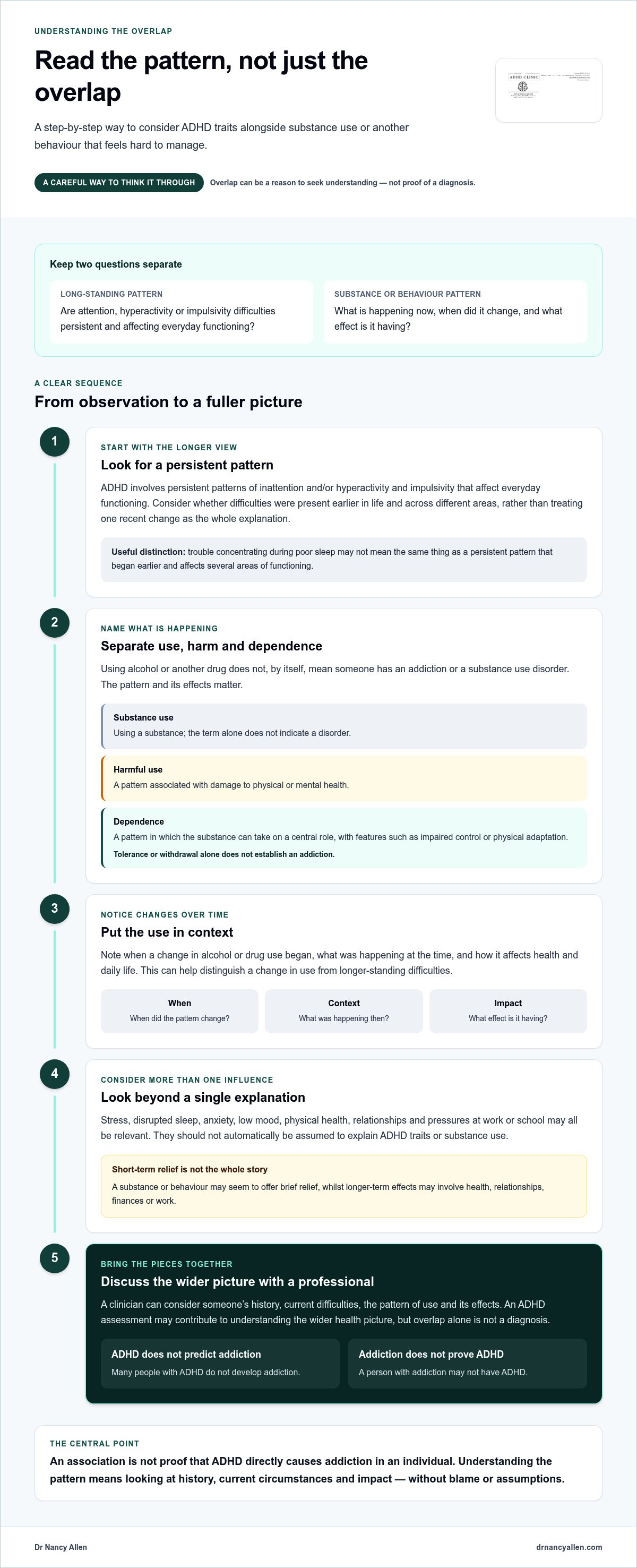
Using alcohol or another drug does not, by itself, mean a person has an addiction or a substance use disorder. Clinicians consider the pattern, its effects on health and daily life, and relevant diagnostic criteria. In broad terms:
Substance use means using a substance; the term alone does not indicate a disorder.
Harmful use describes a pattern associated with damage to physical or mental health.
Dependence involves a pattern of use in which the substance can take on a central role, with features such as impaired control or physical adaptation. Tolerance or withdrawal alone does not establish an addiction.
“Addiction” is often used in everyday conversation, while clinical assessments use specific diagnostic terminology. Behavioural addictions are not simply repeated habits: for example, gambling disorder is recognised clinically, but frequent gaming, shopping or screen use does not automatically amount to a diagnosed disorder.
Does ADHD cause addiction?
No single explanation can determine why an individual develops an addiction. Research describes an association between ADHD and substance-related problems for some people, but an association does not prove that ADHD directly causes addiction in any one person. Many people with ADHD do not develop addiction, and a person with addiction may not have ADHD.
Risk and wellbeing are shaped by more than a diagnosis. Personal circumstances, other health concerns, stress, social environment and access to support may all be relevant. These factors can interact differently, so it would be misleading to treat ADHD as either a prediction of addiction or a complete explanation for someone’s substance use.
If you recognise a possible overlap in your own life or someone else’s, that is a reason to seek understanding, not to feel ashamed. An assessment considers a person’s history and current difficulties, rather than relying on a label or one behaviour. Being open about your concerns can help a clinician consider the wider picture and discuss appropriate next steps.
Why ADHD and addictive behaviours may overlap for some people
There isn’t one pathway that explains why someone with ADHD might develop difficulties with substance use or another behaviour. For some, traits such as acting quickly or finding it hard to pause before seeking a reward may influence choices. For others, distress, life circumstances or a separate health concern may be more relevant. These are possibilities, not universal features of ADHD, and none can establish that someone has an addiction.
Impulsivity, reward, and short-term relief
When an immediate reward feels compelling, it may be harder for some people to weigh it against a later consequence. That doesn’t mean they lack care or judgement. It may help explain why someone sometimes acts quickly, particularly when strong emotions or easy access to alcohol, drugs, gambling or another rewarding activity are involved.
A substance or behaviour can also seem to offer short-term relief. Someone might describe feeling calmer, less restless or briefly distracted from difficult thoughts. That immediate relief can coexist with longer-term effects on health, relationships, finances or work. On its own, it doesn’t show that the person has ADHD or an addiction. What matters is the broader pattern and its impact, considered with care rather than blame.
The American Academy of Pediatrics’ resource, ADHD and Substance Abuse: The Link Parents Need to Know, discusses several possible contributors to substance-use risk for young people with ADHD, rather than presenting a single explanation. This supports a cautious view: risk reflects multiple factors that may interact, and no one factor determines what will happen to an individual.
Stress, emotional regulation, and overlapping difficulties
Stress, disrupted sleep, anxiety and low mood can all be relevant to someone’s wider experience, but they shouldn’t be assumed to explain ADHD traits or substance use. They may occur alongside these concerns, affect how manageable daily demands feel, or have another explanation that needs attention. Physical health, relationships, work or school pressures and a person’s support network can also shape the picture.
Context matters. For example, difficulty concentrating during a period of poor sleep may not mean the same thing as a persistent pattern that began earlier in life and affects several areas of functioning. A change in alcohol or drug use also needs to be understood in relation to when it began, what was happening at the time and how it affects the person.
A clinician can explore development, current functioning and relevant health and social circumstances together, rather than drawing conclusions from one symptom. If you’re wondering whether long-standing attention or impulsivity difficulties deserve assessment, an adult or child ADHD assessment can be one part of understanding the wider picture. It isn’t a substitute for support directed at substance-use concerns.
How to tell ADHD traits from signs of a developing addiction
Some experiences can look similar on the surface. Difficulty concentrating, acting impulsively or missing commitments may relate to long-standing ADHD traits, but they can also appear or worsen alongside substance use, poor sleep, stress or other health concerns. The useful questions are how the pattern developed, what has changed and how it affects everyday life, not whether one symptom proves a diagnosis.
Patterns that may help a clinician understand the difference
An ADHD assessment considers developmental history and whether difficulties meaningfully affect relevant areas of life. Substance-use concerns may be easier to understand by describing changes over time, rather than comparing yourself with a checklist. This guide can help you organise what to discuss, but it cannot diagnose either condition.
Long-standing attention or impulse difficulties: Were similar patterns present earlier in life, and do they affect more than one setting, such as home, education or work? A clinician considers history and functioning, not just a recent difficulty.
Changes in substance use: Has use become more frequent, harder to control or a higher priority? Have you continued despite unwanted consequences, or found it difficult to cut down? Be as specific as you can about what changed and when.
Impact on daily life: Consider effects on health, relationships, work, study, responsibilities or safety. Note whether difficulties mainly happen around using a substance or are present at other times too. Neither pattern gives a diagnosis by itself.
Intoxication, withdrawal, sleep loss and stress can affect concentration, memory, mood and behaviour, making the picture harder to interpret. If you’re seeking clarity about ADHD in adulthood, this adult ADHD assessment guide explains the role of developmental history and assessment.
Impulsivity associated with ADHD does not automatically mean addiction or a loss of control. A person can also have substance-related difficulties whether or not they have ADHD. Looking at timing and context helps a clinician avoid attributing every difficulty to one cause.
When should someone seek professional advice?
Consider speaking with a healthcare professional if substance use feels difficult to control, is increasing, or is affecting your health, relationships, work or safety. You don’t need to be certain what the problem is before asking for help. An honest account gives the clinician a clearer starting point for discussing appropriate next steps.
Before the conversation, note what substances you use, how often, when the pattern changed and what effects you’ve noticed. Include prescribed medicines and any concerns about how they interact with your experience. If you’re unsure or worried about being judged, say so. A symptom list can prompt discussion, but it is not a substitute for an assessment.
Practical steps for discussing ADHD and addiction safely
It can be hard to know how to begin a conversation about ADHD and addiction, especially if you’re worried about being judged or misunderstood. You don’t need to arrive with a diagnosis or a complete explanation. A few clear notes about what concerns you, what has changed and what support you need can make the first discussion more manageable.
Preparing for a clinical conversation
Before speaking with a clinician, write down the main concerns you want to raise. Include any relevant ADHD history, such as long-standing difficulties and when you first noticed them. Describe substance use as openly as you can, including prescribed and non-prescribed medicines. This information helps the clinician consider safety and the wider picture.
Note what you use, how often, and whether the pattern has changed.
Record any effects on your health, mood, relationships, work or daily responsibilities.
List prescribed medicines, other substances and any concerns about combining them.
Write down questions, such as what kind of assessment or support may be appropriate.
You can bring someone you trust if that would help you feel more at ease. They may help you remember details or explain what they’ve observed, but the conversation should still include your own concerns and preferences. If you’re anxious, say so at the start. You can also ask the clinician to explain the next steps clearly.
Finding support and agreeing a safe next step
Support will depend on your circumstances and any immediate risks. A GP or relevant NHS service can discuss substance-use concerns, mental health and whether further assessment or support is appropriate. For individuals exploring dedicated residential recovery options abroad, specialised facilities such as an afkickkliniek Zuid-Afrika offer intensive addiction programmes. If ADHD may also be part of the picture, mention it. Addressing one concern doesn’t mean the other has to be ignored.
Don’t abruptly stop alcohol, drugs or prescribed medication without appropriate medical advice. If you may be dependent on alcohol or another substance, stopping suddenly can carry health risks. Speak to a clinician about a safer plan, and get advice before changing prescribed medicines.
Know which route to use. If someone may have overdosed, has severe withdrawal symptoms or is in immediate danger, call 999 for emergency help. For urgent medical advice that isn’t an immediate, life-threatening emergency, contact NHS 111. If you’re unsure how serious the situation is, explain what is happening and follow the advice you receive.
If questions about attention or impulsivity are part of what you want to understand, you can explore an ADHD assessment with Dr Nancy Allen. An assessment can help clarify ADHD-related concerns, while substance-use needs should be discussed with the appropriate healthcare service.
How ADHD assessment can contribute to a joined-up care plan
When ADHD and addiction concerns occur together, understanding each part of the picture can help clinicians make more informed decisions. An ADHD assessment can explore whether long-standing difficulties may fit ADHD and how they affect everyday life. It does not, by itself, diagnose or treat addiction, and it is not a substitute for support focused on substance use.
What an ADHD assessment can clarify
A thorough assessment considers a person’s developmental history, current experiences and the impact of difficulties across relevant areas of life. It may explore when patterns began, how they have changed and whether they affect home, education, work or relationships. This context helps distinguish persistent ADHD-related difficulties from concerns that may have another explanation or need separate attention.
Clinicians may also consider other health needs that could affect concentration, organisation, mood or daily functioning. Being open about substance use, prescribed medication and relevant changes can make that discussion more complete. This isn’t about assigning blame or assuming one issue explains another. It gives clinicians useful context to consider alongside your history and current needs.
An assessment can contribute information to a wider care plan, but decisions about addiction-related support and treatment belong with the appropriate clinicians. If more than one professional is involved, sharing relevant information with your agreement may help them understand how different concerns relate and coordinate next steps. For individuals with neurodevelopmental conditions who require ongoing daily assistance, specialist disability providers such as Accessible Care demonstrate how tailored community support can fit alongside clinical guidance. Plans should reflect the individual, rather than follow a single template.
A compassionate next step with Dr Nancy Allen
Dr Nancy Allen is a private GP specialising in ADHD assessments for adults and children. Her assessment service focuses on understanding ADHD, not providing addiction treatment. Secure online consultations are available across the UK, with personalised treatment planning informed by each person’s needs and circumstances.
If you’re considering an assessment, note the questions you want answered and any relevant history you’d like to discuss. You can also explain what other support you’re receiving or hope to access, so ADHD-related concerns can be considered as part of your wider health picture. You don’t need to have everything worked out before seeking clarity.
A careful ADHD assessment can be one part of a broader conversation about wellbeing, while substance-use concerns deserve attention in their own right. If exploring ADHD is a helpful next step for you or your child, explore ADHD assessment with Dr Nancy Allen.
Take a thoughtful next step towards clarity
You don’t need every answer before asking for support. Start with the question that feels most important now, whether that’s understanding long-standing attention difficulties, talking about substance use or working out which concern to address first. Sharing the full picture can help the relevant clinicians discuss next steps without reducing you to a label.
Exploring ADHD is one possible part of that process. An ADHD assessment can help clarify whether your experiences may fit ADHD, while addiction concerns need to be discussed with clinicians equipped to address them. These paths can sit alongside one another, with care shaped around your circumstances.
If an ADHD assessment feels like a helpful next step for you or your child, explore ADHD assessment with Dr Nancy Allen. Questions about ADHD and addiction can feel difficult to raise, but seeking understanding is a constructive step. You deserve to be heard with care and without judgement.
Frequently Asked Questions
Can ADHD lead to addiction?
No. ADHD doesn’t inevitably lead to addiction, and having ADHD isn’t proof that someone will develop an addictive disorder. Research describes an association for some groups, but it can’t establish what will happen to an individual or show that ADHD directly caused their difficulties. Questions about ADHD and addiction are best explored in context, including personal health and circumstances. If substance use worries you, tell a qualified clinician what you’ve noticed and when it began.
Is addiction more common in people with ADHD?
Some research finds an association between ADHD and a higher risk of certain substance-use problems, but findings vary according to the people studied and the substance considered. Group-level estimates can’t predict an individual’s future. A clinician can discuss your circumstances by considering your health history, current use and any effects on daily life. If you’re asking because a pattern has changed, describe the change rather than relying on a risk statistic to decide whether you need help.
Can ADHD medication cause addiction?
The answer depends on the medicine and individual circumstances. Taking a prescribed medicine as directed isn’t, by itself, evidence of addiction, but some ADHD medicines have risks that need to be considered and monitored by the prescriber. Don’t share medication, take more than prescribed or make sudden changes without medical advice. If you notice cravings, unexpected effects or concerns about combining medication with alcohol or other substances, contact the prescriber to discuss a safe review.
Can someone have ADHD and an addiction at the same time?
Yes, both can be present, and neither diagnosis automatically confirms the other. For instance, someone may have long-standing attention difficulties and later notice that substance use is affecting attendance, finances or relationships. Tell clinicians involved in your care about both concerns, including what substances or medicines are involved. This helps them consider the timing and impact of each issue and decide whether separate assessments or coordinated support would be useful.
Should I treat ADHD or addiction first?
There isn’t one order that suits everyone. The safest plan depends on the substances involved, your health and whether there’s an immediate risk. Tell the professionals supporting you about both concerns so they can agree what needs attention first and who is responsible for each part of care. Don’t wait for an ADHD assessment if there’s a serious reaction, suspected overdose, severe withdrawal or immediate danger. In an emergency, call 999.
What should I do if I am worried about someone else?
Choose a calm moment and describe one or two specific things you’ve noticed, such as missed work or a change in their use, without calling them names or demanding an explanation. You could say, “I’m worried about you. Would you like help speaking to your GP?” Listen to what they want and offer practical support, such as helping them make an appointment. If they’re in immediate danger or facing a life-threatening emergency, call 999.
Can an ADHD assessment diagnose addiction too?
No. An ADHD assessment focuses on evaluating ADHD, so it doesn’t automatically establish whether someone has an addictive disorder or provide addiction treatment. You can still mention substance use, alcohol and prescribed medicines during the assessment because this information may be relevant to understanding your health needs. Ask what the assessment can address and what separate follow-up may be appropriate. That helps you leave with a clearer understanding of the next step, even if more than one service is involved.



Comments