


ADHD and POTS: Understanding the MCAS & Dysautonomia Link

Did you know that individuals with ADHD are four times more likely to be hypermobile than their neurotypical peers? For many, this isn't just a quirk of flexibility; it's the first clue in a complex biological puzzle involving Dysautonomia MCAS. POTS AND THE LINK WITH adhd. If you've spent years feeling like a 'hypochondriac' because your heart races when you stand up or your skin flares for no apparent reason, you aren't imagining things. You're likely experiencing a systemic manifestation of a dysregulated nervous system that connects your brain and body in ways traditional medicine often fails to recognise.
It's incredibly draining to have your physical symptoms dismissed as 'just anxiety' whilst you're already struggling with the executive dysfunction required to manage your health. You deserve a unifying explanation for this cluster of symptoms that finally acknowledges the deep connection between your neurodivergence and your autonomic system. In this article, we'll explore the biological pathways behind these conditions and offer practical insights to help you regain clarity and control over your body and mind.
Table of Contents
The ADHD, POTS, and MCAS Trifecta: What is Dysautonomia?
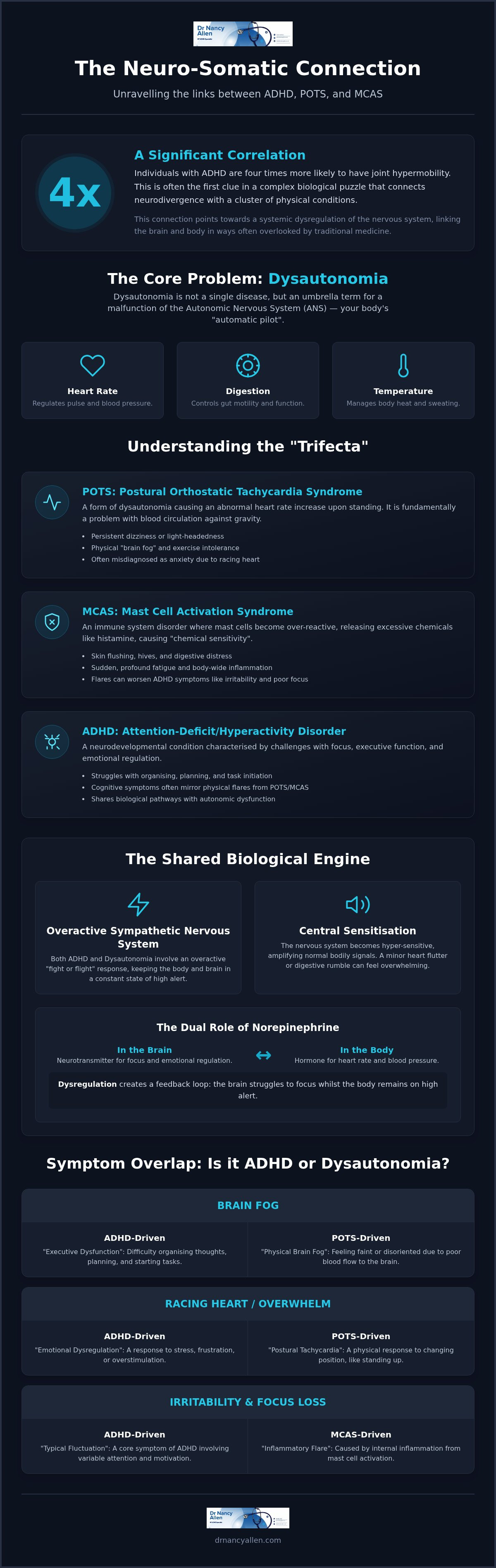
Dysautonomia isn't a single disease; it's a broad umbrella term describing a malfunction in the autonomic nervous system. This system controls everything you don't think about, like heart rate, digestion, and temperature regulation. When it misfires, symptoms often wax and wane unpredictably. You might feel fine one morning and completely incapacitated by midday. This inconsistency often leads patients to feel like they're "making it up", but the biological reality is that your body's automatic pilot is simply struggling to maintain balance.
Many people are now discovering what clinicians call the "Trifecta" or "Pentad". This refers to a high co-occurrence of conditions including Dysautonomia MCAS. POTS AND THE LINK WITH adhd. It's often underpinned by Ehlers-Danlos Syndrome (EDS) or joint hypermobility. Research suggests that the ADHD brain doesn't exist in a vacuum; it's deeply intertwined with the autonomic nervous system. This connection explains why your cognitive struggles often mirror your physical flares. It's a single, complex picture of a highly tuned, sensitive nervous system.
To better understand how these complex conditions interact, watch this helpful video:
POTS: More Than Just a Racing Heart
Postural Orthostatic Tachycardia Syndrome, or POTS, is a form of dysautonomia where your heart rate increases abnormally when you sit or stand up. It's about more than just a fast pulse. Common symptoms include persistent dizziness, exercise intolerance, and a specific type of physical brain fog. Because the symptoms of a racing heart and lightheadedness mimic the physical sensations of panic, POTS is frequently misdiagnosed as ADHD-related anxiety. In reality, it's a physical failure of the body to circulate blood effectively against the pull of gravity.
MCAS: When the Immune System Overreacts
Mast Cell Activation Syndrome (MCAS) is best described as a "chemical sensitivity" at a cellular level. Your mast cells, which are part of your immune system, become over-reactive and release an inappropriate amount of chemicals like histamine into your body. Whilst you might expect typical allergy symptoms like sneezing, MCAS often presents as skin flushing, digestive distress, and sudden, profound fatigue. When MCAS flares up, it can significantly worsen ADHD symptoms. The internal inflammation often leads to heightened irritability and an inability to focus that feels distinct from your usual executive dysfunction. Understanding the nuances of Dysautonomia MCAS. POTS AND THE LINK WITH adhd is the first step toward finding management strategies that actually work for your specific biology.
Shared Biology: Why ADHD and Dysautonomia Often Co-exist
ADHD and autonomic dysfunction aren't separate islands; they share a biological engine in the sympathetic nervous system. This "fight or flight" system is frequently overactive in both conditions. Norepinephrine, a neurotransmitter that helps you focus and regulate emotions in the brain, also acts as a hormone that controls heart rate and blood pressure. When norepinephrine levels are dysregulated, it creates a feedback loop where the brain struggles to attend to tasks whilst the body remains in a state of high alert. This chemical imbalance is a primary driver behind the complex presentation of Dysautonomia MCAS.
This biological overlap often leads to central sensitisation. This is a state where the nervous system becomes hyper-sensitive to both internal and external stimuli. In this state, the brain becomes hyper-aware of bodily signals that neurotypical individuals might ignore. A slight increase in heart rate or a minor digestive rumble is amplified, contributing to the feeling of being constantly overwhelmed. It isn't just anxiety; it's a physical calibration issue where your brain is receiving too much data from your body at once.
The Role of the Vagus Nerve
The vagus nerve serves as the essential "brake" for your nervous system. It facilitates the transition into a "rest and digest" state, allowing your heart rate to slow and your mind to settle. Many individuals with ADHD and dysautonomia exhibit low vagal tone, meaning this brake isn't functioning efficiently. This leaves the body stuck in a state of sympathetic arousal. It's the primary reason behind the "tired but wired" phenomenon, where you feel physically drained yet your mind continues to race at high speed, unable to find a sense of calm.
Hypermobility: The Structural Bridge
The physical structure of your body also plays a significant role in this link. There's a profound connection between Ehlers-Danlos Syndrome (EDS) and neurodivergence. Research indicates that nearly 80% of female adults with ADHD are hypermobile. When connective tissues are too flexible, blood vessels can become "stretchy", leading to blood pooling in the lower limbs. This triggers Postural Orthostatic Tachycardia Syndrome (POTS) as the heart overcompensates to get oxygen back to the brain.
These "stretchy" tissues also fail to provide a stable environment for mast cells, making them more likely to degranulate and cause systemic inflammation. Because of this high correlation, assessing for joint laxity is a crucial component of a thorough adult adhd assessment. If you feel your symptoms are part of a larger systemic pattern, a specialist consultation can help you connect these biological dots and find a path forward that respects your unique physiology.
Distinguishing Symptoms: Is it ADHD, POTS, or Both?
Deciphering whether a symptom originates in your brain or your autonomic system is one of the most challenging aspects of managing these co-occurring conditions. Understanding the intersection of Dysautonomia MCAS. POTS AND THE LINK WITH adhd requires a nuanced look at how these conditions masquerade as one another. Whilst they often overlap, they usually have distinct "signatures" that can help you identify the primary driver of your discomfort.
Brain fog and executive dysfunction are frequently used interchangeably, but they feel very different to the patient. Executive dysfunction is a breakdown in the managerial functions of the brain; you know what you need to do, but you can't sequence the steps or find the motivation to start. Brain fog, conversely, feels like a cognitive haze or "cotton wool" in the head. It's often positional, worsening when you've been standing too long, or it may follow a meal if MCAS is involved. If your focus improves significantly when you lie down, it's likely that your autonomic system, rather than your ADHD alone, is driving the cognitive slump.
Adrenaline surges are another area of confusion. In hyperadrenergic POTS, the body overproduces norepinephrine, leading to sudden bursts of "jitteriness" or a racing heart. This can look like ADHD impulsivity or a sudden panic attack. However, these surges often occur without a psychological trigger. Learning to recognise these as physical events rather than emotional failures is a vital step in your journey toward self-validation.
The Overlap of Anxiety and Tachycardia
When your heart races due to POTS, your brain naturally searches for a reason why. This often results in a "top-down" feeling of anxiety where there is no actual worry present. You might also experience "air hunger", a sensation of being unable to take a full, satisfying breath. This is a physiological response to poor blood circulation, not a sign of a mental health crisis. Tracking these episodes alongside your menstrual cycle is incredibly helpful; many patients find that symptoms of both ADHD and dysautonomia peak during the luteal phase when progesterone rises and oestrogen drops.
Medication Nuances
Choosing the right pharmacological support is a delicate balancing act. When considering lisdexamphetamine vs methylphenidate, it's important to monitor how they affect your heart rate. For some, stimulants provide helpful vasoconstriction that actually improves POTS symptoms by helping blood reach the brain. For others, they may exacerbate tachycardia or trigger MCAS-related flushing. If stimulants prove too taxing for your autonomic system, non-stimulant options like Guanfacine may be considered, as they can sometimes support both focus and blood pressure regulation. A personalised medical plan is essential to ensure your treatment supports your body as well as your mind.
Practical Management Strategies for the 'Neuro-Somatic' Patient
Managing the complex interplay of Dysautonomia MCAS. POTS AND THE LINK WITH adhd is often a full-time job. Generic medical advice like "just drink more water" frequently fails because it ignores the reality of ADHD executive dysfunction. To make hydration stick, place colourful, clear water bottles in every room you frequent. Using flavoured electrolytes can provide a small dopamine reward whilst simultaneously supporting the blood volume issues seen in POTS. This simple hack bypasses the "out of sight, out of mind" nature of neurodivergence.
Pacing is another significant hurdle. The ADHD brain often operates in an "all or nothing" mode, but this triggers a punishing boom-bust cycle in dysautonomia. Try the "50 percent rule": stop your activity when you feel you still have half your energy remaining. This prevents the total physical crash that often follows a hyper-focus session. For MCAS management, simplify your approach by prioritising fresh, un-aged foods to reduce histamine load. This reduces the cognitive load of a complex elimination diet whilst still calming systemic inflammation.
Sensory regulation is equally vital. When your autonomic nervous system is flared, your brain's ability to filter sensory input drops. Using weighted blankets or gentle compression garments can provide the proprioceptive input many ADHD brains crave whilst also helping to prevent blood pooling in the legs.
Advocating for Yourself in the Medical System
GP appointments are often too short to explain a lifetime of seemingly unrelated symptoms. Prepare a one-page summary that highlights patterns rather than isolated incidents. Using a symptom tracker for just two weeks can provide the "hard data" doctors often require. If you find a doctor is dismissing your symptoms as mere anxiety, pivot the conversation to your physical limitations, such as your heart rate increase upon standing. If you need a clinician who truly understands these "neuro-somatic" overlaps, booking a specialist ADHD assessment can provide the time needed to look at the whole picture.
Environment and Sensory Load
Your surroundings can either soothe or flare your nervous system. Light, sound, and temperature are significant triggers for both ADHD sensory overload and autonomic stress. Use dimmable warm lighting and noise-cancelling headphones to reduce the "noise" your brain must process. Since POTS often involves heat intolerance, keeping your environment cool is essential for preventing dizziness. Prioritising restorative sleep is the final, non-negotiable piece of the puzzle; it's the only time your autonomic system can truly reset and recover from the day's demands.
Seeking Clarity: The Path to a Holistic Diagnosis
For many individuals, a single label like ADHD often feels incomplete. It doesn't account for the dizzy spells, the sudden digestive distress, or the heart palpitations that occur without warning. When medical care is siloed, you're left with a collection of specialists who rarely communicate, leaving you to bridge the gaps between your physical and cognitive health alone. This is why a systemic approach is essential for understanding Dysautonomia MCAS. By looking at these biological connections as a unified whole, you move from being a "collection of symptoms" to a person with a clearly understood, albeit sensitive, physiology.
Finding this clarity is frequently the most powerful tool for shedding the shame of being labelled "difficult" or "anxious" by the medical establishment. When you realise that your executive dysfunction and your physical flares are driven by the same underlying dysregulation, self-compassion finally becomes possible. Whilst these conditions are undoubtedly complex, they are manageable. You don't have to live in a state of constant uncertainty; with the right expert guidance, you can develop a strategy that respects both your brain and your body.
A Personalised Approach to Specialist Care
Dr Nancy Allen integrates neurodivergence and physical health through a lens of deep-seated empathy and clinical precision. With 25 years of experience, she understands that a thorough assessment must validate the "whole self" rather than just focusing on cognitive traits. This holistic view considers how your autonomic system and hormonal health interact with your neurodiversity. It's a collaborative process designed to restore your confidence and provide the insight needed to navigate your health journey with a sense of security. Taking the first step toward this clarity is often the moment the weight of medical gaslighting begins to lift.
Next Steps for Your Health Journey
A multi-disciplinary approach is the gold standard for managing complex comorbidities. If you're ready to stop guessing and start healing, booking an Adult ADHD Assessment provides the unhurried time required to connect every dot. We offer secure online consultations throughout the UK, providing a low-stress environment for those who find travel difficult due to POTS or chronic fatigue. You'll receive a comprehensive diagnosis and tailored treatment plan within 72 hours, ensuring you have a clear path forward without unnecessary delay.
Always remember that you aren't a "difficult" patient; you have a complex system that requires a specialised level of understanding. You deserve a clinician who acts as a trusted guide, helping you translate the signals your body is sending. By prioritising your well-being through an expert assessment, you're choosing a life of greater clarity and restored health.
Reclaiming Control of Your Health Journey
Living with the complex intersection of Dysautonomia MCAS. POTS AND THE LINK WITH adhd requires more than just managing symptoms; it requires a deep understanding of your body's unique wiring. You've learnt that your physical flares and cognitive challenges are often two sides of the same coin, driven by a sensitive autonomic nervous system and shared biological pathways. Recognising these patterns is the first step toward moving past the frustration of being misunderstood by the traditional medical system.
If you're ready to find the clarity you deserve, Dr Nancy Allen offers specialist expertise in neurodivergence and its physical comorbidities. With 25 years of clinical experience, she provides empathic, patient-centric consultations that look at your whole health picture. You can receive a comprehensive diagnosis and treatment plan within 72 hours, helping you move forward with confidence and a clear strategy for the future.
Book a Private ADHD Assessment with Dr Nancy Allen
You aren't a collection of unrelated problems; you're a person with a complex system that simply needs the right expert support. Clarity is within reach, and you deserve a health journey defined by validation and restoration.
Frequently Asked Questions
Can POTS feel like ADHD anxiety?
Yes, POTS often mimics the physical sensations of ADHD anxiety due to the rapid heart rate and lightheadedness that occur when standing. This physiological response can trick the brain into a state of high alert, making you feel anxious without a specific psychological trigger. Distinguishing between the two involves checking if your symptoms improve when lying down; this suggests an autonomic cause rather than a purely cognitive or emotional one.
Is MCAS more common in people with ADHD and Autism?
Research indicates a significant overlap, with neurodivergent individuals being more likely to experience immune system dysregulation. This is often part of a broader "trifecta" involving Dysautonomia MCAS. The common thread is frequently joint hypermobility, which can lead to mast cell instability and systemic inflammation. Understanding this connection is essential for managing the sudden fatigue and cognitive haze that many autistic and ADHD patients experience whilst navigating their daily lives.
Do ADHD medications make POTS symptoms worse?
ADHD medications affect individuals with POTS differently. Whilst stimulants like methylphenidate can increase heart rate, they also act as vasoconstrictors, which may help prevent blood pooling in the legs and improve cognitive clarity. However, for some, they can exacerbate tachycardia or trigger MCAS flares. It's crucial to have a personalised medical management plan that monitors your cardiovascular response to ensure the treatment supports both your focus and your autonomic stability without causing additional distress.
Why is hypermobility linked to ADHD and Dysautonomia?
Hypermobility, particularly in conditions like Ehlers-Danlos Syndrome, involves differences in connective tissue that affect the entire body. Stretchy blood vessels can lead to blood pooling, triggering POTS, whilst the same genetic factors are linked to higher rates of neurodivergence. Approximately 50% of people with ADHD are hypermobile. This structural link creates a sensitive system where the physical body and the brain are more reactive to internal and external stressors than their neurotypical peers.
Can treating MCAS help improve my ADHD focus?
Treating MCAS can significantly improve ADHD focus by reducing systemic inflammation and the brain fog associated with histamine release. When mast cells are flared, the resulting internal noise can make executive dysfunction feel much worse. By stabilising these cells through diet or medication, you reduce the physiological burden on your nervous system. This often leads to a more stable baseline, allowing your ADHD management strategies to be more effective and your cognitive energy to last longer.
What should I do if my GP doesn't believe in the ADHD-POTS link?
If your GP is dismissive, focus on providing concrete data rather than just describing feelings. Use a symptom tracker to show the relationship between your posture and heart rate over a two-week period. If you still feel unheard, seeking a private specialist consultation can provide the time and expertise needed to connect these complex dots. Dr Nancy Allen offers assessments that validate the whole self, ensuring your physical symptoms aren't mislabelled as purely psychological.
Is Dysautonomia considered a disability in the UK?
In the UK, dysautonomia can be considered a disability under the Equality Act 2010 if it has a substantial and long-term negative effect on your ability to do normal daily activities. This includes the profound fatigue and dizziness that often accompany the condition. Recognising this status can help you access necessary workplace or educational adjustments, which are vital when managing the combined impact of autonomic dysfunction and the executive challenges that come with ADHD.
Can hormone changes during menopause affect POTS and ADHD?
Hormone fluctuations during menopause significantly impact both conditions, as oestrogen plays a key role in neurotransmitter regulation and blood vessel tone. A drop in oestrogen can worsen ADHD symptoms like forgetfulness and increase the frequency of POTS flares. Dr Nancy Allen specialises in the intersection of menopause and neurodivergence, helping patients navigate these transitions with personalised care that addresses both the hormonal and autonomic shifts occurring in the body during this stage of life.


Comments