


How Long Does Menopause Last? Navigating the Timeline and Stages

Updated: 9 hours ago
What if the question of how long does menopause last isn't just about counting down the years, but about understanding a permanent shift in your biological landscape? For many women across the UK, the transition feels like an endless cycle of unpredictable hot flushes and brain fog that disrupts both work performance and home life. It's completely natural to feel anxious about the duration of this change, especially when you're balancing professional responsibilities with the physical toll of night sweats and shifting moods.
I understand that you're looking for more than just a timeline; you're looking for clarity and a way to feel like yourself again. This guide provides a detailed look at the clinical stages of menopause and how long symptoms typically persist based on the latest research. You'll gain a clear understanding of the transition from perimenopause to postmenopause, alongside evidence-based strategies to reduce the duration of your symptoms. We'll explore how to manage your hormonal health for the long term, ensuring you have the insight needed to move forward with confidence and steady, expert support.
Table of Contents
Defining the Menopause Timeline: A Transition, Not an Event
Many women approach their GP asking exactly how long does menopause last, expecting a fixed date or a predictable window. In reality, menopause isn't a single event but a gradual biological transition. Whilst clinical definitions provide a clear marker, the lived experience is often much more fluid. This complexity arises because every woman's hormonal architecture is unique, meaning your journey through these stages will be entirely personal to you.
To understand where you are in this process, it's helpful to view it as a series of distinct chapters. Citing a clinical resource like Menopause can help clarify the biological changes occurring, but tracking your own cycles and symptoms is the most effective way to identify your current stage. By recording changes in your sleep, mood, and period frequency, you can provide your specialist with the data needed to tailor your care.
To help visualise this timeline and the symptoms you might encounter, watch this helpful explanation:
The Difference Between Menopause and Perimenopause
Perimenopause is the often-lengthy "transition" phase where oestrogen levels begin to fluctuate and decline. This stage can last anywhere from two to eight years, and it's typically when symptoms like brain fog or irregular periods first appear. In contrast, menopause itself is actually a specific 24-hour milestone. It's the first anniversary of your final period. If you reach twelve consecutive months without a bleed, you have officially reached menopause. The duration of perimenopause varies significantly, making it difficult to predict exactly when that final milestone will occur.
Postmenopause: The Permanent Shift
The Three Clinical Stages: Navigating the Years of Change
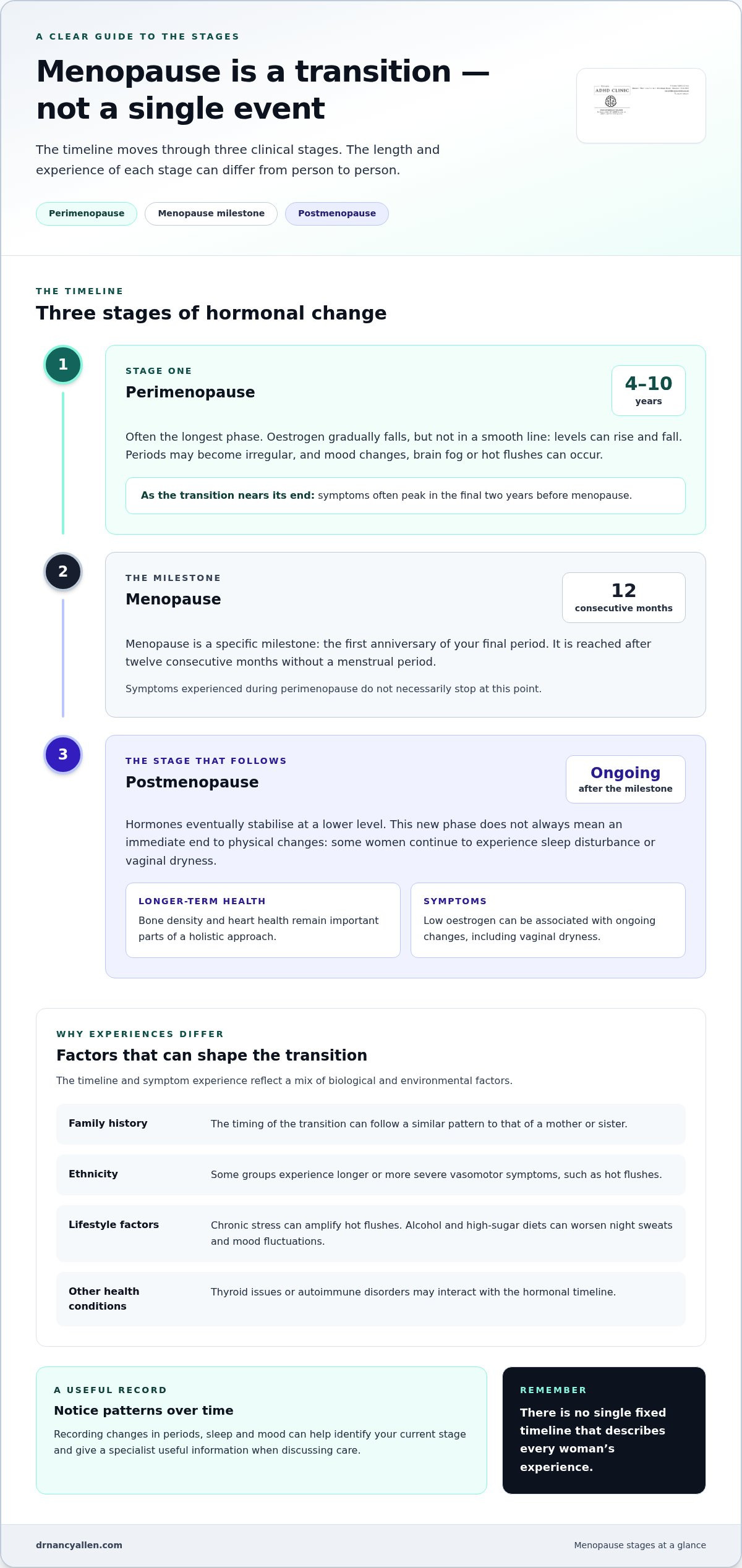
Clinically, your journey is divided into three distinct phases. While the question of how long does menopause last is often asked as if it were a single event, the reality is a prolonged shift in hormonal behaviour. Understanding these stages allows you to anticipate changes and seek the right support at the right time. It helps to move away from the idea of a "waiting game" and instead view each phase as a specific biological chapter that requires its own unique management strategy.
Perimenopause: The Decade of Fluctuations
Often the longest phase, perimenopause can last between four and ten years. During this time, your ovaries gradually produce less oestrogen. This isn't a smooth decline; it's a series of peaks and troughs. You might notice irregular periods or subtle mood changes long before the classic hot flushes begin. Research indicates that symptoms often peak in the final two years of the transition to menopause, as progesterone levels also fall away. This hormonal turbulence is what drives the unpredictable nature of brain fog and anxiety that many women find so disruptive to their professional lives.
Menopause itself is actually the 24-hour milestone that confirms you haven't had a menstrual period for twelve consecutive months. This specific anniversary marks the official end of your reproductive years. It's a significant marker, but it's important to remember that the symptoms you experienced during perimenopause don't always vanish the moment you reach this point.
Life in Postmenopause
Postmenopause is the stage that follows that twelve-month anniversary. While your hormones eventually stabilise at a lower level, this "new normal" doesn't always mean an immediate end to all physical changes. Some women continue to experience sleep disturbances or vaginal dryness well into this phase because oestrogen remains at a consistently low level. Reclaiming your quality of life during this time involves looking at your health holistically, focusing on bone density and heart health as much as symptom relief.
If you find that symptoms are lingering or affecting your daily confidence, reaching out for specialist menopause care can help you develop a personalised strategy for the years ahead. Understanding these stages validates that what you're feeling is a measurable biological process. Knowing how long does menopause last across each phase helps you prepare for the long-term health reclamation that follows, ensuring you remain informed and empowered throughout the entire transition.
Factors Influencing How Long Your Symptoms Persist
While clinical stages provide a useful framework, the duration of your transition is shaped by a unique combination of biological and environmental variables. If you're wondering how long does menopause last in your specific case, looking at your family history is a powerful starting point. Genetics often dictate the timing of the transition; women frequently follow a similar pattern to their mothers or sisters. Additionally, research highlights that ethnicity plays a role in symptom intensity and duration, with some groups experiencing longer or more severe vasomotor symptoms than others.
Beyond biology, several factors that influence menopause are within your control. Chronic stress can amplify the severity of hot flushes by placing additional strain on your adrenal glands. Similarly, alcohol consumption and high-sugar diets often exacerbate night sweats and mood fluctuations. When these lifestyle factors intersect with existing health conditions, such as thyroid issues or autoimmune disorders, the hormonal timeline can become significantly more complex to navigate.
Surgical and Early Menopause Timelines
Induced menopause, resulting from surgery such as a hysterectomy or treatments like chemotherapy, follows a very different trajectory than the natural transition. Rather than a gradual decline over years, oestrogen levels drop precipitously. This sudden onset often leads to more intense symptoms that require immediate, specialised management. For women reaching this milestone before age 45, long-term care is essential to protect bone and heart health, as the body is deprived of protective hormones much earlier than expected.
The ADHD and Menopause Connection
A frequently overlooked factor in the menopause journey is neurodiversity. Oestrogen plays a critical role in the production and regulation of dopamine; as levels fall, women with ADHD often find their existing symptoms becoming significantly more pronounced. Brain fog, impulsivity, and executive dysfunction can intensify, making professional and personal life feel increasingly overwhelming. This intersection is often where women feel most misunderstood by traditional medical assessments.
For many, the menopause transition is the first time they recognise these patterns of neurodivergence. If you find the cognitive shifts of midlife particularly distressing, seeking an Adult ADHD Assessment can provide the clarity needed to manage both your hormonal and neurological health. Validating this connection is a vital step in understanding how long does menopause last and how to reclaim your focus during this period of significant change.
Managing the Midlife Transition: Strategies for Long-Term Wellbeing
Understanding how long does menopause last is only one part of the puzzle; the true goal is ensuring that every stage of the transition is managed with clinical precision and personal care. Rather than simply waiting for symptoms to pass, you can proactively reclaim your hormonal health through a combination of medical intervention and targeted lifestyle changes. The landscape of care is evolving rapidly. For instance, in March 2026, NICE recommended Fezolinetant as a vital non-hormonal option for those unsuitable for traditional Hormone Replacement Therapy (HRT), whilst the MHRA expanded licences for other innovative treatments in July 2026. This shift towards personalised medicine ensures that your treatment plan can be as unique as your experience.
Personalised HRT remains a cornerstone of management for many, offering protection for your bones and heart whilst alleviating the most disruptive symptoms. However, a holistic approach also requires addressing the cognitive and metabolic shifts that occur. Nutritional adjustments, such as increasing calcium and vitamin D intake, are essential to counter the natural decline in bone density. Similarly, addressing the anxiety and depression that can accompany hormonal fluctuations is vital for maintaining your professional performance and personal confidence.
Addressing metabolic shifts often involves more than just diet; it requires a comprehensive medical perspective. To understand how a primary care physician might manage these changes, you can check out John Abroon M.D. for their expert approach to medical weight loss and internist-led care.
Restoring Pelvic Health and Confidence
A frequently overlooked consequence of declining oestrogen is its impact on pelvic floor health. Oestrogen receptors are situated throughout the bladder and pelvic tissues; as levels fall, these tissues can lose their elasticity and strength. This often leads to symptoms that women find difficult to discuss, such as urinary urgency, stress incontinence, or discomfort during intimacy. These are not inevitable parts of ageing that you must simply endure. Specialist care can help you restore this vital area of your health, ensuring that you move through postmenopause with physical comfort and renewed confidence. If you are experiencing these changes, booking a Pelvic Floor & Incontinence Consultation is a proactive step towards long-term restoration.
Holistic Lifestyle Adjustments
Whilst you may still be focused on
how long does menopause last
, your daily habits can significantly influence the severity of your journey. Prioritising sleep hygiene is a fundamental strategy for managing night sweats and the resulting insomnia. Beyond rest, the role of physical activity cannot be overstated. Weight-bearing exercises, such as brisk walking or strength training, are critical for maintaining bone strength in a low-oestrogen environment. Complementing this with mindfulness, stress-reduction techniques, or wellness-focused support from
helps stabilise the nervous system, making the psychological shifts of the transition feel much more manageable and less overwhelming.
Seeking Specialist Support for a Smoother Hormonal Journey
Navigating the midlife transition often begins with a simple question: how long does menopause last? However, for many women across the UK, the more pressing concern is the quality of their daily life whilst the transition unfolds. When general advice or standard ten-minute appointments feel insufficient to address the nuances of your symptoms, it's time to consider specialist support. This is also an ideal opportunity to explore primary care resources that provide a blueprint for quality health services and comprehensive patient support. Moving beyond a reactive approach to your health allows you to reclaim control over your body and mind, ensuring that you don't just endure these years but thrive through them.
The traditional medical model often lacks the time required to unpick the complex overlap of hormonal shifts, lifestyle stressors, and cognitive changes. A private GP approach, such as that offered by Ready Health, offers unhurried consultations where your narrative is the central focus. Through secure online consultations, women can now access expert care regardless of their location. This national access ensures that geographical barriers don't prevent you from receiving the validation and clinical insight you deserve, providing a steady hand during a time of significant biological change.
The Value of Empathetic, Specialist Care
Bespoke care means moving away from a "one size fits all" mentality. Every woman's hormonal profile is as individual as her fingerprint, and your treatment should reflect that. A clinician who understands the complexities of midlife health, such as Dr Nancy Allen with over 25 years of clinical experience, provides more than just a prescription. She offers a partnership. By combining clinical authority with deep-seated empathy, specialist care ensures that your experience is heard and your treatment is tailored to your specific needs, including the often-misunderstood intersection of menopause and neurodiversity.
Taking the Next Step Toward Hormonal Clarity
Preparing for your first consultation is an empowering step toward hormonal health reclamation. It's helpful to keep a brief diary of your symptoms and any patterns you've noticed in your energy levels or mood. During your initial assessment, you'll work together to create a management plan that addresses your immediate concerns whilst protecting your long-term wellbeing. This might include personalised hormone therapy, pelvic health strategies, or cognitive support tailored to your professional and personal life.
You don't have to navigate this transition alone. While the biological reality of how long does menopause last varies for everyone, the quality of support you receive shouldn't be a matter of chance. Reaching out for specialist guidance is a commitment to your future self; for instance, a Women’s Mental Health Specialist can provide the hormone-informed care needed to ensure you move through this chapter with clarity, confidence, and expert support to guide you every step of the way.
Reclaiming Your Path to Hormonal Clarity
The journey through midlife is a profound biological shift that requires more than just patience. While the question of how long does menopause last often brings you to the start of this guide, the answer lies in understanding your unique hormonal architecture. By recognising the clinical stages and the factors that influence your specific timeline, such as neurodiversity or lifestyle habits, you move from uncertainty toward empowerment. You've learned that perimenopause can be a decade-long transition; however, with the right strategies, these years don't have to be defined by disruption.
Expert support ensures that your experience is validated and your health is prioritised. Dr Nancy Allen provides compassionate, evidence-based private care with a deep expertise in the complex overlap between neurodiversity and hormonal health. You can book a private menopause consultation with Dr Nancy Allen to develop a personalised treatment plan that restores your confidence and long-term wellbeing. You don't have to navigate this transition in isolation. With a steady hand to guide you, it's possible to reclaim your vitality and step into postmenopause feeling informed, supported, and truly heard.
Frequently Asked Questions
How long do hot flushes usually last after my periods stop?
On average, hot flushes persist for about seven years after your final period, though for some women, they can last up to 14 years. While they typically peak in frequency during the first year of postmenopause, they should gradually decline in intensity. If these symptoms disrupt your sleep or work performance, specialised management can help reduce their severity and their impact on your daily life.
Can menopause symptoms return years into postmenopause?
Yes, symptoms can reappear or persist long after your periods have stopped. While vasomotor symptoms like night sweats often subside, other issues such as vaginal dryness or urinary changes can actually worsen over time due to permanently low oestrogen levels. It's also possible for significant stress or health changes to trigger a temporary return of flushes, which is why long-term hormonal health strategies remain essential for postmenopausal wellbeing.
Is it possible to be in perimenopause for 10 years or more?
It is entirely possible, as perimenopause typically lasts between four and ten years for most women. Every hormonal journey is unique, and some individuals experience a very slow, gradual decline in oestrogen levels. If you are asking how long does menopause last because your transition feels unusually prolonged, tracking your symptoms can help a specialist determine if your experience requires targeted clinical intervention.
How do I know if my symptoms are menopause or something else?
Distinguishing menopause from other conditions, such as thyroid disorders or ADHD, requires a thorough clinical assessment. Symptoms like fatigue, brain fog, and mood swings often overlap with various health issues. A specialist GP will look at your age, menstrual history, and symptom patterns to provide clarity. This unhurried, expert evaluation ensures you aren't misdiagnosing a separate health concern as a purely hormonal shift.
Will taking HRT make the menopause transition last longer?
No, HRT does not prolong the biological transition; it simply manages the symptoms whilst the shift occurs. Your body will still move through the stages of perimenopause and into menopause at its own pace. HRT provides the hormonal support needed to protect your bones and heart, allowing you to navigate the transition with significantly less disruption to your professional and personal life.
What is the average age for menopause to end in the UK?
The average age for menopause in the UK is 51, which is when most women reach the twelve-month milestone without a period. However, "ending" is a misnomer, as you remain postmenopausal for the rest of your life. While the most acute symptoms often subside by the mid-fifties, the biological shift is permanent, making the question of how long does menopause last more about symptom duration than a return to premenopausal status.
Can lifestyle changes shorten the duration of menopause symptoms?
While lifestyle changes cannot stop the biological transition, they can significantly reduce the severity and perceived duration of symptoms. Regular weight-bearing exercise, a balanced diet, and reducing alcohol intake help stabilise your system. Managing stress is particularly effective, as high cortisol levels can exacerbate hot flushes and anxiety. These proactive steps create a more manageable environment for your body as it adapts to lower hormone levels. To explore how targeted nutrition can help with sleep issues,
about the services at Enas Wellness.
Is brain fog a permanent symptom of postmenopause?
For most women, brain fog improves as hormones stabilise during postmenopause. Oestrogen plays a vital role in cognitive function, and once the fluctuations of perimenopause end, many find their mental clarity returns. However, for those with underlying neurodivergence, such as ADHD, these cognitive shifts may feel more persistent. In such cases, a specialist assessment can help distinguish between hormonal brain fog and other executive function challenges.



Comments