


Dysautonomia and ADHD: Understanding the Connection

What if the "brain fog" you have always attributed to neurodiversity is actually your nervous system struggling to regulate your heart rate? For many, the connection between dysautonimia and adhd means life isn't just about managing focus; it's about a body that feels permanently out of sync, marked by chronic fatigue that sleep cannot fix and a dizzying lightheadedness every time you stand too quickly. It's common to feel that your physical discomfort is dismissed as "just anxiety," yet the reality is often far more systemic.
We understand how exhausting it is to navigate a world that feels too loud and too bright whilst your own body feels unreliable. This article explores how autonomic dysfunction and ADHD are intrinsically linked, providing the clarity you need to stop treating symptoms in isolation. We will outline how a specialist assessment can offer a framework for holistic health management, ensuring your care is as integrated as your experience. By looking at the "whole picture," you can finally move towards a life where both your mind and body are supported with the expert care they require.
Table of Contents
What is the Link Between Dysautonomia and ADHD?
For many, ADHD has always been described as a condition of the mind, a struggle with focus, impulsivity, or organisation. However, clinical experience and emerging research suggest a much deeper, systemic connection that involves the entire body. The link between dysautonimia and adhd is rooted in the way the body processes stress and regulates its most basic functions. It is not just about a "busy brain"; it is about a nervous system that struggles to maintain internal balance. Central to this connection is norepinephrine, a chemical that acts as both a hormone and a neurotransmitter. It's responsible for sharpening our focus, but it also dictates our heart rate and blood pressure. When this system is out of balance, the result is a blur of cognitive and physical symptoms that can feel impossible to untangle.
Understanding the Autonomic Nervous System
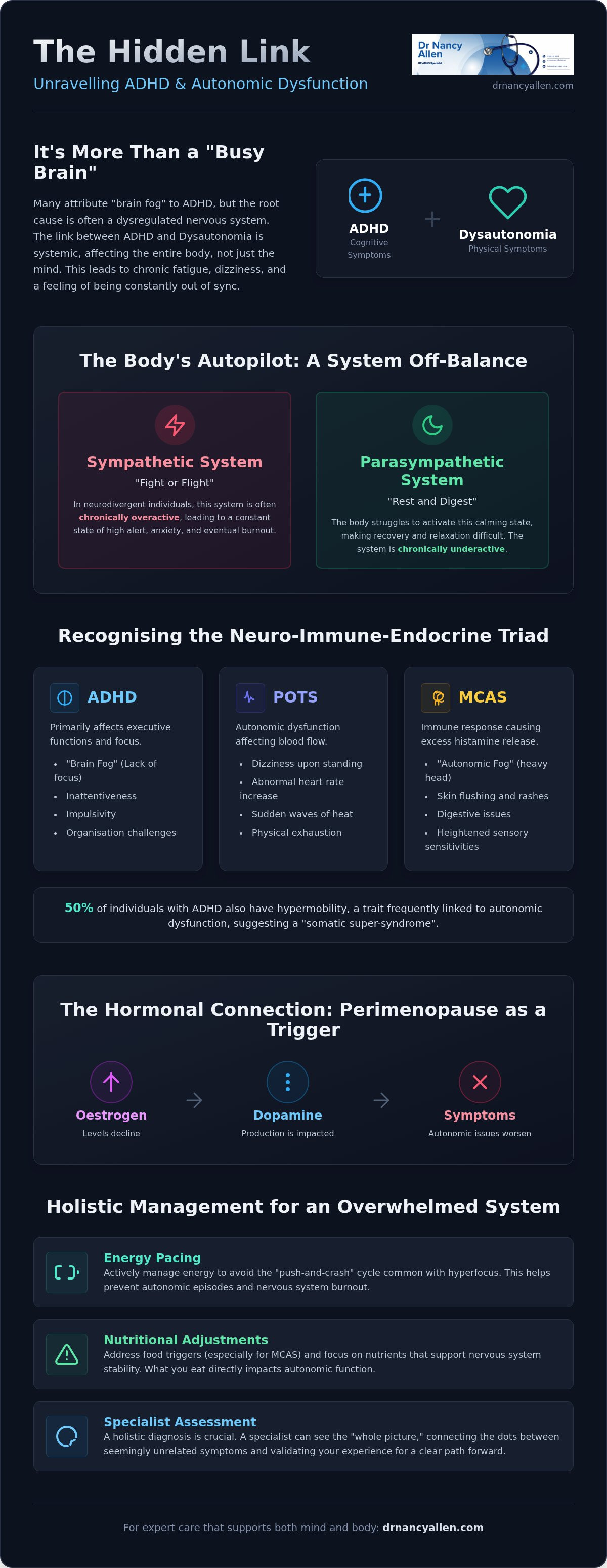
The Autonomic Nervous System (ANS) acts as the body's autopilot, managing everything from digestion to pupil dilation without our conscious input. It relies on a delicate balance between the sympathetic branch, which prepares us for action, and the parasympathetic branch, which allows us to recover. In neurodivergent individuals, this balance is often disrupted. The "fight or flight" response can become chronically overactive, making it difficult for the brain and body to ever truly reach a state of "rest and digest." To understand the broader context of these malfunctions, it's helpful to ask, What is Dysautonomia? Essentially, dysautonomia is an umbrella term for conditions where the ANS does not work as it should, leading to a breakdown in these automatic processes.
Why ADHD is More Than an Executive Function Issue
Viewing ADHD solely through the lens of inattentiveness ignores the physical reality of living with a sensitive nervous system. There is a profound overlap between sensory processing and autonomic reactivity. For instance, a loud noise or a bright light doesn't just distract someone with ADHD; it can trigger a physical spike in heart rate or a sudden wave of fatigue. Research published by the National Institutes of Health suggests that approximately 50% of individuals with ADHD also have hypermobility, a trait frequently associated with autonomic dysfunction. This suggests that these conditions are often part of a "somatic super-syndrome" rather than isolated issues. Many patients find that years of masking their ADHD symptoms to fit into neurotypical environments has led to profound nervous system burnout. This exhaustion isn't just mental; it's a physical manifestation of a system that has been running at maximum capacity for far too long.
Recognising the Symptoms: POTS, MCAS, and the ADHD Triad
For many patients, life feels like a collection of disjointed physical and mental struggles that don't seem to have a common cause. However, when we examine the link between dysautonimia and adhd, a clear pattern often emerges. This pattern is sometimes referred to as a "neuro-immune-endocrine" triad, involving ADHD, Postural Orthostatic Tachycardia Syndrome (POTS), and Mast Cell Activation Syndrome (MCAS). These conditions don't just exist alongside one another; they interact, with each one potentially worsening the symptoms of the others. Recognising these signs is the first step toward moving away from the frustration of being told your symptoms are "just anxiety."
POTS and ADHD: The Dizziness Connection
Postural Orthostatic Tachycardia Syndrome (POTS) is a common form of autonomic dysfunction where the heart rate increases abnormally after sitting up or standing. For a neurodivergent person, this can make a simple transition from a desk feel like a physical marathon. Whilst hyperfocus might allow you to ignore your body's signals for hours, the subsequent "crash" is often more than just mental exhaustion. It's frequently an autonomic episode. You might notice your heart racing, a sudden wave of heat, or purple-tinged skin on your legs after standing for too long. These physical stressors drain the very executive function resources you need to manage your ADHD.
MCAS and Sensory Sensitivities
Recent ADHD and dysautonomia research suggests a significant overlap with MCAS, where the body's mast cells release too much histamine. This can lead to skin flushing, digestive issues, and a specific type of "autonomic fog" that feels distinct from ADHD inattentiveness. While ADHD fog is usually about a lack of focus, autonomic fog feels like a heavy, physical pressure in the head, often triggered by heat or certain foods. Because histamine acts as a neurotransmitter, these "allergic" reactions can directly disrupt your cognitive clarity. If your sensory overload is always accompanied by physical discomfort, a specialist ADHD assessment can help determine if an immune or autonomic component is at play.
Common physical signs to monitor in your daily routine include:
Palpitations: A racing or pounding heart when you aren't feeling particularly stressed.
Temperature Dysregulation: Feeling excessively hot or cold regardless of the room temperature.
Digestive Sensitivity: Sudden bloating or nausea that seems tied to your energy levels rather than just what you've eaten.
Understanding these symptoms as part of a single, connected system provides the validation many patients have sought for years. It allows for a management plan that doesn't just target the brain, but supports the entire nervous system.
The Hormonal Connection: Menopause, ADHD, and Dysautonomia
The intersection of dysautonimia and adhd is particularly complex for women, as the nervous system is deeply influenced by the ebb and flow of hormones. Oestrogen isn't just a reproductive hormone; it's a vital neuro-protective agent that directly impacts dopamine levels and autonomic stability. When oestrogen drops, dopamine often follows, leading to a sharp rise in executive dysfunction and physical instability. For many women, these shifts aren't just subtle changes in mood but represent a significant disruption to their ability to function day-to-day.
Oestrogen, Dopamine, and the Nervous System
Many women find their symptoms peak during the luteal phase of their menstrual cycle or during the transition into menopause. This isn't a coincidence. Oestrogen is a key modulator of the autonomic nervous system. As levels fluctuate, the body’s ability to regulate heart rate and blood pressure can falter, exacerbating conditions like POTS or leading to unexplained fainting episodes. For those with ADHD, this hormonal dip makes the cognitive "fog" feel more like a physical barrier, as the brain's reward system loses its primary chemical support. The result is often a double burden of increased inattentiveness and heightened physical vulnerability.
Navigating Midlife with ADHD and Dysautonomia
Perimenopause often acts as a trigger for previously managed autonomic issues. For some, it's the moment when a lifetime of masking ADHD finally becomes impossible. It’s crucial to distinguish between what society calls "menopause brain" and the underlying reality of late-diagnosed ADHD in Women. Without a specialist lens, these overlapping symptoms are frequently misdiagnosed as simple anxiety or age-related decline, leaving women without the support they truly need.
Dr Nancy Allen’s specialised approach focuses on this specific overlap. With over 25 years of clinical experience, she understands that treating the menopausal neurodivergent patient requires more than just a single prescription. It demands an integrated plan where Hormone Replacement Therapy (HRT) and ADHD management work in tandem to restore both cognitive clarity and physical confidence. By addressing the hormonal foundation, it's possible to stabilise the autonomic nervous system and reclaim a sense of control. This holistic perspective ensures that you aren't just managing symptoms, but actively restoring your quality of life during a period of significant transition.
Holistic Management: Strategies for an Overwhelmed Nervous System
Managing the daily intersection of dysautonimia and adhd requires a significant shift in perspective. You cannot simply "push through" executive dysfunction when your body is struggling to maintain its basic physiological balance. Traditional productivity advice often ignores the physical toll of autonomic dysfunction, leading to a cycle of shame and exhaustion. Instead, we must focus on creating a foundation of safety for the nervous system. The "Pacing" method is central to this approach. It involves breaking tasks into smaller chunks and scheduling mandatory rest periods before you feel exhausted. This prevents the "boom and bust" cycle that often leads to autonomic crashes and prolonged periods of brain fog.
Nutrition and physical regulation play vital roles in maintaining stability. For those experiencing postural issues, increasing salt and hydration is often a clinical recommendation to help maintain blood volume and prevent dizziness. Stabilising glucose levels throughout the day also prevents the adrenaline spikes that can mimic ADHD restlessness or trigger palpitations. For immediate regulation, Vagus nerve stimulation techniques can be incredibly effective. Simple actions like splashing cold water on your face or practicing diaphragmatic breathing can help toggle the body from a "fight or flight" state back to "rest and digest."
Lifestyle Adjustments for Autonomic Stability
Standard ADHD tips like "just use a planner" often fail because they don't account for the physical fatigue caused by dysautonomia. When your heart rate is constantly fluctuating, your brain has less energy for planning and organisation. Horizontal rest is often far more restorative than sitting upright, as it allows your heart to pump blood more easily. Compression wear can also assist by preventing blood from pooling in the lower limbs. Recovery is just as important as activity. For deeper insights into managing your energy and restoring your system, explore our guide on ADHD and Sleep.
Medication and Treatment Considerations
Medication management for neurodivergent patients with autonomic sensitivity is a delicate balance. Stimulants such as Lisdexamphetamine can improve focus but may also increase heart rate, which can be problematic for a sensitive system. In some cases, non-stimulants or the addition of beta-blockers can provide a smoother experience without the physical "jitteriness." It's essential to work with a practitioner who understands how to fine-tune your treatment plan to suit your unique physiology. If you're ready for a clinical approach that sees the whole picture, you can book a specialist assessment today to begin your journey toward better balance.
Seeking Clarity: The Path to a Specialist ADHD Assessment
Seeking help through traditional primary care often leaves patients feeling frustrated and misunderstood. A standard GP appointment is typically too brief to untangle the complex relationship between dysautonimia and adhd. When symptoms like lightheadedness or palpitations are presented alongside executive dysfunction, they are frequently mislabelled as "just anxiety." This fragmented approach fails to recognise that your physical and cognitive experiences are deeply interconnected. Choosing a specialist who sees the "whole picture" is not just about getting a label; it's about finding an expert guide who validates your lived experience and provides a clinical framework for recovery.
The 72-Hour Diagnosis Journey
Dr Nancy Allen offers a streamlined, online assessment process designed specifically for UK patients who need answers without the long waiting lists. This journey begins with a thorough consultation where your history is heard with both clinical precision and genuine compassion. With over 25 years of experience, Dr Allen understands the nuances of how autonomic dysfunction interacts with neurodiversity. Once the assessment is complete, a diagnosis and personalised treatment plan are provided within 72 hours. This rapid turnaround ensures you don't spend months in a state of uncertainty. To understand the full scope of this process, you may wish to read our Adult ADHD Assessment pillar.
Moving Beyond the Label
A comprehensive diagnosis serves as a powerful tool for self-advocacy and long-term health. It provides the evidence needed to request essential workplace adjustments, ensuring your environment supports your nervous system rather than draining it. Under UK law, understanding your legal rights can protect you from discrimination and provide access to the support you deserve. This holistic perspective is vital for those managing both dysautonimia and adhd, as it ensures every part of your health is addressed. Beyond the legalities, a diagnosis allows for the creation of a personalised roadmap for your wellbeing. This includes fine-tuning medication, implementing pacing strategies, and potentially managing hormonal health in tandem. If you're ready to stop guessing and start healing, booking a specialist consultation is the first step toward reclaiming the quality of life you deserve.
Reclaiming Your Balance and Clarity
Living with the complex overlap of dysautonimia and adhd often means navigating a world that doesn't quite understand your physical or mental reality. We've explored how autonomic dysfunction influences everything from your heart rate to your executive function, and how hormonal shifts during menopause can significantly amplify these challenges. Recognising that your symptoms are part of a connected, systemic experience is the first step toward effective management. You don't have to manage this complexity in isolation; expert validation provides the framework you need to move from surviving to thriving.
Dr Nancy Allen offers specialist expertise in neurodiversity and hormonal health, providing compassionate, online consultations across the UK. With diagnosis and treatment planning available within 72 hours, you can gain the insight you need without the anxiety of a long wait. Book your private ADHD assessment with Dr Nancy Allen today to begin your journey toward holistic health management. There is a path forward that sees the whole you, and it starts with the right support.
Frequently Asked Questions
Can ADHD cause dysautonomia symptoms like dizziness?
While ADHD doesn't directly cause dysautonomia, the two conditions frequently coexist because they both involve dysregulation of the nervous system. Dizziness is often a physical symptom of autonomic dysfunction, specifically triggered when the body struggles to regulate blood pressure or heart rate during movement. For those with dysautonimia and adhd, these physical sensations can often be mistaken for the restlessness or lightheadedness sometimes associated with neurodivergence or sensory overload.
Is POTS a common comorbidity of ADHD?
Yes, POTS is a very common comorbidity, with studies suggesting a significant overlap amongst neurodivergent populations. Research indicates that approximately 50% of individuals with ADHD also have hypermobility, which is a major risk factor for developing POTS. This connection creates a unique set of challenges where cognitive fatigue is compounded by the physical exhaustion of a heart rate that spikes simply from standing up or moving through daily tasks.
How does ADHD medication affect autonomic dysfunction?
ADHD medications, particularly stimulants, can influence autonomic dysfunction by increasing your heart rate and blood pressure. Whilst these medications are highly effective for cognitive clarity, they may exacerbate symptoms like palpitations or dizziness in sensitive individuals. It's essential to work with a specialist who can fine-tune your treatment plan, potentially incorporating non-stimulant options or beta-blockers to ensure your focus is improved without compromising your physical autonomic stability.
Why do my ADHD symptoms get worse during my period or menopause?
Your symptoms often worsen during these times because oestrogen is a vital modulator of both dopamine and the autonomic nervous system. When oestrogen levels drop during the luteal phase or menopause, dopamine production decreases, making ADHD symptoms harder to manage. Simultaneously, this hormonal dip can destabilise the autonomic system, making you more prone to POTS flares, temperature dysregulation, and profound fatigue that feels both mental and physical.
What is the best way to manage brain fog caused by both ADHD and dysautonomia?
Managing brain fog effectively requires a multi-faceted approach that addresses both your cognitive and physiological needs. Strategies like the "pacing" method help prevent the autonomic crashes that drain your mental energy. Additionally, maintaining glucose stability and increasing your intake of salt and water can support your blood volume, reducing the physical dizziness that often clouds your thinking. Combining these lifestyle adjustments with a tailored ADHD management plan provides the best foundation for clarity.
Can I get a private ADHD diagnosis online in the UK?
Yes, you can receive a comprehensive private ADHD diagnosis through secure online consultations across the United Kingdom. Dr Nancy Allen provides a specialised service that includes a thorough assessment and a personalised treatment plan within 72 hours. This streamlined process is designed to offer rapid clarity and expert validation, allowing you to bypass long waiting lists and begin managing the complex link between dysautonimia and adhd with professional guidance.
What is the difference between anxiety and autonomic dysfunction in ADHD?
The primary difference lies in the source of the symptoms; anxiety is typically a cognitive or emotional response to stress, whereas autonomic dysfunction is a physiological failure to regulate involuntary functions. Whilst they can feel similar, autonomic symptoms like a racing heart or dizziness often occur without an emotional trigger. Distinguishing between the two is vital for effective treatment, as "anxiety" medications may not address the underlying physical regulation issues of the nervous system.
Is dysautonomia considered a disability alongside ADHD in the UK?
Both dysautonomia and ADHD can be considered disabilities in the UK under the Equality Act 2010 if they have a substantial and long-term effect on your ability to carry out normal day-to-day activities. This legal recognition entitles you to reasonable adjustments in the workplace and educational settings. Having a formal diagnosis from a specialist is a crucial step in accessing these rights and ensuring your environment is adapted to support your unique nervous system needs.


Comments