


Menopause Symptoms: A Comprehensive Guide to Specialist Clinical Care

Updated: 9 hours ago
What if the debilitating brain fog and sudden irritability you're experiencing aren't merely inevitable signs of ageing, but a complex biological puzzle that a standard ten-minute GP appointment is simply not equipped to solve? It's deeply frustrating to feel as though your physical and emotional experiences are being dismissed or, perhaps more confusingly, mistaken for worsening ADHD symptoms. You understand your own body, and you've likely noticed when the cognitive clarity you once took for granted begins to fade into a haze of anxiety and exhaustion whilst you struggle to keep up with daily demands. Identifying your specific menopause symptoms is the first step toward finding a solution that actually works for your unique physiology.
This guide will help you identify the subtle and often misunderstood nuances of these changes, offering the specialist clinical insight needed to reclaim your quality of life. We'll explore the vital connection between hormonal shifts and brain health, address your concerns regarding the safety of modern HRT, and provide a clear roadmap toward a personalised treatment plan. You'll discover how expert, empathetic care can restore your sense of self and provide the lasting physical comfort and mental sharpness you've been seeking.
Table of Contents
What are Menopause Symptoms? Identifying the Full Spectrum
Menopause is rarely a sudden transition. Instead, it's a gradual physiological shift where symptoms often emerge years before your final period. Understanding the full spectrum of menopause symptoms requires looking beyond the well-known clichés of hot flushes. For many women, the experience is a confusing blend of physical discomfort and emotional volatility that feels difficult to pin down. Recognising these changes as part of a biological process is the first step toward reclaiming control over your health. This holistic view includes monitoring your oral health, as hormonal fluctuations can impact gum sensitivity, making regular visits to a clinic like Greenlane Dental Practice a key part of your self-care routine.
The Three Stages of the Menopausal Transition
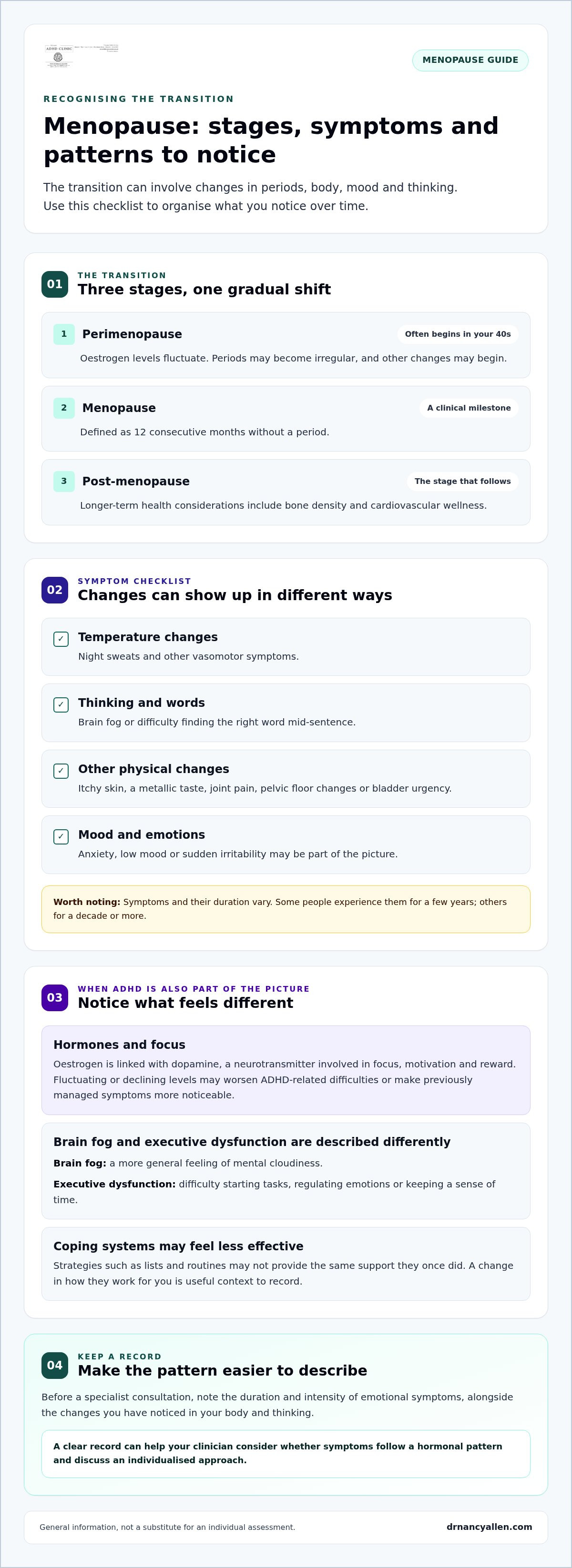
The journey typically follows three distinct phases. Perimenopause marks the beginning, often starting in your 40s, where oestrogen levels fluctuate wildly. This hormonal chaos can lead to irregular cycles and the first onset of systemic changes. Menopause itself is a clinical milestone, defined as the point when you've reached 12 consecutive months without a period. For a comprehensive overview of menopause and its biological roots, clinical definitions provide a helpful baseline. Finally, post-menopause is the stage that follows, where the focus shifts toward managing long-term health, such as bone density and cardiovascular wellness, as your body settles into its new hormonal baseline.
Common vs. Silent Menopause Symptoms
While vasomotor symptoms like night sweats are frequently discussed, "silent" symptoms can be just as disruptive. Cognitive changes, such as brain fog or struggling to find the right word mid-sentence, are significant clinical markers of hormonal flux. You might also notice unusual sensations like itchy skin or a metallic taste in your mouth. These aren't isolated quirks; they're direct results of declining hormone receptors throughout the body. Physical markers also extend to joint pain and pelvic floor changes. Oestrogen plays a crucial role in maintaining collagen and lubrication, so when levels drop, you might experience stiff joints or bladder urgency that feels entirely new. For those seeking to address these intimate physical changes, you can explore Aesthetic Gynecology with Dr Tiffany Yeo-Reddy, who provides a holistic perspective on restorative care.
Because every woman's biology is unique, how long menopause lasts varies significantly. Some find relief within a few years, whilst others experience symptoms for a decade or more.
Psychological symptoms are often the most misunderstood. Anxiety, low mood, and sudden irritability aren't merely reactions to a busy life. They are clinical indicators of neurochemical changes in the brain. When you prepare for a specialist consultation, tracking the duration and intensity of these feelings is vital. A detailed record helps your clinician distinguish between general stress and the specific patterns of hormonal depletion. This data allows for a more accurate, personalised approach to your care, ensuring that your treatment plan addresses the root cause rather than just the surface-level effects.
The ADHD and Menopause Connection: A Specialist Perspective
For many neurodivergent women, the transition into midlife feels less like a gradual change and more like a sudden loss of control. If you've spent years developing delicate systems to manage focus and organisation, you might find those strategies abruptly failing. This isn't a personal failing or merely a sign of "normal ageing." Instead, it's often the result of how declining oestrogen levels interact with a brain that already processes information differently. When oestrogen drops, it can unmask or significantly worsen ADHD-related menopause symptoms, making previously manageable tasks feel insurmountable.
The core of this struggle lies in the dopamine link. Oestrogen plays a vital role in the production and reception of dopamine, the neurotransmitter responsible for focus, motivation, and reward. As hormonal levels fluctuate, dopamine efficiency plummet. This explains why your usual coping mechanisms, such as meticulous list-making or strict routines, may no longer provide the cognitive support they once did. Distinguishing between general "menopause brain fog" and specific executive dysfunction is a nuance that requires specialist clinical insight. Whilst brain fog often feels like a global cloudiness, executive dysfunction manifests as a specific inability to initiate tasks, regulate emotions, or maintain a sense of time.
Why Oestrogen Matters for Brain Health
Oestrogen acts as a master regulator for neurotransmitters including dopamine and serotonin. When these levels decline, the impact on emotional regulation and cognitive clarity is profound. You might experience heightened sensory sensitivity, increased impulsivity, or a return of the internal restlessness you thought you'd left behind in your youth. Declining oestrogen levels during the menopausal transition directly reduce dopamine efficiency in the brain, which often exacerbates pre-existing executive dysfunction or unmasks previously managed ADHD symptoms. Understanding these connections is essential for finding effective Menopause symptoms and relief through targeted clinical care.
Seeking a Combined Assessment
Relying on a general practitioner who lacks specialist knowledge in neurodivergence often leads to a "one-size-fits-all" approach that ignores the ADHD-menopause overlap. A dual-specialist perspective is vital because treatment for one condition often informs the management of the other. For instance, stabilising your hormones with HRT might improve the efficacy of your ADHD medication, or vice versa. If you find yourself struggling with new or worsening cognitive challenges, seeking an adult ADHD assessment alongside menopause care can provide the clarity you need to move forward.
By tailoring a treatment plan that addresses both your hormonal health and your neurodivergent needs, you can restore the cognitive clarity required to thrive. You don't have to navigate this complex intersection alone; connecting with a specialist who understands the intricacies of the female brain can help you build a personalised roadmap toward hormonal and mental well-being.
NHS vs. Private Menopause Care: Why Personalisation Matters
Whilst the NHS provides a vital service for many health concerns, the standard ten-minute GP appointment is often inadequate for addressing the complex, multi-system nature of the menopausal transition. Many women find themselves leaving these brief consultations feeling unheard or offered a "one-size-fits-all" prescription that doesn't account for their specific lifestyle or medical history. Specialist private care shifts the focus from managing a checklist of menopause symptoms to understanding the individual woman behind them. By prioritising time and empathy, a specialist can explore the full spectrum of menopause symptoms that might otherwise be overlooked in a rushed clinical setting; learn more about how this philosophy of unhurried, patient-centric care is applied within concierge medicine.
Choosing private care also opens the door to more sophisticated treatment options, such as body-identical HRT, which is molecularly identical to the hormones your body produces naturally. These bespoke protocols are tailored to your unique hormonal profile and updated as your needs evolve. The added convenience of secure, national online consultations ensures that expert medical guidance is accessible to busy women across the UK, regardless of their location. This modern approach removes the geographical and time-based hurdles that often delay essential care. For those who also value local, community-focused medical support, you can check out Ready Health to learn more about their accessible private healthcare services.
This commitment to accessible, high-quality primary care is mirrored by providers like GP Plus, who offer a wide range of private medical services that prioritise patient time and thorough clinical assessment.
The Depth of a Private Specialist Consultation
A private specialist consultation goes far beyond basic blood tests to provide a holistic review of your wellbeing. This unhurried environment allows for meaningful discussions regarding sensitive topics such as pelvic health, changes in intimacy, and long-term bone density. The work of specialists like TurboUrolog – Dr Anna Bonder-Nowicka in urology and sexology highlights how crucial it is to have expert support for the physical and emotional complexities of intimate health during menopause. Your specialist acts as a dedicated health partner, looking at how hormonal shifts impact every aspect of your life. This comprehensive assessment ensures that your treatment plan is not just about symptom suppression, but about long-term health restoration and the prevention of future complications.
Speed of Care and Treatment Implementation
Waiting months for an appointment at a traditional menopause clinic can significantly exacerbate your distress and impact your career and relationships. In private practice, the emphasis is on rapid assessment and implementation. Dr Nancy Allen's approach ensures that following your consultation, a personalised treatment plan is delivered within 72 hours. This efficiency provides immediate clinical validation and a clear path forward, bypassing the lengthy hurdles of traditional referral pathways. You gain the clarity and support you need precisely when you need it, allowing you to begin your journey toward hormonal balance without unnecessary delay.
Assessing Your Symptoms: Preparing for Your Consultation
Walking into a consultation with a clear understanding of your own body's patterns transforms the clinical experience from a passive assessment into a collaborative partnership. Identifying menopause symptoms is far more effective when you can provide context on their frequency, intensity, and specific triggers. A detailed symptom diary, kept over a few weeks, allows your specialist to spot patterns that might otherwise be missed during a single conversation. Instead of a vague sense of feeling "off," you can point to specific windows of time where sleep was disrupted or irritability spiked.
Your clinical history is equally important. A specialist will look at your previous hormonal journey, including experiences with PMS or postnatal depression. These past events often indicate a high level of sensitivity to hormonal shifts, which helps in tailoring your current treatment. You should also clarify your primary goals. Whether your priority is physical comfort, better sleep, or the restoration of cognitive clarity, defining these outcomes ensures the resulting plan aligns with your life.
Key Questions to Ask Your Menopause Specialist
Preparation involves knowing which questions will yield the most insight for your specific situation. You might ask about the distinction between synthetic and body-identical HRT, or explore non-hormonal alternatives if HRT isn't suitable for you. For neurodivergent women, it's essential to ask how hormonal care will be integrated with existing ADHD management. This ensures that your treatment doesn't just address menopause symptoms in isolation, but supports your overall brain health and executive function.
What to Expect from an Online Consultation
National online consultations provide a secure and private digital space, allowing you to discuss sensitive health concerns without the stress of travel. You can expect a supportive, patient-centric environment where your experiences are validated by a clinician who understands the complexities of midlife health. For those who must travel while navigating health transitions, RN MEDflights offers professional support to ensure a safe and comfortable journey. The process is unhurried, focusing on a thorough understanding of your needs. After the initial assessment, you'll receive a clear roadmap for follow-up care and monitoring. This structured approach ensures you aren't left wondering about next steps; instead, you have a partner dedicated to your long-term restoration.
If you're ready to gain clarity on your health, you can book a specialist menopause consultation to start your personalised care journey.
Reclaiming Your Vitality: The Path to Hormonal Clarity
Moving from the confusion of identifying menopause symptoms to a state of clinical clarity is a transformative experience. It marks the shift from merely enduring your days to actively participating in your life again. Evidence-based, personalised care provides more than just a prescription; it offers a profound restoration of your sense of self. When your hormonal health is stabilised, the cognitive fog lifts, and the physical discomfort that once felt like an immovable weight begins to dissipate. You aren't just managing a condition; you're reclaiming the vitality that defines who you are.
Restoring confidence in your body and cognitive abilities is a central pillar of specialist care. Many women describe a feeling of being "back in the room" once their treatment plan takes effect. This newfound clarity allows you to approach your career, relationships, and personal goals with the same sharpness you possessed before the transition began. Beyond the immediate relief of menopause symptoms, proactive hormonal management offers significant long-term health benefits. Maintaining optimal hormone levels supports cardiovascular health and bone density, providing a protective foundation as you move into the next chapter of your life; you can learn more about how Westridge Holistic medicine uses naturopathic care to help you build this foundation through a root-cause approach to wellness.
Holistic Wellbeing and Menopause
Clinical intervention works best when integrated with a broader approach to holistic wellbeing. This includes tailored nutrition to support metabolic health—where specialists such as ah-fertilitynutrition.com can offer expert guidance on hormonal balance—and movement patterns that protect your joints and muscle mass. Stress management is equally vital, as high cortisol levels can exacerbate hormonal imbalances. We also prioritise pelvic floor health, which is often a "silent" area of concern. Restoring strength and function in this area is essential for physical comfort and overall confidence, ensuring you feel secure in every aspect of your daily movement. A sustainable plan for your post-menopausal years focuses on these interconnected elements of health.
Your Journey with Dr Nancy Allen
Choosing the right partner for your healthcare journey makes all the difference. Dr Nancy Allen brings over 25 years of clinical experience to every consultation, with a specific focus on the complex overlap between hormones and brain health. This expertise ensures that your physical experiences and neurodivergent needs are handled with deep compassion and professional precision. You aren't just another patient on a list; you're an individual deserving of unhurried, expert-led care. This commitment to personalised support is a standard that should extend to all aspects of family health; for instance, Earth Angels Home Care provides specialised in-home care for seniors and those with dementia in Nova Scotia, demonstrating how tailored assistance can support families during challenging transitions.
Our personalised treatment plans act as a clear roadmap to your recovery. From the initial assessment to the implementation of your bespoke protocol, every step is designed to provide security and stability. If you're ready to move past the exhaustion and reclaim your cognitive clarity, the path forward is simple. You can book your specialist menopause consultation today and begin the journey toward lasting hormonal balance and vitality.
Taking Control of Your Menopause Journey
Navigating the complex intersection of hormonal shifts and cognitive health requires more than just endurance; it demands specialist insight. You now understand that your experience is a biological reality, whether you are managing the unmasking of ADHD or the physical markers of the transition. By moving beyond the limitations of standard care, you can access a path that prioritises your unique physiology and long-term wellbeing. Identifying your specific menopause symptoms is the start of a journey toward restoration rather than just management.
Dr Nancy Allen offers national online consultations from a trusted UK GP, bringing over 25 years of clinical expertise in both ADHD and hormonal health. You can expect a personalised care plan delivered within 72 hours, providing you with a clear and actionable roadmap to recovery. There is no need to struggle through this transition alone whilst feeling unheard. Book your private specialist menopause consultation with Dr Nancy Allen to begin reclaiming your cognitive clarity and physical comfort. You deserve to feel like yourself again, supported by care that truly understands your journey.
Frequently Asked Questions
What are the first signs of perimenopause to look out for?
Changes in your menstrual cycle and subtle mood shifts are often the earliest indicators of the transition. You might notice shorter or longer cycles, heavier bleeding, or sudden bouts of anxiety and sleep disruption. These early menopause symptoms occur because oestrogen levels begin to fluctuate unpredictably, affecting your body's internal thermostat and neurochemistry before your periods stop entirely. Recognising these patterns early allows for more effective management.
Can menopause symptoms make my ADHD worse?
Yes, declining oestrogen levels directly impact dopamine efficiency, which often significantly exacerbates ADHD symptoms. Oestrogen helps regulate neurotransmitters responsible for focus and emotional regulation. When these levels drop during midlife, women with ADHD frequently find their usual coping strategies fail. This leads to increased forgetfulness, impulsivity, and executive dysfunction that feels more intense than in previous years, requiring a specialist approach to manage both conditions together.
Is HRT safe, and what are the different types available privately?
Modern HRT is considered safe for most women, particularly when using body-identical hormones that are molecularly the same as those your body produces. Private clinics often favour these "body-identical" options, such as oestrogen gels, patches, or micronised progesterone capsules, because they carry a lower risk profile compared to older synthetic versions. A specialist will assess your individual health history and family background to ensure the treatment is appropriate for your specific needs.
How long do menopause symptoms typically last without treatment?
The duration of the menopausal transition varies significantly, though many women experience symptoms for approximately four to seven years. However, for some individuals, symptoms can persist for up to 12 years or even longer. Without clinical intervention, these changes can impact long-term bone density and cardiovascular health. Proactive management is essential for maintaining your quality of life and protecting your physical wellbeing during and after the transition.
Can I get a private menopause diagnosis online in the UK?
You can certainly receive a private menopause diagnosis via secure online consultations with a UK based specialist. These virtual assessments are thorough, focusing on a detailed review of your medical history and current symptoms rather than relying solely on blood tests, which can be unreliable due to hormonal fluctuations. This approach provides rapid access to expert care and personalised treatment plans from the comfort and privacy of your own home.
What happens if I cannot take HRT for symptom management?
There are several effective non-hormonal options available if HRT is not suitable for your medical history or personal preference. Specialists can prescribe specific medications to manage vasomotor symptoms like hot flushes, or recommend targeted supplements and cognitive behavioural therapy (CBT). Lifestyle adjustments, including nutrition and pelvic floor rehabilitation, also play a vital role in managing the broader spectrum of menopause symptoms and restoring your physical comfort and confidence.
Why am I experiencing brain fog and memory issues during menopause?
Brain fog occurs because oestrogen receptors are located throughout the brain, particularly in areas responsible for memory and information processing. As oestrogen levels decline, the brain's metabolic activity changes, leading to word-finding difficulties and a sense of mental cloudiness. This is a biological shift in how your brain uses energy, not a permanent loss of cognitive ability. These cognitive challenges often respond well to hormonal stabilisation and specialist clinical support.
How much does a private menopause specialist consultation cost?
Initial consultations with a private menopause specialist in the United Kingdom typically range from £150 to £465, depending on the complexity of the assessment. Follow-up appointments to monitor your progress generally cost between £85 and £250. Whilst these fees represent a self-pay investment in your health, many patients find the unhurried time and personalised expertise provide a level of clarity and care that is difficult to achieve through standard public health routes.



Comments