


Menopause Weight Gain: Debunking the Myths and Reclaiming Your Body

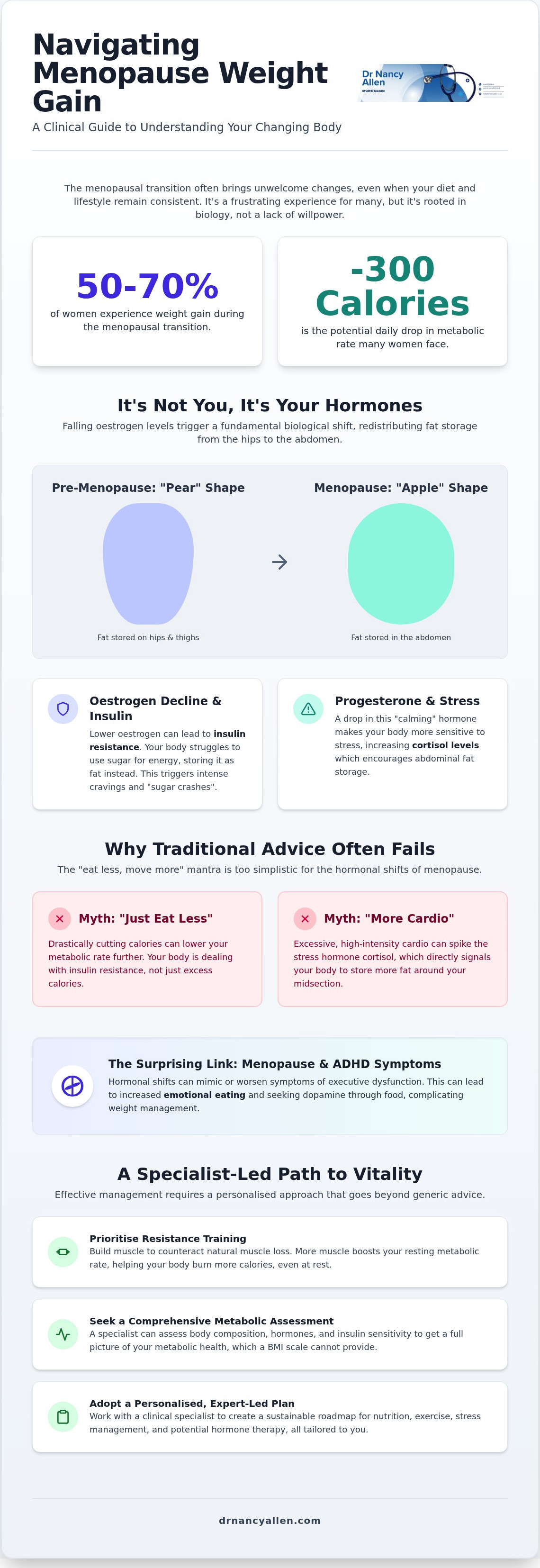
Did you know that between 50 and 70 per cent of women experience menopause weight gain, with many seeing their metabolic rate drop by up to 300 calories every day? It often feels like an overnight betrayal when the "menopause middle" appears despite your best efforts. You are likely eating the same nutritious meals and maintaining the same active lifestyle, yet the scales continue to climb and your clothes feel uncomfortably tight. It is deeply frustrating to feel out of control of your own body, especially when you are met with conflicting social media advice or told that your fatigue is simply a part of getting older.
You deserve clinical clarity that honours your experience rather than dismissing it. This article promises to bridge the gap between traditional diet culture and specialist medical insight, explaining the biological reality of visceral fat and hormonal shifts. We will debunk the persistent myths that fuel low self-esteem, explore the latest evidence-based treatments, and provide a structured roadmap for reclaiming your health. By the end, you will understand exactly why your body is changing and how a personalised, expert-led approach can help you feel like yourself again.
Table of Contents
Understanding Menopause Weight Gain: Why Midlife Changes Your Shape
Many women notice that their body shape begins to transform even whilst their diet and activity levels remain unchanged. This shift, often referred to as menopause weight gain, isn't just about a number on the scale; it is a fundamental biological redistribution of fat. For a comprehensive overview of menopause, it's clear that the drop in oestrogen signals the body to stop storing fat in the hips and thighs and start depositing it in the abdomen. This shift from a "pear" to an "apple" shape is a hallmark of the menopausal transition.
This transition frequently begins during perimenopause, which can start in your early 40s or even late 30s. Since this stage occurs years before your final period, you might find yourself struggling with a changing waistline whilst still having regular cycles. Understanding how long does menopause last is vital, as these metabolic shifts can persist for over a decade, requiring a long-term strategy rather than a quick-fix diet.
The Reality of the 'Menopause Middle'
The migration of fat to the midsection involves two distinct types of tissue. Subcutaneous fat sits just under the skin and is what you can pinch. However, the "menopause middle" is often driven by visceral fat, which accumulates deep within the abdominal cavity around internal organs. Visceral fat is a metabolically active tissue that influences inflammation. This internal change often happens alongside other menopause symptoms like night sweats and mood changes, creating a perfect storm of physical and emotional discomfort that can impact your quality of life.
Is it Just Age or is it Hormones?
Whilst some general practitioners might suggest that midlife weight gain is merely a consequence of getting older or moving less, the science tells a more nuanced story. Natural sarcopenia, the age-related loss of muscle mass, certainly plays a role by lowering your basal metabolic rate. However, the hormonal decline of menopause accelerates this process and dictates where the fat is stored. Traditional BMI measurements often become less accurate during this time because they don't account for body composition. You might weigh the same as you did five years ago but have significantly more visceral fat and less muscle mass. Recognising that menopause weight gain is a clinical event rather than a personal failure is the first step toward effective management.
Hormones vs. Habits: The Science Behind the Shift
It is a common misconception that midlife weight gain is merely a failure of willpower or a sudden lapse in healthy habits. In reality, your body is navigating a complex biochemical restructuring that changes how you process every calorie you consume. Whilst your daily routine plays a role, it is often the biological environment that dictates your hunger signals and energy expenditure. Understanding this shift is the first step toward moving away from shame and toward effective, evidence-based solutions.
Oestrogen, Insulin, and Your Metabolism
Oestrogen is far more than a reproductive hormone; it is a vital metabolic regulator. In your younger years, oestrogen helped maintain insulin sensitivity, ensuring that your cells could efficiently absorb glucose for energy. As oestrogen levels decline during perimenopause and menopause, your cells can become resistant to insulin's signals. This resistance means that instead of being burned for fuel, sugar remains in the bloodstream longer, eventually being stored as fat.
This metabolic friction often leads to intense "sugar crashes" and persistent cravings. You might find that your favourite comfort foods, which you once enjoyed in moderation, now feel almost addictive. This isn't a lack of discipline; it's your brain responding to fluctuating blood sugar levels. When exploring the relationship between menopause and your health, it becomes clear that these internal feedback loops are the primary drivers of physical change.
The Cortisol Connection: Stress and Belly Fat
The transition is also marked by a significant drop in progesterone, a hormone that typically buffers your nervous system against stress. Without this natural "calming" influence, your body’s stress response can become overactive, leading to elevated levels of cortisol. Chronically high cortisol is particularly problematic because it specifically signals the body to store fat in the abdominal cavity to protect vital organs. This is a key reason why many women notice a sudden increase in visceral fat even if they haven't changed their exercise routine.
This creates a difficult cycle where poor sleep, often caused by night sweats, further spikes cortisol the following morning. High cortisol then increases insulin resistance, making it even harder for the body to access stored fat for energy. If you feel as though you are doing everything right but seeing no results, a specialist clinical assessment can provide the clarity needed to address these underlying hormonal imbalances rather than just fighting the symptoms.
Debunking the Myths: Why 'Eat Less, Move More' Often Fails
The traditional advice to simply "eat less and move more" is often the first thing women hear when they discuss menopause weight gain with their doctors. However, this advice fails to account for the significant metabolic adaptations that occur during midlife. For many, following a strict caloric deficit whilst increasing aerobic exercise leads to exhaustion rather than results. We must move away from outdated weight loss tropes and look at the clinical reality of how a woman's body functions during this transition.
The Willpower Fallacy in Midlife
It's time to stop viewing hunger as a moral failure. As oestrogen levels fluctuate, the hormones responsible for appetite regulation, ghrelin and leptin, become disrupted. Ghrelin, which signals hunger, often increases, whilst leptin, which tells your brain you're full, becomes less effective. This biological drive for energy isn't something you can simply willpower away.
Attempting to diet by severely restricting calories often backfires. Your body perceives the restriction as a threat and slows your metabolism even further to conserve energy. This makes it incredibly difficult to maintain any progress. By reframing weight management as a clinical hormonal issue, we can focus on nourishing the body and stabilising blood sugar rather than punishing it with restriction.
HRT: Friend or Foe to Your Waistline?
One of the most persistent myths is that Hormone Replacement Therapy (HRT) is a primary driver of menopause weight gain. This fear often prevents women from seeking the very treatment that could help them. Clinical evidence suggests that HRT can actually improve body composition by reducing the accumulation of visceral fat and helping to maintain vital muscle mass. It doesn't make you gain weight; instead, it addresses the hormonal deficit that triggers fat redistribution.
By stabilising your hormonal environment, HRT can improve your sleep quality and overall energy levels. When you aren't perpetually exhausted, you're more likely to engage in the type of movement that supports metabolic health, such as resistance training. Rather than being a cause of weight gain, HRT is often a vital tool in reclaiming your vitality and metabolic flexibility.
Excessive cardio is another common trap. Whilst walking is excellent for health, long sessions of high-intensity cardio can spike cortisol. As we've discussed, high cortisol signals the body to hold onto abdominal fat. Similarly, you cannot spot reduce belly fat with crunches or sit-ups. Fat loss is a systemic process driven by hormonal balance and overall metabolic health, not by targeting specific areas of the body through exercise alone.
The ADHD Overlap: When Executive Dysfunction Meets Menopause
Midlife is a period of profound change, but for neurodivergent women, the hormonal transition can feel like a total loss of control. Falling oestrogen levels directly impact dopamine production, which is the primary neurotransmitter involved in ADHD. This drop often leads to a sudden spike in symptoms like impulsivity and "brain fog." When your brain is starved of dopamine, it naturally looks for the quickest available source of stimulation: high-sugar or high-fat foods. This dopamine-seeking behaviour is a hidden driver of menopause weight gain that traditional diet plans completely ignore.
If you've spent your life feeling slightly disorganised but managed to cope, the perimenopausal drop in hormones might be the point where those coping mechanisms finally fail. Many women only realise they have a neurodivergent brain during this stage. Seeking an adult adhd assessment can be a transformative part of your health journey, providing the context needed to understand why your relationship with food and habits has changed so drastically.
Dopamine, Menopause, and Food Cravings
Oestrogen acts as a vital modulator for dopamine to work effectively in the brain. When oestrogen levels plummet, dopamine levels often follow. This creates a state of neurochemical deficit where your brain feels noisy and unfocused. Sugary snacks provide a temporary surge of dopamine, offering a brief moment of clarity or emotional comfort. This isn't emotional eating in the traditional sense; it is a physiological attempt to regulate a dopamine-starved brain. Managing these cravings requires more than just restriction. It requires strategies that address the dopamine deficit directly.
Executive Dysfunction and Healthy Habits
Standard weight management advice relies heavily on executive function: planning, organising, and following through. Tasks like meal prepping, tracking every calorie, and maintaining a rigid exercise schedule require significant mental energy. For women with ADHD, these tasks can feel impossible when combined with menopausal fatigue. Decision fatigue often leads to choosing the easiest food option at the end of a long day, which is rarely the most nutritious.
Instead of fighting your brain, you must simplify your environment. Removing the need for complex planning and focusing on low-barrier healthy habits can make a significant difference. Success in managing menopause weight gain whilst navigating ADHD requires a specialist who understands this unique intersection. To find a path that works for your specific neurochemistry, book a specialist consultation with Dr Nancy Allen for a personalised care plan.
Reclaiming Your Vitality: A Specialist Approach to Weight Management
Managing menopause weight gain requires a transition from generic advice to a precision-based clinical strategy. When the biological rules of your body change, your management plan must evolve to meet those new requirements. Reclaiming your vitality isn't about restriction; it's about restoration. By focusing on five key pillars, you can shift your body back into a state of metabolic flexibility and confidence.
Clinical Assessment: Start with a comprehensive hormonal and metabolic evaluation to identify your specific needs and baseline health.
Movement Shift: Move away from exhausting, high-impact cardio and prioritise building lean muscle mass through resistance.
Nutritional Optimisation: Increase your protein intake to protect muscle and focus on foods that stabilise your blood sugar levels.
Stress Regulation: Treat sleep and stress management as non-negotiable medical requirements for your metabolic health.
Hormonal Support: Discuss personalised HRT options to address the underlying oestrogen deficiency driving fat redistribution.
Strength Training: The Secret Weapon
Building muscle is the most effective way to boost a menopausal metabolism. Muscle tissue is metabolically expensive, meaning it burns more calories at rest than fat tissue does. Beyond weight management, resistance training significantly improves insulin sensitivity, helping your body process carbohydrates more effectively. It also provides a vital defence against osteoporosis by increasing bone density. You don't need to spend hours in a gym; starting with bodyweight exercises or resistance bands at home for twenty minutes, three times a week, can create a powerful metabolic shift.
Personalised Clinical Care with Dr Nancy Allen
Navigating these changes alone is often overwhelming and confusing. A private GP consultation offers the time and space to explore your symptoms in depth, ensuring you're heard by someone who understands the nuances of midlife health. Dr Nancy Allen provides a supportive environment where every symptom, from weight changes to menopause itchy skin, is validated and addressed. With over 25 years of clinical experience, Dr Allen delivers personalised treatment plans within 72 hours of your consultation. This unhurried, expert-led approach provides the clarity and speed you need to stop guessing and start feeling like yourself again.
Reclaiming Your Confidence and Metabolic Health
Understanding that menopause weight gain is a biological response to shifting hormones rather than a personal failure is the first step toward lasting change. By moving away from restrictive dieting and prioritising metabolic health through resistance training and blood sugar stability, you can work with your body instead of against it. For those navigating the added complexity of ADHD, recognising the link between dopamine and cravings provides a vital piece of the puzzle that is often overlooked in standard care.
You don't have to manage these transitions in isolation. Seeking specialist guidance ensures your symptoms are viewed through a clinical lens that values your individual experience. With over 25 years of experience, Dr Nancy Allen offers national online consultations from the comfort of your home, providing the expertise needed to navigate this transition with clarity. You can receive a personalised treatment plan within 72 hours, allowing you to begin your restoration journey without delay.
Book a private specialist menopause consultation with Dr Nancy Allen today and take the first step toward feeling like yourself again. Your health and vitality are worth the investment.
Frequently Asked Questions
Why am I suddenly gaining weight in my stomach during menopause?
Abdominal weight gain occurs because falling oestrogen levels signal your body to store fat around your internal organs as visceral tissue. This shift often results in an "apple" shape, even if your total weight remains stable. Unlike subcutaneous fat, this visceral fat is a metabolically active tissue that can influence systemic inflammation. Understanding this biological drive helps you move away from the frustration of feeling out of control and towards targeted clinical solutions.
Can HRT help with menopause weight gain?
Clinical evidence suggests that Hormone Replacement Therapy (HRT) can assist in managing weight by stabilising your metabolic environment. By replacing lost oestrogen, HRT helps maintain insulin sensitivity and reduces the tendency for the body to store fat in the abdominal area. It also improves sleep quality, which lowers cortisol levels and prevents the stress-induced fat storage that often plagues women during the menopausal transition. It is a tool for restoration rather than a cause of gain.
Does menopause weight gain ever go away on its own?
Menopause weight gain rarely resolves without a deliberate change in management because your basal metabolic rate can decrease by an estimated 200 to 300 calories per day. This physiological slowdown, combined with natural muscle loss, means your body requires less energy than it did previously. Without addressing hormonal imbalances or adjusting your movement and nutrition strategies, the shift in fat distribution usually persists throughout the post-menopausal years. Proactive specialist care is often necessary for long-term success.
What is the best exercise for losing menopause belly fat?
Resistance training is the most effective form of exercise for addressing midlife weight changes. Whilst walking is beneficial for cardiovascular health, lifting weights or using resistance bands builds lean muscle mass, which increases your resting metabolic rate. This type of movement also improves how your body processes glucose and manages insulin. Focusing on strength training twice a week provides a more sustainable metabolic boost than long sessions of high-intensity cardio, which can inadvertently spike cortisol.
How many calories should a menopausal woman eat to lose weight?
There is no universal calorie count, as requirements vary based on your activity levels and muscle mass. However, research indicates that the menopausal transition can lower your daily energy needs by up to 300 calories. Instead of drastic restriction, focus on prioritising high-quality protein to protect your muscle tissue and stabilise blood sugar. A specialist assessment can help you determine a personalised nutritional path that supports your metabolism without triggering the stress response of extreme dieting.
Why am I always hungry during perimenopause?
Fluctuating oestrogen levels disrupt the delicate balance between your hunger and fullness hormones, ghrelin and leptin. Ghrelin, which signals your brain that it's time to eat, often increases during perimenopause, whilst leptin levels may drop. This creates a persistent sense of hunger that isn't related to your actual energy needs. Recognising this as a hormonal signal rather than a lack of willpower is essential for effective appetite management and reducing the shame associated with cravings.
Can ADHD medication help with menopause-related emotional eating?
For women with a confirmed diagnosis, managing ADHD symptoms can significantly reduce impulsive eating. When oestrogen drops, dopamine levels often fall as well, leading the brain to seek quick hits of stimulation from sugary snacks. By addressing the underlying neurodiversity through a specialist-led plan, you can improve executive function and reduce the need for dopamine-seeking food behaviours. An integrated approach ensures both your hormonal and neurodivergent needs are met through a single, cohesive strategy.
Is it possible to lose weight during menopause without HRT?
It is possible to manage your weight without HRT, though it often requires a more rigorous focus on lifestyle pillars. You must be particularly diligent with resistance training to combat muscle loss and maintain a high-protein diet to stabilise blood sugar. Managing stress and prioritising sleep are also vital to keep cortisol levels in check. For women who cannot or choose not to use hormones, these non-hormonal strategies become the primary tools for metabolic health.


Comments