


Breast Pain and Menopause: Causes, Relief, and When to Seek Support

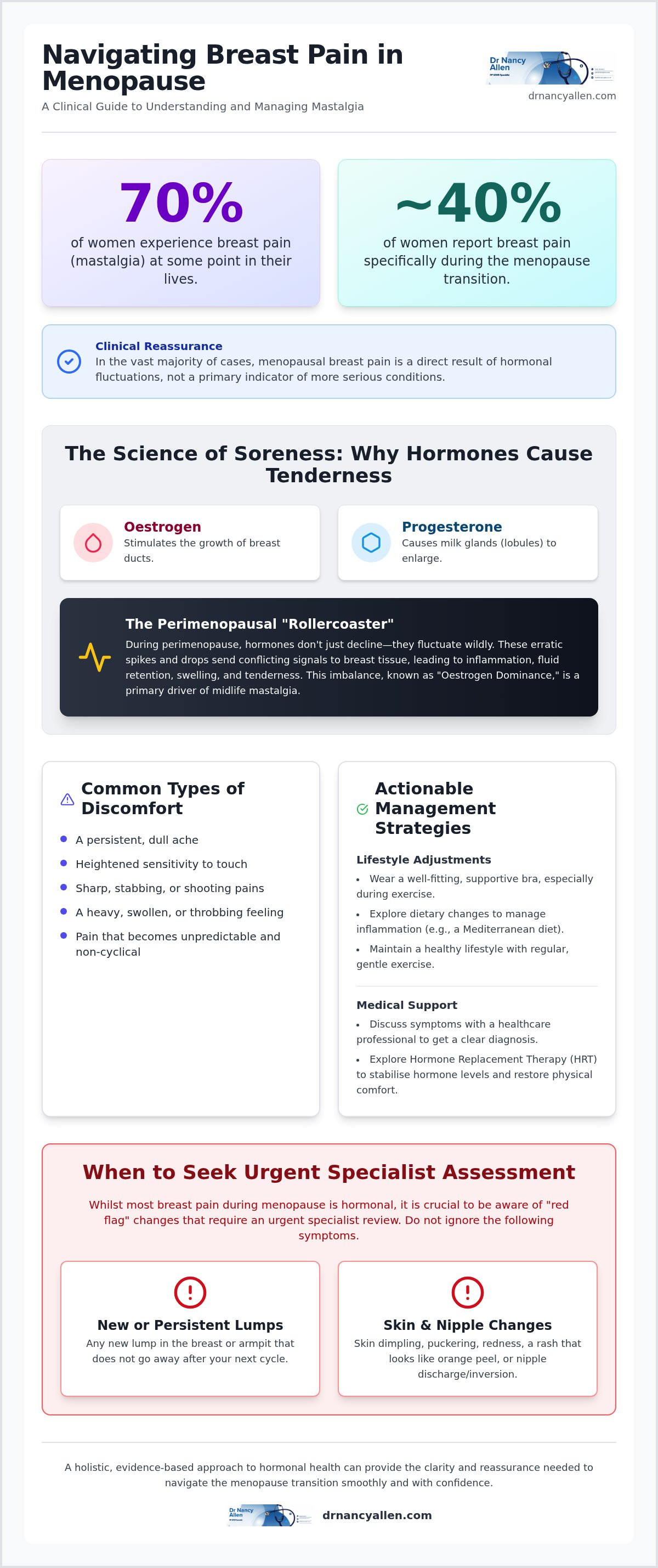
Did you know that up to 70% of women experience mastalgia at some point, with nearly 40% specifically reporting breast pain menopause symptoms during their transition? It's a startling figure that highlights just how common this discomfort is; yet many women suffer in silence, fearing the worst or feeling that their pain is an inevitable part of ageing. You might find that your favourite exercise routine is now a source of dread, or that a simple hug has become unexpectedly painful.
It's completely understandable to feel anxious when you notice new changes in your body, especially when conflicting advice about HRT or breast health leaves you feeling more confused than comforted. This guide is designed to offer you the clinical reassurance and practical clarity you deserve. We'll explore why fluctuating oestrogen levels trigger these sensations and provide actionable lifestyle and medical strategies to restore your comfort. From identifying the right support to knowing exactly when a symptom requires a specialist review, you'll find the expert insight needed to manage this transition with confidence.
Table of Contents
Understanding Breast Pain During the Menopause Transition
Breast pain, clinically known as mastalgia, is frequently a source of quiet distress during the midlife transition. Whilst we often discuss hot flushes and mood swings, the reality is that breast pain menopause and perimenopause symptoms are amongst the most frequent menopause symptoms reported to specialists. For many, this discomfort manifests as a dull ache or a heightened sensitivity that makes even the lightest touch feel intrusive.
The emotional weight of these physical changes can be significant. It's common for women to experience health anxiety when they notice new sensations in their breasts, immediately worrying about more serious conditions. However, providing immediate reassurance is vital. Understanding Breast Pain (Mastalgia) helps us recognise that pain alone is rarely the primary indicator of breast cancer. In the vast majority of cases, these sensations are a direct result of the hormonal "rollercoaster" that defines the perimenopausal years.
To gain more insight into how your lifestyle and diet might influence these hormonal symptoms, watch this helpful video:
Is Soreness Normal in Perimenopause?
It may seem counterintuitive, but breast pain often peaks during perimenopause rather than after your periods have stopped. This is because your hormone levels aren't simply declining; they're fluctuating wildly. You might experience sharp, stabbing pains or a heavy, throbbing sensation that seems to follow no logical pattern. Because your cycle may be irregular during this time, the "cyclical" nature of the pain can become blurred, making it difficult to predict when you'll need extra support.
The Impact on Quality of Life
Chronic discomfort isn't just a physical hurdle; it changes how you move through the world. You might find yourself avoiding the gym because your sports bra no longer provides enough relief, or pulling away from intimacy due to physical tenderness. For women with ADHD, these sensory sensitivities can be particularly overwhelming, as the brain may struggle to "filter out" the constant signal of discomfort. You shouldn't feel that you have to "just live with it". Recognising that breast pain menopause is a legitimate clinical symptom is the first step toward finding a personalised solution that restores your quality of life.
The Science of Soreness: Why Hormones Cause Breast Tenderness
Breast tissue is remarkably sensitive to the chemical messengers circulating in your bloodstream. To understand why breast pain menopause occurs, we must look at how oestrogen and progesterone interact with breast anatomy. Oestrogen is responsible for stimulating the growth of the breast ducts, whilst progesterone causes the milk glands, or lobules, to enlarge. During the perimenopausal transition, these hormones don't simply fade away; they fluctuate wildly, often surging to high levels before crashing. These erratic spikes send conflicting signals to the breast tissue, leading to the discomfort many women experience.
Fluid retention within the breast tissue leads to a distinct feeling of fullness and tenderness that can make everyday movement uncomfortable. According to the Cleveland Clinic on menopausal breast pain, these hormonal shifts are the primary driver of midlife mastalgia. When these levels are out of sync, the resulting inflammation can make the breasts feel heavy, swollen, or even bruised to the touch.
Oestrogen Dominance vs. Depletion
In the earlier stages of perimenopause, it's common to encounter a state often called oestrogen dominance. This occurs when oestrogen levels remain relatively high whilst progesterone levels begin to drop. This hormonal imbalance triggers a heightened inflammatory response within the breast tissue, often resulting in cyclical pain that feels more intense than what you may have experienced in your younger years. Once you transition fully into post-menopause and your hormone levels stabilise at a lower baseline, this specific type of stimulatory pain usually disappears.
Hormonal Shifts and Sensory Sensitivity
Hormonal fluctuations do more than just affect physical tissue; they also impact how your nervous system perceives pain. Declining oestrogen can lower your pain threshold, making physical sensations feel more acute. This is a vital consideration for women who may be exploring an adult adhd assessment, as neurodivergent individuals often have baseline differences in sensory processing. When you combine hormonal flux with existing sensory sensitivities, the physical distress of menopause can feel significantly more overwhelming. If you find that these sensations are becoming difficult to manage, seeking a tailored care plan from a specialist can help restore your sense of well-being.
Identifying Different Types of Mastalgia in Midlife
Not all breast pain menopause sensations are the same. Clinicians typically categorise mastalgia into three distinct groups: cyclic, non-cyclic, and extramammary. Whilst these definitions are clear in a clinical setting, perimenopause often blurs the boundaries. As your menstrual cycle becomes unpredictable, pain that was once strictly "cyclic" may start to appear at random intervals. This overlap makes it difficult to determine whether your hormones or external factors are the primary culprit, which is why understanding the nuances of each type is essential for effective management.
Cyclic Breast Pain in Perimenopause
This type is inextricably linked to your hormonal rhythm. Typically, you'll notice a dull ache or a "heavy," lumpy sensation in both breasts, often concentrated in the upper, outer areas. These symptoms usually intensify during the week before your period begins and subside once bleeding starts. During perimenopause, as periods sometimes become more frequent or significantly heavier, this cyclic discomfort can feel more persistent and intense than in previous years, as the breast tissue is repeatedly stimulated by fluctuating oestrogen.
Non-Cyclic Pain and Other Factors
Unlike cyclic pain, non-cyclic mastalgia doesn't follow a calendar. It's often described as a sharp, stabbing, or burning sensation, frequently felt in one specific area of one breast. Whilst hormones can still play a role, this pain is often triggered by non-hormonal factors such as high stress levels, dietary choices, or even certain medications. A common yet overlooked cause is a poorly fitting bra. Because menopause weight gain can change your breast size and shape quite rapidly, a bra that fit six months ago may no longer provide the necessary support. This lack of structural integrity can strain the Cooper's ligaments, leading to chronic soreness.
Sometimes, the pain isn't actually in the breast tissue at all. Extramammary pain originates in the chest wall, ribs, or even the neck and shoulders, but it "refers" or radiates into the breast area. This can be caused by anything from a pulled muscle to costochondritis, an inflammation of the cartilage that joins the ribs to the breastbone. To help your specialist provide the most accurate assessment, consider tracking your symptoms using this checklist:
Location: Is the pain in one breast or both, and is it localised to a specific spot?
Sensation: Does it feel like a dull ache, a sharp stab, or a burning sensation?
Timing: Does the pain correlate with your menstrual cycle, even if it's irregular?
Triggers: Are there specific activities, such as exercise or sleeping on your front, that make it worse?
Physical Changes: Have you noticed any changes in the skin, nipple area, or the overall shape of the breast?
Practical Strategies for Managing Menopausal Breast Discomfort
Managing the physical sensations of midlife requires a dual approach that addresses both the structural support of the breast and the internal hormonal environment. Whilst the experience of breast pain menopause symptoms can feel unpredictable, most women find significant relief through a combination of targeted lifestyle adjustments and clinical intervention. You don't have to accept constant tenderness as a permanent fixture of your transition.
Dietary and Lifestyle Adjustments
Simple changes to your daily habits can have a profound impact on breast inflammation. Reducing your intake of caffeine and salt is often the first line of defence, as both substances contribute to fluid retention that increases pressure within the breast tissue. Equally vital is the role of physical support. A 2014 study found that 85% of women with breast pain found relief by wearing a well-fitted sports bra. As your body changes, a professional fitting is essential to ensure your bras aren't straining the delicate ligaments of the chest wall. Many women also find that wearing a soft, non-wired crop top to sleep provides necessary support during the night, preventing the sharp stabs of pain that can occur when moving in bed.
Medical Options and HRT
For those whose discomfort is driven by the "hormonal rollercoaster" of perimenopause, Hormone Replacement Therapy (HRT) can be transformative. There is a common misconception that HRT always causes breast tenderness; however, by "levelling out" the erratic spikes in oestrogen and progesterone, a bespoke HRT plan often resolves the very pain it was once thought to cause. Depending on your specific symptoms, your specialist might recommend:
Systemic HRT: Patches, gels, or sprays that stabilise hormone levels across the entire body.
Topical Treatments: Anti-inflammatory gels applied directly to the painful area for localised relief.
Progesterone Regulation: Ensuring adequate progesterone to balance oestrogen's stimulatory effect on breast ducts.
Beyond hormonal therapy, certain supplements have shown promise in clinical settings. Evening Primrose Oil, rich in gamma-linolenic acid (GLA), is a traditional remedy that many women find helpful for reducing cyclical inflammation. Managing stress is also a key component of care, as high cortisol levels can further disrupt your hormonal balance and heighten your perception of pain. If you find that self-management isn't providing the clarity you need, a Peri-menopause & Menopause Specialist Care consultation can help you develop a clinical plan tailored to your unique biology.
When to Seek Specialist Support for Your Hormonal Health
Whilst we've established that breast pain menopause symptoms are usually a result of hormonal flux rather than serious illness, it's vital to recognise when a symptom requires an urgent clinical review. Professional reassurance is a cornerstone of effective menopause care. You should never feel that your concerns are too small for a consultation, especially when physical discomfort is coupled with anxiety. Trusting your intuition is an important part of managing your health; if something feels "off" or different from your usual patterns, seeking an expert opinion is the right course of action.
Clinical "red flags" are specific changes that necessitate a prompt assessment by a healthcare professional. These include:
New Lumps: Any new thickening or distinct lump in the breast or underarm area.
Skin Changes: Dimpling, puckering, or redness that resembles the texture of an orange peel.
Nipple Discharge: Any unusual fluid or blood-stained discharge from the nipple.
Structural Alterations: A sudden change in the size, shape, or position of one breast.
Many women find that a standard GP appointment can feel rushed, often leaving little time to unpick the complexities of perimenopausal symptoms. A private menopause specialist provides the time and space needed for a thorough, unhurried discussion. This ensures that your physical symptoms are viewed within the context of your wider hormonal health, rather than as isolated issues.
The Specialist Consultation Process
An online consultation with Dr Nancy Allen is designed to be a supportive, patient-centric experience. We focus on validating your experience and providing evidence-based clarity. Following a comprehensive review of your history and symptoms, we work together to move from a diagnosis to a tailored management plan, often within 72 hours. This rapid turnaround ensures you aren't left waiting for relief, allowing you to regain control over your well-being with a clear path forward.
Taking the Next Step
To make the most of your appointment, consider keeping a symptom diary for a few weeks beforehand. Note down when the pain occurs, its intensity, and any other changes you might be noticing. A holistic review often reveals that breast tenderness is occurring alongside other issues, such as menopause itchy skin or sleep disturbances. Understanding how long does menopause last can also help put your journey into perspective. Remember that most breast pain is a manageable stage of this transition. With the right specialist support, you can move through these years feeling heard, informed, and physically comfortable.
Reclaiming Comfort and Confidence in Midlife
Navigating the physical changes of midlife requires a balance of clinical insight and gentle self-care. We've explored how the erratic spikes of oestrogen and progesterone drive breast pain menopause symptoms, and identified that whilst this discomfort is common, it's rarely a sign of serious illness. By prioritising structural support through professional bra fittings and considering the stabilising effects of bespoke medical care, you can transition through this period with significantly less distress. You don't have to tolerate persistent tenderness as a standard part of your journey.
If you're seeking clarity and a path toward relief, expert guidance is available. Dr Nancy Allen offers specialist care backed by over 25 years of clinical experience, providing a supportive space to discuss your hormonal health. Through secure online consultations available UK-wide, you can receive a personalised treatment plan often within 72 hours of your appointment. Book a private menopause consultation with Dr Nancy Allen today to start your journey toward restoration. You deserve to feel comfortable and empowered in your body once again.
Frequently Asked Questions
Is breast pain a common symptom of menopause?
Yes, breast pain is a very frequent experience during the midlife transition. Research indicates that approximately 40% of women report breast tenderness as they move through perimenopause and menopause. It is often one of the earliest signs that hormonal levels are beginning to fluctuate. Whilst it can be distressing, it is a normal biological response to changing oestrogen levels and often occurs alongside other symptoms like hot flushes or mood changes.
Can HRT cause breast tenderness?
Hormone Replacement Therapy can cause breast tenderness, particularly when you first start a new prescription or adjust your dosage. Statistics show that around 36% of women on combined therapy report new tenderness compared to 12% of those not using hormones. However, for many women, a stabilised HRT regimen eventually reduces pain by levelling out the erratic hormonal spikes that cause inflammation and swelling in the breast tissue in the first place.
When should I be worried about breast pain during menopause?
You should seek an urgent clinical review if you notice "red flag" symptoms such as a new lump, skin dimpling, or nipple discharge. Whilst breast pain menopause symptoms are usually benign, any persistent pain in one specific spot or sudden changes to the breast's shape should be assessed by a professional. Trusting your intuition is vital; if a sensation feels different from your usual discomfort, a specialist review provides necessary clarity.
How long does menopausal breast pain typically last?
The duration varies between individuals, but breast pain typically peaks during perimenopause and begins to subside once you have fully transitioned into post-menopause. This is because the stimulatory effects of fluctuating oestrogen on breast tissue diminish as hormone levels stabilise at a lower baseline. Most women find that the most intense period of discomfort aligns with the years of irregular cycles leading up to their final period, after which the pain usually resolves.
Does caffeine make menopausal breast pain worse?
Many women find that reducing caffeine intake significantly improves their physical comfort. Caffeine is a stimulant that can increase the production of certain biochemicals that trigger inflammation and fluid retention within the breast tissue. By cutting back on tea, coffee, and chocolate, you may notice a reduction in the fullness and sensitivity that often characterises breast pain menopause discomfort during the perimenopausal years, especially in the days leading up to a period.
Are there specific bras recommended for menopausal breast pain?
Professional bra fittings are highly recommended because your breast size and shape can change rapidly during the menopause transition. A well-fitted, non-wired sports bra is often the best choice for providing structural support without irritating sensitive tissue. In fact, research suggests that 85% of women find relief simply by wearing a more supportive, correctly sized bra. Consider wearing a soft, seamless crop top for sleeping if you find that night-time movement causes discomfort.
Can breast pain happen even after menopause has finished?
Yes, it is possible to experience breast pain after menopause, though it is less common than during the transition years. Post-menopausal pain is usually non-cyclic and may be linked to lifestyle factors, dietary triggers, or musculoskeletal issues in the chest wall. Because hormonal fluctuations have ceased, any new or persistent pain in the post-menopausal years should always be discussed with a specialist to rule out non-hormonal causes and ensure your ongoing breast health.
How can a menopause specialist help with breast tenderness?
A specialist like Dr Nancy Allen provides a holistic assessment that goes beyond surface-level advice. By reviewing your full hormonal profile and lifestyle, a specialist can create a personalised treatment plan, often delivered within 72 hours. This might include adjusting your HRT dosage, recommending specific anti-inflammatory strategies, or providing clinical reassurance. With over 25 years of experience, a specialist ensures your care is tailored to your unique biological needs and helps restore your quality of life.


Comments